





Choosing the right rheological thickeners is essential for stable texture, smooth processing, and consistent product quality. In food, personal care, and fragrance-adjacent systems, thickening is never only about viscosity. It also affects suspension, pourability, spreadability, mouthfeel, and long-term stability. A poor match can trigger phase separation, clumping, dull sensory performance, or filling-line problems. This guide offers a practical checklist to help evaluate rheological thickeners with more confidence across complex formulations.
Why a Checklist Matters for Rheological Thickeners
Many formulation failures happen because a thickener is chosen too early, based only on target viscosity or cost. In reality, rheological thickeners must work within a full system.
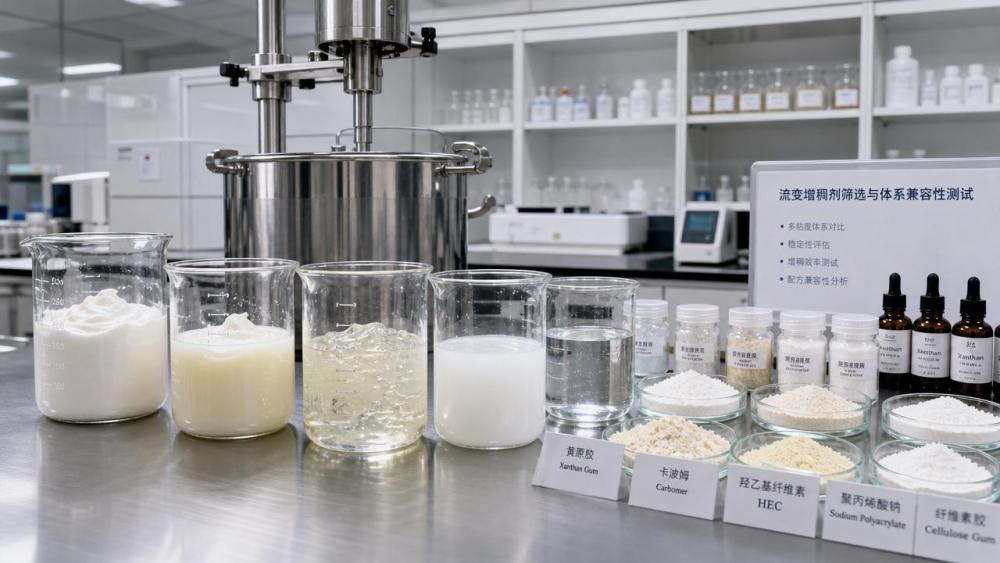
pH, electrolytes, sugar, alcohol, oils, surfactants, heat load, and shear conditions all change how a thickener performs. A checklist reduces trial-and-error and improves scale-up reliability.
This approach is especially useful in cross-category development, where one portfolio may include sauces, dairy, gels, serums, cleansers, and aromatic emulsions with very different flow demands.
Core Selection Checklist for Stable Texture
- Define the target flow profile first, including low-shear stability, high-shear process behavior, and recovery after pumping, mixing, filling, or consumer use.
- Check the base system composition, especially water content, oil phase, salt level, alcohol presence, sugar solids, and surfactant package compatibility.
- Match the thickener to the required texture, such as glossy, creamy, short, stringy, spoonable, sprayable, or self-leveling sensory behavior.
- Verify pH tolerance early, because many rheological thickeners lose efficiency, collapse, or precipitate outside their preferred operating range.
- Evaluate temperature resistance during pasteurization, hot fill, cooling, freeze-thaw, and warehouse cycling, not only at room-temperature bench conditions.
- Assess hydration speed and dispersion method, since poor wet-out often causes fisheyes, undissolved particles, and inconsistent batch-to-batch viscosity.
- Test synergy with other hydrocolloids or structuring agents, because blended rheological thickeners often deliver better suspension and texture control than single ingredients.
- Measure yield value when particles, pigments, air cells, herbs, or actives must remain uniformly suspended during storage and transport.
- Review label, regulatory, and claim fit, including clean label expectations, natural positioning, allergen status, and regional compliance requirements.
- Compare total use cost instead of price per kilogram, since dosage efficiency, processing ease, and waste reduction strongly affect commercial value.
How Rheological Thickeners Behave in Different Applications
Food and Beverage Systems
In foods, rheological thickeners shape both stability and eating experience. A yogurt base may need creamy body with low syneresis, while a sauce may need cling on hot surfaces without turning gummy.
Hydrocolloids such as xanthan gum, guar gum, pectin, carrageenan, and modified starches each create distinct flow curves. The right selection depends on solids level, protein interaction, and thermal history.
Personal Care and Cosmetic Formulas
In creams, serums, masks, and cleansers, rheological thickeners control pickup, glide, cushion, and break. A stable viscosity profile also supports active delivery and packaging performance.
Carbomers, cellulose derivatives, acrylate copolymers, and natural gums respond differently to electrolytes, neutralization, and surfactants. Always test with fragrance, preservative, and active load included.
Fragrance-Related and Home Formulations
Air care gels, scented cleaners, and home-care liquids often contain solvents, surfactants, and perfume oils that challenge structure. Here, rheological thickeners must stabilize aesthetics without dulling fragrance release.
A formula may look acceptable at first, then thin over time as perfume or salt interferes with the network. Compatibility screening over several weeks is essential.
Commonly Overlooked Risks
Ignoring Shear Recovery
A product may test well in a static cup but fail after pumping. Some rheological thickeners lose structure under shear and recover too slowly, causing settling or thin appearance after filling.
Overlooking Ion Sensitivity
Minerals, salts, and charged actives can sharply reduce thickening efficiency. This is common in fortified beverages, surfactant systems, and anti-aging products with complex active blends.
Confusing Viscosity with Stability
High viscosity does not guarantee suspension or emulsion stability. Yield stress, elastic behavior, and droplet or particle interaction often matter more than a single Brookfield number.
Skipping Process Simulation
Bench samples mixed gently can mislead development teams. Real process conditions include high shear, heat ramps, holding time, deaeration, and line transfer, all of which affect rheological thickeners.
Underestimating Sensory Trade-Offs
A highly efficient thickener may create drag, stringiness, stickiness, or an artificial finish. Always balance technical stability with the intended sensory signature.
A Practical Evaluation Workflow
- Start with three to five candidate rheological thickeners that fit the formula type, claim position, and processing window.
- Prepare lab batches using the final pH, preservative system, fragrance or flavor load, and expected electrolyte content.
- Record hydration time, mixing energy, and order of addition, because these variables often change performance more than dosage adjustments.
- Measure viscosity at multiple shear rates, then assess yield value, recovery, visual uniformity, and sensory behavior after 24 hours.
- Run accelerated tests covering heat, cold, centrifuge stress, and at least one freeze-thaw cycle when relevant to distribution conditions.
- Confirm performance in pilot conditions before final selection, especially for products filled hot, pumped long distances, or exposed to repeated handling.
What Strong Selection Usually Looks Like
The best choice is rarely the thickest option. Strong selection means the rheological thickener delivers stable texture, clean processing, compatible sensory performance, and reliable shelf behavior at a commercially sensible dosage.
In many cases, blended systems outperform single ingredients. A primary viscosity builder combined with a suspension aid or texture modifier can produce better balance across processing and end use.
For intelligence-led formulation work, especially across food, beauty, and fragrance-related categories, selection should connect molecular behavior with market expectations for clean labels, premium feel, and safety.
Conclusion and Next Step
Selecting rheological thickeners becomes easier when the decision is organized around flow profile, compatibility, process stress, and sensory outcome. A checklist helps turn an uncertain choice into a structured comparison.
Begin with the target texture, screen under realistic conditions, and verify stability with the full formula in place. That disciplined approach leads to more dependable products and fewer late-stage reformulation surprises.
Related News
- How to assess a bio-based thickener manufacturer's batch consistencyOct 16, 2026Food Rheology Expert
- Verifying halal status of hydrocolloid ingredients in the Middle EastOct 15, 2026Food Rheology Expert
- How Do You Test Hydrocolloid Viscosity After Changing a Thickener?Oct 17, 2026Food Rheology Expert
- Which Natural Hydrocolloid Works Best in Acidic Cosmetic Formulas?Oct 16, 2026Food Rheology Expert
Related News
- 00
0000-00
Can biomimetic peptides in cosmetics reduce the look of wrinkles? - 00
0000-00
How to assess a bio-based thickener manufacturer's batch consistency - 00
0000-00
Verifying halal status of hydrocolloid ingredients in the Middle East - 00
0000-00
How to interpret active matter on a surfactant specification sheet - 00
0000-00
How Do You Test Hydrocolloid Viscosity After Changing a Thickener?
Food Rheology Expert
Weekly Insights
Stay ahead with our curated technology reports delivered every Monday.