





Rheology Modifiers for Confectionery: How to Choose for Texture and Stability
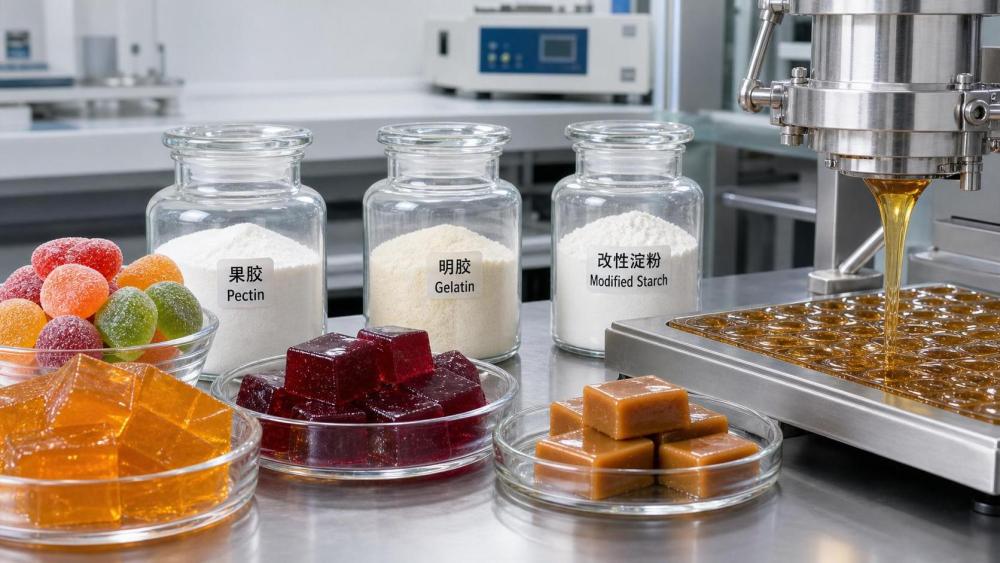
Choosing the right rheology modifiers for confectionery is rarely just a texture decision.
It affects depositing, cutting, aeration, moisture migration, gloss retention, and shelf-life stability.
That is why rheology modifiers for confectionery need to be assessed as process tools, not only label ingredients.
In practice, selection depends on sugar type, solids level, water activity, target chew, and thermal history.
A modifier that performs well in gummies may fail in caramel, pectin jellies, or whipped centers.
The smarter route is to connect rheology behavior with application demands before shortlisting suppliers.
This guide focuses on that decision path, with practical criteria for evaluating rheology modifiers for confectionery.
Start with the Texture Target, Not the Ingredient Name
Many confectionery projects begin with a familiar hydrocolloid request.
That is convenient, but it often leads to poor fit.
A better starting point is the final eating experience and process window.
Ask four questions first.
- Should the product bite cleanly, stretch, melt fast, or hold shape?
- Will it be pumped, extruded, deposited, whipped, or slabbed?
- What thermal stress appears during cooking, cooling, or packaging?
- How sensitive is the formula to moisture pickup or sugar crystallization?
These questions narrow the field faster than comparing supplier brochures.
For example, high elasticity may point toward gelatin or certain starch systems.
High acid tolerance may favor pectin in fruit systems.
Suspension stability in fillings may require xanthan blends or modified starches.
So the first rule in choosing rheology modifiers for confectionery is simple.
Define the function in the finished product and on the line.
Know the Main Rheology Modifier Families
Different rheology modifiers for confectionery create structure through different mechanisms.
Understanding those mechanisms reduces trial-and-error during scale-up.
Gelatin
Gelatin delivers elastic chew, fast flavor release, and a familiar bite.
It works well in gummies, marshmallows, and aerated confectionery.
Its limits include thermal sensitivity, animal origin concerns, and variable set behavior.
Pectin
Pectin is widely used for fruit jellies and clean-label positioning.
High methoxyl grades need sugar and acid balance.
Low methoxyl grades offer more formulation flexibility but need calcium control.
Starch and Modified Starch
These systems are useful for body, opacity, chew, and cost control.
They fit jelly candies, chewy centers, and fillings needing process tolerance.
Performance depends heavily on cook conditions and shear history.
Xanthan, Gellan, Carrageenan, and Blends
These are often used in smaller doses for viscosity building or structure tuning.
They can support suspension, deposit control, and reduced syneresis.
However, overuse may create a short texture or unwanted pastiness.
Match the Modifier to the Confectionery System
Not all confectionery systems stress ingredients in the same way.
This is where selection becomes more technical and more useful.
Gummies and Jellies
Focus on gel strength, demolding speed, moisture stability, and bite profile.
For rheology modifiers for confectionery in this segment, compare set speed and stickiness carefully.
A strong lab gel does not always translate to clean production release.
Caramels and Chewy Candies
These products depend on solids, fat, protein, and sugar interactions.
Here, modifiers often support body and chew consistency rather than classic gelation.
Thermal resilience becomes more important than initial viscosity alone.
Fillings and Inclusions
Flow during depositing matters, but post-fill stability matters more.
Look at particle suspension, fat migration control, and resistance to phase separation.
Blended rheology modifiers for confectionery are often the most reliable option here.
Aerated Confectionery
Marshmallow and similar products need air retention under mixing and storage stress.
The ideal system holds bubbles without becoming rubbery or dry.
That balance usually requires evaluating viscosity curve, foam stability, and set timing together.
Selection Criteria That Matter During Evaluation
When comparing rheology modifiers for confectionery, a short technical checklist helps keep decisions objective.
- Viscosity profile under process temperature and shear.
- Gel strength or body development over time.
- Tolerance to sugar concentration, acid, salts, and humectants.
- Water binding and resistance to syneresis or weeping.
- Impact on flavor release, opacity, and mouthcoating.
- Label positioning, origin, allergen status, and regional acceptance.
- Supply consistency, dosage efficiency, and total formulation cost.
This list keeps the review grounded in measurable performance.
It also prevents overvaluing a low-cost ingredient that later creates downtime or texture drift.
Quick Evaluation Table
Common Failure Points in Rheology Modifiers for Confectionery
Several selection errors show up repeatedly across development teams.
They are avoidable if screening is built around real operating conditions.
- Testing at bench scale without matching final solids and cooling rate.
- Choosing by peak viscosity while ignoring flavor release and bite cleanup.
- Ignoring acid or calcium sensitivity in fruit-based systems.
- Assuming one modifier can cover gummies, fillings, and aerated products equally.
- Treating clean label as a marketing check rather than a formulation constraint.
From recent market shifts, clean label pressure is clearly stronger.
That also means technical teams must compare natural positioning with process robustness.
The best rheology modifiers for confectionery now need both sensory performance and label credibility.
A Practical Decision Framework
A workable selection process does not need to be complicated.
It needs to reflect how confectionery actually behaves in production.
- Define the texture target using sensory language and measurable texture data.
- Map the process window, including heat load, shear, hold time, and depositing temperature.
- Screen two to four candidate systems at realistic solids and pH.
- Check short-term machinability before focusing on long-term shelf behavior.
- Run accelerated stability on moisture migration, stickiness, and structure loss.
- Review cost-in-use, supplier support, and regional compliance before final approval.
This approach usually exposes weak options early.
More importantly, it makes discussions with suppliers far more productive.
Instead of asking for a general recommendation, you can ask for proof around your exact failure risks.
Final Takeaway
Choosing rheology modifiers for confectionery is really about fit.
Fit between texture and process.
Fit between shelf stability and clean-label goals.
Fit between lab promise and line reality.
The most reliable decisions come from evaluating each modifier inside the real confectionery system.
When that evaluation is structured, rheology modifiers for confectionery become a strategic advantage, not a troubleshooting step.
Use that framework to compare options, challenge assumptions, and move toward texture stability with fewer reformulation cycles.
Related News
- How cassava costs shape Thailand xanthan gum market pricesSep 29, 2026Food Rheology Expert
- Can Thailand's xanthan gum market support stable export supply?Sep 28, 2026Food Rheology Expert
- How food hydrocolloids prevent ice crystals in frozen dessertsSep 14, 2026Food Rheology Expert
- Which food texture modifiers for sauces prevent thinning after reheating?Sep 13, 2026Food Rheology Expert
Related News
- 00
0000-00
What drives fragrance ingredients price changes in bulk orders? - 00
0000-00
How to assess a food antioxidants distributor’s traceability practices - 00
0000-00
How minimum order quantities shape private label ingredient sourcing costs - 00
0000-00
What drives personal care ingredient price volatility in sourcing - 00
0000-00
What drives micelles price differences in cosmetic formulations?
Food Rheology Expert
Weekly Insights
Stay ahead with our curated technology reports delivered every Monday.