





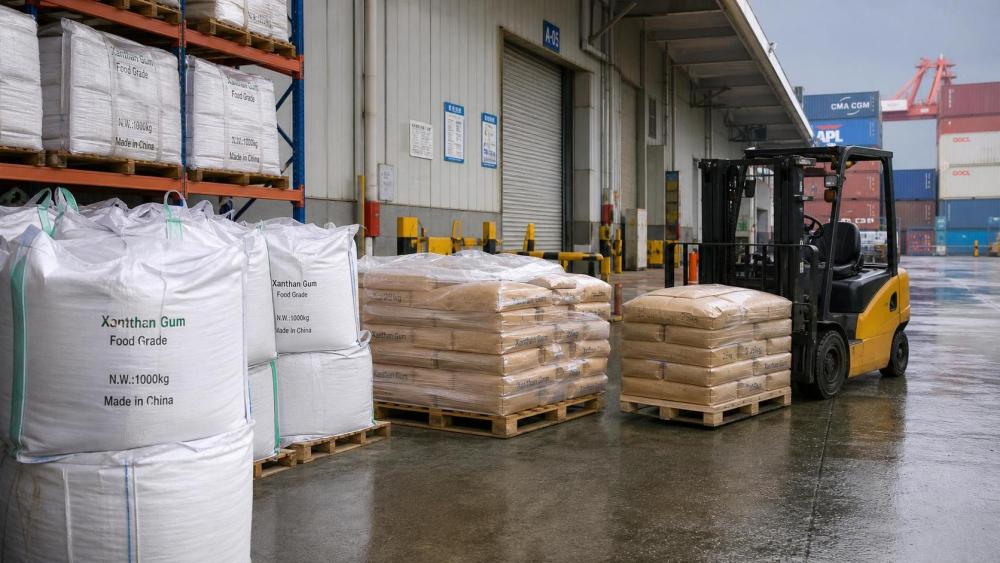
On July 15, 2026, Vietnam began applying a 12.3% provisional anti-dumping duty to xanthan gum imports from China and India after a domestic industry complaint. The measure directly concerns bulk industrial-grade xanthan used in food and personal care manufacturing, and it deserves close attention from ASEAN distributors, importers, procurement teams, and manufacturers because it can affect landed cost calculations and delivery planning at the same time.
What Vietnam has confirmed so far
The confirmed facts are limited but commercially significant. Vietnam’s Ministry of Industry and Trade has imposed a provisional anti-dumping duty of 12.3% on imported xanthan gum from China and India, effective July 15, 2026. The action follows a complaint from the domestic industry. The measure applies to bulk industrial-grade xanthan gum used in food and personal care manufacturing. The summary provided also indicates likely effects on pricing and lead times for ASEAN distributors that source from major Asian producers.
Where the pressure may appear across the supply chain
Import sourcing and regional distribution
From an industry perspective, distributors and trading companies sourcing xanthan gum into Vietnam or through ASEAN-linked supply chains may be the first to feel the effect. The immediate issue is not only the additional duty itself, but also how that duty changes quotation timing, supplier discussions, and shipment planning. What deserves closer attention is whether contracts, price validity periods, and customer offers still reflect the new import cost reality.
Food and personal care manufacturing
Manufacturers using bulk industrial-grade xanthan gum in food and personal care production may face pressure in raw material budgeting and replenishment schedules. Analysis shows that even a provisional trade measure can complicate procurement timing if buyers were relying on supply from China and India into Vietnam. For these users, the main operational concern is whether material availability, cost pass-through, or production scheduling needs adjustment.
Supply chain and delivery coordination
Supply chain service providers and procurement teams should also watch lead-time risk. The input summary specifically points to possible disruption in pricing and delivery timing for ASEAN distributors. Observably, when trade remedies are introduced, the commercial impact is often felt in documentation review, shipment release planning, and customer communication before it is fully visible in monthly purchasing reports.
Practical points companies should watch now
Track how the provisional measure is described in practice
Companies should closely monitor official wording and any follow-up clarification around product scope, applicable transactions, and implementation details. The current confirmed fact is that the duty is provisional and targets bulk industrial-grade xanthan gum from China and India. Businesses should avoid assuming broader or narrower coverage until further official language is confirmed.
Review exposed product lines and customer commitments
For companies supplying food and personal care manufacturers, the most relevant task is to identify which quotations, purchase plans, and customer commitments depend on imported xanthan gum covered by the measure. Analysis shows that the business impact may differ between spot purchases, standing supply arrangements, and orders already in process.
Recheck documentation and delivery timing
Importers and distributors should review supplier documents, shipment timing, and internal handoff points that affect customs, cost booking, and delivery promises. What deserves closer attention is the gap between a policy announcement and its practical effect on goods already being sourced, priced, or scheduled for delivery.
Prepare for customer communication on price and lead time
Because the provided summary already points to possible pricing and lead-time effects, companies should be ready to explain changes to downstream buyers in clear commercial terms. This is especially relevant for teams managing regional accounts that expect stable supply from major Asian producers.
Why this looks like more than a one-day pricing story
Observably, this development should not be read only as a short-term cost issue. It is also a policy signal for companies that depend on cross-border sourcing of functional ingredients into Vietnam and the wider ASEAN market. At the same time, it is too early to present the full market impact as a settled outcome. Analysis shows that this is better understood as an active trade measure with immediate operational relevance and with broader implications still requiring observation.
How the market may need to interpret this stage
At this point, the most balanced reading is that Vietnam’s provisional 12.3% anti-dumping duty on xanthan gum imports has created a real commercial variable for affected supply chains, especially in food and personal care manufacturing. The confirmed impact lies in changed import conditions and the resulting pressure on pricing and lead times. It is more appropriate to understand this as an actionable near-term change and a medium-term signal that still needs continued verification as the situation develops.
Basis of this article and what still needs verification
This article is based on the user-provided news title, event date, and event summary. For this type of industry update, source categories typically worth checking include official government notices, company statements, industry association updates, authoritative media coverage, and related trade or standards documents. A specific official source link was not provided in the input, so the exact official text and any later clarifications still need ongoing verification. Continued attention should focus on subsequent official wording, scope interpretation, and any updates affecting implementation, pricing, or delivery arrangements.
Related News
- How to assess a bio-based thickener manufacturer's batch consistencyOct 16, 2026Food Rheology Expert
- Verifying halal status of hydrocolloid ingredients in the Middle EastOct 15, 2026Food Rheology Expert
- How Do You Test Hydrocolloid Viscosity After Changing a Thickener?Oct 17, 2026Food Rheology Expert
- Which Natural Hydrocolloid Works Best in Acidic Cosmetic Formulas?Oct 16, 2026Food Rheology Expert
Related News
- 00
0000-00
Can biomimetic peptides in cosmetics reduce the look of wrinkles? - 00
0000-00
How to assess a bio-based thickener manufacturer's batch consistency - 00
0000-00
Verifying halal status of hydrocolloid ingredients in the Middle East - 00
0000-00
How to interpret active matter on a surfactant specification sheet - 00
0000-00
How Do You Test Hydrocolloid Viscosity After Changing a Thickener?
Food Rheology Expert
Weekly Insights
Stay ahead with our curated technology reports delivered every Monday.