





Xanthan Gum Texture Control Problems and Fixes in Viscosity-Sensitive Products
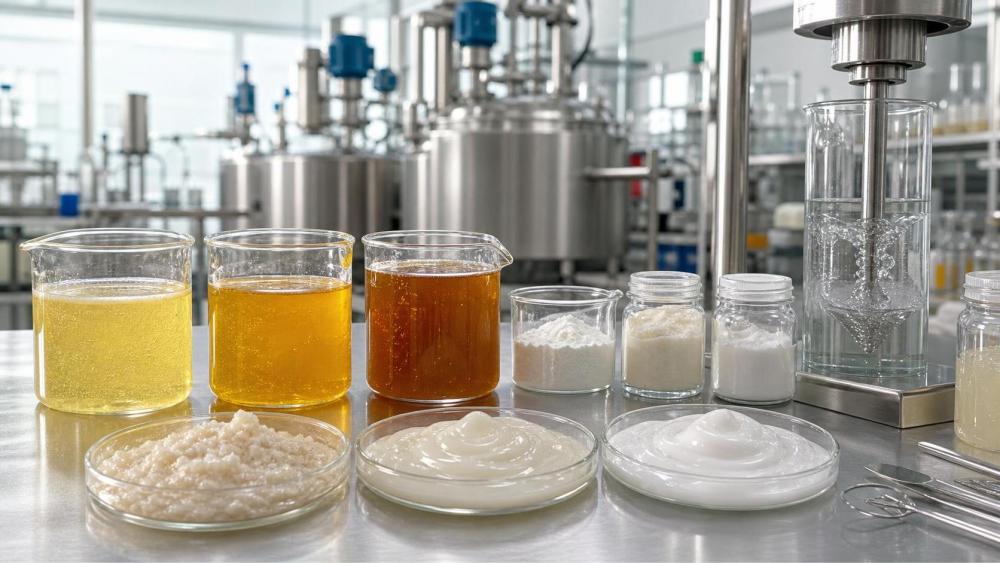
In viscosity-sensitive formulations, xanthan gum texture control often decides whether a product feels premium or problematic.
A tiny dosing shift can change flow, cling, suspension, and sensory balance across food, personal care, and household systems.
That is why texture failures with xanthan gum rarely stay small.
They show up as lumps during make-up, ropey flow during filling, or unstable mouthfeel after storage.
In practical operations, the goal is not just higher viscosity.
The goal is controlled, repeatable rheology that survives shear, temperature, pH, salts, and real production timing.
For teams tracking formulation performance, xanthan gum texture control also supports cleaner labels, tighter sensory positioning, and lower batch rejection risk.
Recent market pressure makes this even more important.
Products now need stable texture with less rework, shorter development time, and better tolerance to ingredient variability.
The good news is that most failures are traceable.
Once the mechanism is clear, the fix is usually process-driven, not mysterious.
Why xanthan gum texture control fails so easily
Xanthan gum hydrates fast at the particle surface.
If powder meets water unevenly, the outer layer swells first and traps dry material inside.
That creates fish eyes, persistent lumps, and poor dispersion.
Another common issue is overbuilt viscosity.
A product may test well in the lab, yet feel slimy, stringy, or hard to pour on the line.
This usually happens when target viscosity is measured without considering shear profile or final use conditions.
Salt, sugar, acids, proteins, surfactants, and actives can also shift network behavior.
So xanthan gum texture control is never only about dosage.
It is about the full formula environment and the exact order of addition.
More importantly, small timing differences during hydration can create large texture differences later.
The most frequent root causes
- Poor powder wet-out during initial charging
- Insufficient shear for dispersion, followed by excessive shear later
- Adding salts or acids before full hydration
- Using the wrong xanthan grade for the required flow curve
- Ignoring hold time needed for final viscosity development
- Temperature swings that alter hydration rate and perceived texture
- Formula interactions with starches, gums, proteins, or surfactants
Problem-by-problem fixes for better xanthan gum texture control
Troubleshooting works best when each texture defect is linked to a specific mechanism.
That keeps xanthan gum texture control practical and repeatable.
1. Lumping and fish eyes
This is the most expensive early-stage failure because it affects yield, filtration, and appearance.
The fix starts with dispersion strategy.
Pre-blend xanthan gum with dry carriers like sugar or other compatible powders.
If the system allows it, use an oil slurry or glycerin slurry before water addition.
Feed powder slowly into a strong vortex, then maintain enough shear until particles fully separate.
Do not add electrolytes too early, because rapid viscosity rise can lock in undispersed material.
2. Stringy or ropey flow
Stringiness often appears in sauces, drink concentrates, gels, and cleansing products.
It usually means the system has too much elastic character for the intended user experience.
Reduce xanthan slightly, then rebalance with another thickener if needed.
In many formulas, a lower xanthan level combined with starch, cellulose gum, or a compatible gum blend gives a cleaner break.
This is a common upgrade path when xanthan gum texture control must protect suspension without creating draggy flow.
3. Poor pourability
A product can look stable in the tank but fail in the hand.
That usually means low-shear viscosity is too high.
Check the use temperature, package geometry, and dispensing force.
Then retest using flow methods that reflect real application.
Often, a small reduction in xanthan or a change in solids balance improves pouring without losing stability.
In other words, xanthan gum texture control should be judged by behavior, not just one viscosity number.
4. Unstable texture over shelf life
If the texture drifts after filling, the issue may be incomplete hydration or ongoing interactions in the formula.
Review pH, ionic strength, preservative system, and thermal history.
Also verify whether final viscosity was measured too early.
Many operators chase a false problem because the batch had not finished developing.
Process controls that make xanthan gum texture control more reliable
Better outcomes usually come from boring discipline, not dramatic reformulation.
That is especially true for viscosity-sensitive products.
A few operating controls can protect xanthan gum texture control across routine production.
Set a tighter hydration protocol
- Define water temperature before charging
- Define mixer speed during powder addition
- Define powder feed rate and addition point
- Define post-addition shear time
- Define hold time before viscosity release testing
Control the order of addition
This point is often underestimated.
If salts, acids, fragrances, surfactants, or active compounds enter too early, hydration can shift fast.
When texture complaints keep repeating, compare successful and failed batches step by step.
The difference is often sequence, not raw material quality.
Measure more than one viscosity point
One Brookfield result cannot describe full texture behavior.
For stronger xanthan gum texture control, track low-shear feel, high-shear recovery, and storage stability together.
That gives a much clearer signal for filling, dispensing, and sensory performance.
Application-specific checks that reduce texture risk
Different sectors stress xanthan in different ways.
So xanthan gum texture control should match the application, not a generic rulebook.
Food and beverage
Check acid tolerance, sugar loading, heat processing, and final mouthfeel.
Suspension and cling may look good, yet the product can still feel heavy or gummy.
Sensory screening should be part of xanthan gum texture control from the first pilot stage.
Personal care
Watch surfactant compatibility, clarity targets, fragrance loading, and skin feel after rub-out.
A visually stable gel can still leave an unpleasant stringy break during use.
That makes user testing essential before scale-up.
Household and technical liquids
Check nozzle passage, spray pattern, cling on vertical surfaces, and residue after drying.
Here, xanthan gum texture control must balance flow with functional deposition.
A formula that is too thick may reduce usability even if active performance looks strong.
A fast troubleshooting table for daily use
Final takeaways for stable xanthan gum texture control
Most texture failures are not random.
They usually come from hydration, shear, sequence, or formula interaction.
That makes xanthan gum texture control a solvable operational discipline.
Start by mapping the exact defect, then verify how the batch was made.
Tighten hydration rules, test real-use flow, and match the gum system to the sensory target.
From a broader formulation perspective, that approach protects consistency, user acceptance, and production economics at the same time.
For teams working across food, fragrance-adjacent care products, and active-rich systems, disciplined xanthan gum texture control remains one of the simplest ways to improve quality without overcomplicating the formula.
Related News
- How to assess a bio-based thickener manufacturer's batch consistencyOct 16, 2026Food Rheology Expert
- Verifying halal status of hydrocolloid ingredients in the Middle EastOct 15, 2026Food Rheology Expert
- How Do You Test Hydrocolloid Viscosity After Changing a Thickener?Oct 17, 2026Food Rheology Expert
- Which Natural Hydrocolloid Works Best in Acidic Cosmetic Formulas?Oct 16, 2026Food Rheology Expert
Related News
- 00
0000-00
Can biomimetic peptides in cosmetics reduce the look of wrinkles? - 00
0000-00
How to assess a bio-based thickener manufacturer's batch consistency - 00
0000-00
Verifying halal status of hydrocolloid ingredients in the Middle East - 00
0000-00
How to interpret active matter on a surfactant specification sheet - 00
0000-00
How Do You Test Hydrocolloid Viscosity After Changing a Thickener?
Food Rheology Expert
Weekly Insights
Stay ahead with our curated technology reports delivered every Monday.