





On 29 May 2026, national standardization bodies of Thailand, Vietnam, Indonesia, Malaysia, the Philippines, and Singapore jointly issued the Guidance on Import Compliance for Cosmetic Fragrances, introducing new regulatory requirements for microencapsulated fragrances entering their markets effective 1 July 2026.
New Regulatory Requirements Take Effect in July 2026
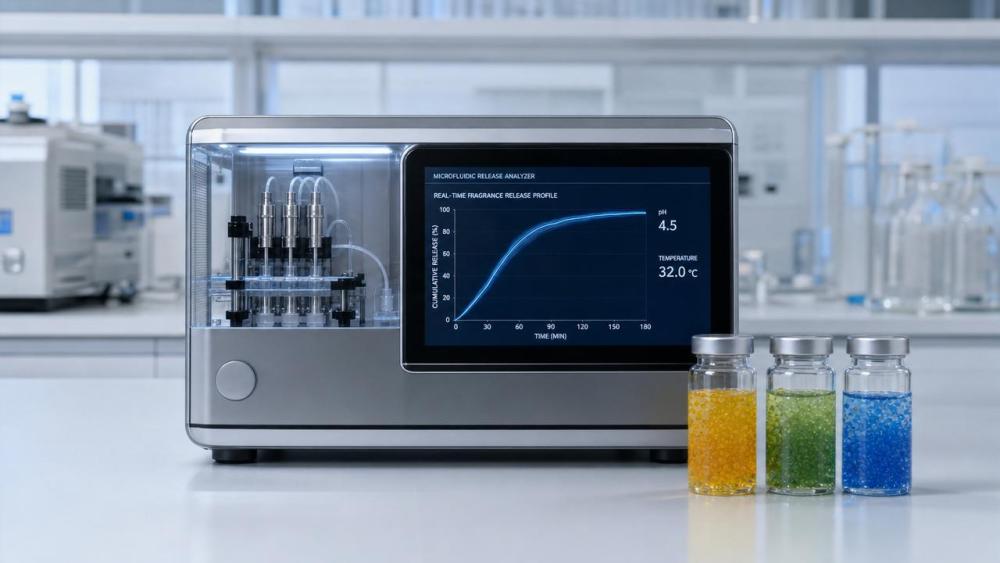
As of 1 July 2026, all imported microencapsulated fragrances must be accompanied by an IFRA Standard compliance statement referencing Version 51 or later. In addition, exporters must submit an in vitro release kinetics report validated according to OECD Test Guideline 492, simulating fragrance release under skin-relevant pH and temperature conditions. The measure was formally adopted on 29 May 2026 by the six ASEAN countries’ standardization authorities.
Impact Across the Fragrance Supply Chain
Exporters and Trading Companies
Direct trade enterprises face immediate operational adjustments: customs clearance now requires two distinct technical documents—IFRA 51+ declarations and OECD TG 492–validated reports. Delays may occur if documentation is incomplete or misaligned with local interpretation of test parameters.
Raw Material Sourcing Firms
Suppliers of encapsulation polymers, core fragrances, or functional excipients must now provide supporting data relevant to release kinetics—such as polymer hydrolysis profiles or pH-dependent solubility—to enable downstream compliance reporting.
Manufacturers and Formulators
Processing facilities must integrate release kinetics validation into product development workflows. Batch-level testing may become necessary where formulation changes affect release profiles, increasing R&D lead time and analytical resource allocation.
Testing and Certification Service Providers
Third-party labs offering OECD TG 492 testing will experience rising demand. However, capacity constraints and inter-laboratory variability in simulating skin conditions (e.g., pH 4.5–5.5 at 32°C) may impact report turnaround and consistency across jurisdictions.
Key Actions for Export-Ready Companies
Verify IFRA 51+ Alignment Across All Ingredient Lists
Reassess full ingredient disclosures—not only for fragrance compounds but also for microcapsule shell materials—against IFRA’s latest exposure-based thresholds and restrictions. Cross-reference with Annexes A–C of IFRA Standard Version 51 or newer.
Initiate OECD TG 492 Testing Early in Product Lifecycle
Since release kinetics are formulation- and process-sensitive, initiate method development and validation during pilot-scale production—not post-commercialization—to avoid timeline compression ahead of the 1 July 2026 deadline.
Update Technical Documentation Packages
Integrate release kinetics reports into standard export dossiers alongside safety data sheets (SDS), IFRA statements, and stability data. Ensure reports explicitly state test conditions (pH, temperature, sampling intervals, analytical method) to meet ASEAN reviewers’ expectations.
Engage Local Regulatory Representatives Ahead of Submission
Given variations in enforcement interpretation among the six countries, appoint in-country regulatory liaisons to pre-review documentation structure, nomenclature, and test report formatting before formal import submission.
Emerging Technical Barrier or Harmonization Signal?
Analysis shows this joint initiative reflects a broader shift toward performance-based safety assessment—not just compositional compliance—in ASEAN cosmetic regulation. While it raises short-term compliance costs and extends time-to-market, it may also incentivize harmonized testing protocols and encourage innovation in controlled-release delivery systems. What deserves closer attention is whether this becomes a precedent for other ASEAN-regulated categories (e.g., antimicrobial actives or sunscreen filters) requiring kinetic or bioavailability data.
Strategic Implications for Global Fragrance Suppliers
This requirement marks a meaningful step toward aligning ASEAN’s regulatory approach with EU and US trends that emphasize exposure science and real-use condition testing. For global suppliers, it underscores the growing necessity of embedding regulatory science—not just regulatory affairs—into early-stage development. Success will depend less on document compilation and more on integrated technical readiness across formulation, analytics, and regulatory strategy.
Source Information and Ongoing Monitoring
This article is based solely on the title, event date (29 May 2026), and summary provided by the user. Specific official source links were not provided in the input and should be verified continuously. Stakeholders are advised to monitor upcoming updates—including detailed implementation guidelines, accepted laboratory accreditation criteria, and ASEAN customs notification procedures—as these will shape practical enforcement from July 2026 onward.
Related News
- How to assess color stability from a natural food colors manufacturerOct 06, 2026Food Rheology Expert
- When does amino acid surfactant powder improve cleanser mildness?Oct 05, 2026Surfactant Chemistry Architect
- How to verify a cosmetic nanotechnology supplier's safety documentationOct 04, 2026Dr. Chloe Vance
- How rheological thickeners for shampoo affect suspension stabilityOct 03, 2026Prof. Elian Thorne
Related News
- 00
0000-00
How to assess color stability from a natural food colors manufacturer - 00
0000-00
When does amino acid surfactant powder improve cleanser mildness? - 00
0000-00
How to verify a cosmetic nanotechnology supplier's safety documentation - 00
0000-00
How rheological thickeners for shampoo affect suspension stability - 00
0000-00
How to assess recombinant collagen ingredients for cream stability
Industry Global
Weekly Insights
Stay ahead with our curated technology reports delivered every Monday.