





On 25 May 2026, the UK’s Food Standards Agency (FSA) issued an urgent recall of a plant-based beverage containing microencapsulated almond fragrance due to failure to declare almond as an allergen on the label. The incident signals heightened regulatory scrutiny of allergen release from encapsulated flavor systems — particularly relevant for manufacturers and suppliers in plant-based foods, flavors, and functional ingredients.
Event Overview
The UK Food Standards Agency (FSA) announced on 25 May 2026 the recall of a plant-based beverage flavored with microencapsulated almond fragrance. The product was found to contain free almond protein released from the encapsulation matrix (e.g., ethyl cellulose) during processing or storage, but the label did not include the mandatory allergen statement ‘Contains almonds’. No illnesses have been reported, and the recall is classified as precautionary.
Industries Affected by This Incident
Flavor & Ingredient Manufacturers: Companies supplying microencapsulated fragrances or allergen-containing flavor systems are directly affected, as their delivery format may now trigger allergen labeling obligations previously considered exempt under conventional ‘flavoring’ exemptions.
Plant-Based Food Producers: Brands developing nut-flavored dairy alternatives (e.g., oat, soy, or coconut milks) face increased formulation risk — especially when using encapsulated nut-derived aromas — since carrier degradation may liberate undeclared allergenic proteins.
Regulatory Affairs & Labeling Teams: Compliance departments across food businesses must reassess how ‘processing aids’, ‘carrier substances’, and ‘encapsulation matrices’ interact with allergen declaration rules — particularly where hydrolysis, heat, or pH changes could release bound proteins.
What Relevant Businesses or Practitioners Should Focus On Now
Monitor FSA and EFSA guidance updates on microencapsulated ingredient allergenicity
While no formal policy change has been published yet, this case marks the first publicly documented enforcement action linking microencapsulation failure to allergen mislabeling in the UK. Regulatory agencies may issue technical notes or Q&A documents clarifying evaluation criteria for allergen release potential.
Review current use of microencapsulated nut-derived flavors in ready-to-consume products
Especially in beverages and ambient-stable products where encapsulation integrity may be challenged over shelf life, assess whether carrier materials (e.g., ethyl cellulose, maltodextrin, modified starches) have been validated for allergen retention under real-world conditions.
Distinguish between regulatory signal and operational impact
This recall reflects a specific failure in allergen assessment — not a blanket ban on microencapsulated fragrances. However, it sets a precedent: if a carrier system releases allergenic protein under foreseeable conditions, the allergen must be declared regardless of original source form (e.g., ‘almond oil’, ‘almond extract’, or ‘almond aroma’).
Update supplier specifications and technical documentation immediately
Require flavor suppliers to disclose full composition of encapsulation matrices and provide evidence of allergen release testing (e.g., ELISA or mass spectrometry analysis after simulated processing). Align internal labeling workflows with this new threshold for allergen attribution.
Editorial Perspective / Industry Observation
Observably, this incident functions less as an isolated compliance failure and more as a regulatory inflection point — signaling that microencapsulation is no longer treated as a passive delivery tool but as an active factor in allergen exposure assessment. Analysis shows regulators are shifting focus from ‘ingredient origin’ to ‘final-state protein availability’ in finished products. From an industry perspective, this represents an emerging layer of technical due diligence, especially for products targeting allergy-sensitive consumers or exporting to EU/UK markets. It is not yet a codified requirement, but it is becoming an enforceable expectation.
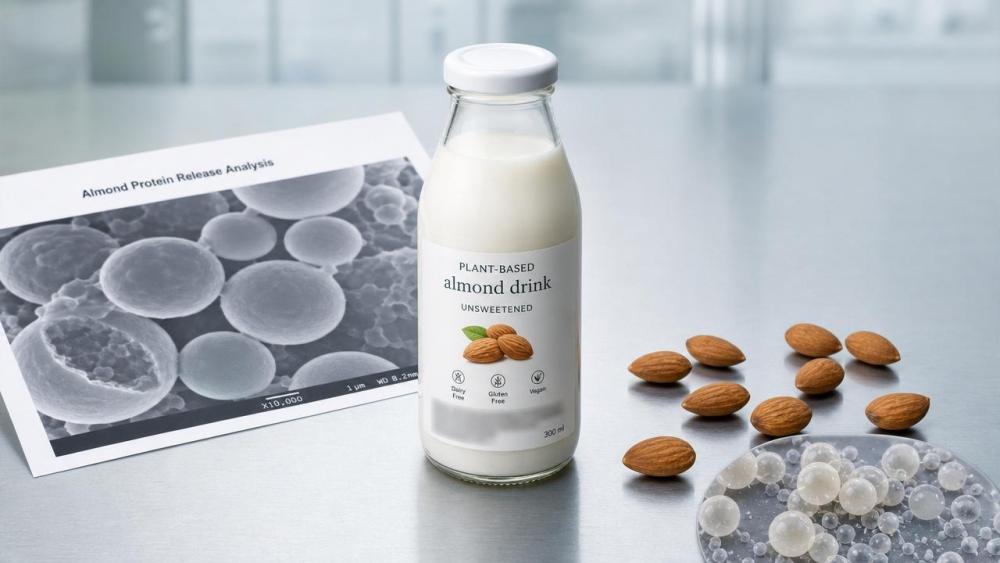
Conclusively, this recall underscores that allergen labeling compliance now extends beyond direct ingredient listing to include evaluation of functional delivery systems. It is best understood not as a sudden rule change, but as the operationalization of existing allergen control principles — applied rigorously to next-generation ingredient formats. Current practice should prioritize verification over assumption, especially where encapsulation intersects with known allergens.
Source: UK Food Standards Agency (FSA) recall notice, published 25 May 2026.
Note: Ongoing developments — including potential EFSA scientific opinion or FSA technical guidance — remain under observation.
Related News
- How to assess color stability from a natural food colors manufacturerOct 06, 2026Food Rheology Expert
- When does amino acid surfactant powder improve cleanser mildness?Oct 05, 2026Surfactant Chemistry Architect
- How to verify a cosmetic nanotechnology supplier's safety documentationOct 04, 2026Dr. Chloe Vance
- How rheological thickeners for shampoo affect suspension stabilityOct 03, 2026Prof. Elian Thorne
Related News
- 00
0000-00
How to assess color stability from a natural food colors manufacturer - 00
0000-00
When does amino acid surfactant powder improve cleanser mildness? - 00
0000-00
How to verify a cosmetic nanotechnology supplier's safety documentation - 00
0000-00
How rheological thickeners for shampoo affect suspension stability - 00
0000-00
How to assess recombinant collagen ingredients for cream stability
Industry Global
Weekly Insights
Stay ahead with our curated technology reports delivered every Monday.