





Effective July 1, 2026, China Customs has introduced tighter pre-shipment controls for exports of sodium lauroyl glutamate and cocamidopropyl betaine destined for the EU and UK. The change brings mandatory pre-shipment inspection and a Certificate of Conformity issued by CNCA-accredited bodies, while also extending lead times by 5-7 days. For exporters, buyers, manufacturers, and supply chain service providers linked to these two surfactants, the update matters because it directly affects shipment readiness, documentation, and delivery scheduling rather than remaining a purely regulatory issue.
What the new export requirement includes
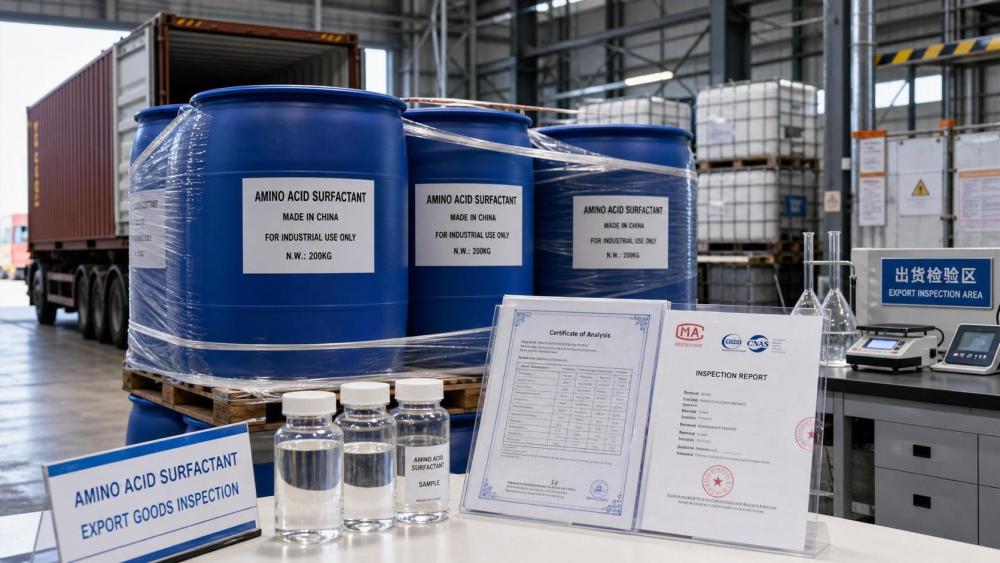
According to the information provided, the new requirement took effect on 2026-07-01 and applies to all exports of sodium lauroyl glutamate and cocamidopropyl betaine from China to EU and UK markets. China Customs now requires mandatory pre-shipment inspection (PSI) together with a Certificate of Conformity (CoC) issued by CNCA-accredited bodies.
The inspection scope covers IFRA Annex III allergen declarations, heavy metals including Pb, As, and Cd, as well as amine oxide residue. The information provided also states that the added compliance process is causing a 5-7 day lead time extension.
Where the immediate pressure is likely to appear
Export execution moves from documentation to timing risk
From an industry perspective, direct trading companies are likely to feel the first impact in shipment planning. The reason is straightforward: once PSI and CoC become mandatory, export readiness depends not only on having goods available but also on completing the required inspection and certification steps before dispatch. What deserves closer attention is whether existing order schedules, booking windows, and customer delivery commitments still match the new timeline.
Manufacturing and packing schedules may need tighter coordination
For processing and manufacturing businesses handling these surfactants, the likely impact sits around lot release, packing completion, and document preparation. Analysis shows that when inspections cover allergen declarations, heavy metals, and amine oxide residue, internal release timing and external shipment timing become more closely linked. Companies involved in production should therefore watch whether production completion dates still leave enough room for inspection before cargo handover.
EU and UK buyers may focus more closely on pre-export compliance visibility
For procurement teams and downstream buyers in the EU and UK, the issue is not only whether goods can be supplied, but whether pre-export compliance can be confirmed early enough in the transaction. Observably, any additional 5-7 day lead time can affect replenishment planning, contract timing, and communication with downstream customers. Buyers will likely pay closer attention to whether suppliers can clearly present PSI and CoC arrangements before shipment.
Logistics and service providers face a narrower scheduling margin
Supply chain service providers, including parties handling export coordination and shipment arrangements, may see pressure in booking alignment and handover timing. The practical concern is that a shipment delayed by inspection or certification can affect the sequence of documentation, customs handling, and departure planning. What deserves closer attention is whether service timelines are being recalibrated to reflect the new inspection step rather than assuming prior dispatch routines still apply.
Practical points companies should watch now
Confirm whether the affected product scope matches live orders
Companies with EU- or UK-bound business should first verify whether current or near-term shipments involve sodium lauroyl glutamate or cocamidopropyl betaine. This is a narrow but specific requirement, so the most immediate task is to identify exposed orders, contracts, and shipment queues rather than treating it as a broad rule for all surfactants.
Check inspection and CoC readiness before cargo is scheduled
The new rule links export release to PSI and a CoC issued by CNCA-accredited bodies. In practical terms, businesses should pay attention to whether the required inspection path and certification arrangements are already in place before shipment booking is finalized. This is especially relevant where delivery dates were set under older lead time assumptions.
Review documentation tied to the inspection scope
Because the stated inspection items include IFRA Annex III allergen declarations, heavy metals (Pb, As, Cd), and amine oxide residue, relevant teams should closely review whether supporting documentation and internal quality records are complete and aligned with what inspection bodies will check. Analysis shows that paperwork gaps can become a shipment timing issue once inspection is mandatory rather than optional.
Reset customer communication around lead time expectations
The reported 5-7 day lead time extension should be treated as an operational communication point. Exporters, account teams, and sourcing managers should pay attention to how order promises, shipping milestones, and delivery updates are explained to EU and UK counterparties. The key distinction is between the policy requirement itself and how consistently it can be reflected in day-to-day order execution.
Why this reads as more than a routine customs update
Analysis shows that this development is important less because it introduces a new headline restriction and more because it shifts compliance checks into the pre-shipment stage for two named surfactants going to two specific destination markets. That changes the point at which export risk materializes. Instead of a downstream documentation concern, compliance becomes a front-end condition for dispatch.
It is more appropriate to understand this as an operationally meaningful policy signal with immediate execution consequences, while still treating the broader industry implications with caution. Based on the information provided, it would be premature to generalize beyond the two listed products and the EU/UK destination scope. Even so, the rule is relevant enough that market participants should continue watching for clarifications in wording, implementation practice, or related customs communication.
How the market may need to interpret it for now
At this stage, the most balanced reading is that the update represents a concrete short-term change in export handling for affected shipments, and a longer-term signal that documentation, testing, and shipment timing are becoming more closely connected in this product flow. It should not yet be treated as proof of a wider regulatory shift beyond the products and markets named in the input, but it clearly warrants ongoing attention from companies with recurring EU- and UK-facing business in these materials.
Basis of this article and what still needs verification
This article is based on the user-provided news title, event date, and event summary. For this type of development, source categories that are commonly relevant include official customs notices, company disclosures, industry association updates, authoritative media reporting, and documents from standards or certification-related bodies. A specific official source link was not provided in the input, so the precise wording and any follow-up implementation details still require continued verification. The main areas to monitor next are whether further official clarification is issued on execution procedures, documentation expectations, or any adjustment to how the requirement is applied in practice.
Related News
- When does amino acid surfactant powder improve cleanser mildness?Oct 05, 2026Surfactant Chemistry Architect
- When to Seek Shampoo Formulation Support for Foam, Mildness, or Stability IssuesAug 07, 2026Surfactant Chemistry Architect
- FDA Tightens GRAS Data Requirements for Amino Acid SurfactantsJul 20, 2026Surfactant Chemistry Architect
- Amino Acid Surfactant Prices Rise on Coconut Oil TightnessJul 15, 2026Surfactant Chemistry Architect
Related News
- 00
0000-00
How to assess color stability from a natural food colors manufacturer - 00
0000-00
When does amino acid surfactant powder improve cleanser mildness? - 00
0000-00
How to verify a cosmetic nanotechnology supplier's safety documentation - 00
0000-00
How rheological thickeners for shampoo affect suspension stability - 00
0000-00
How to assess recombinant collagen ingredients for cream stability
Surfactant Chemistry Architect
Weekly Insights
Stay ahead with our curated technology reports delivered every Monday.