





Effective June 15, 2026, Mexico’s move to impose temporary special tariffs on 185 chemical products exported from China brings a direct rule change for cross-border chemical trade. Because the list explicitly includes amino acid surfactants such as sodium N-acyl glutamate and potassium cocoyl glycinate, as well as related precursor materials, the development matters not only to exporters but also to downstream detergent and baby care buyers in Latin America that rely on Chinese green surfactants for sourcing, delivery planning, and cost control.
What the Announced Tariff Change Confirms
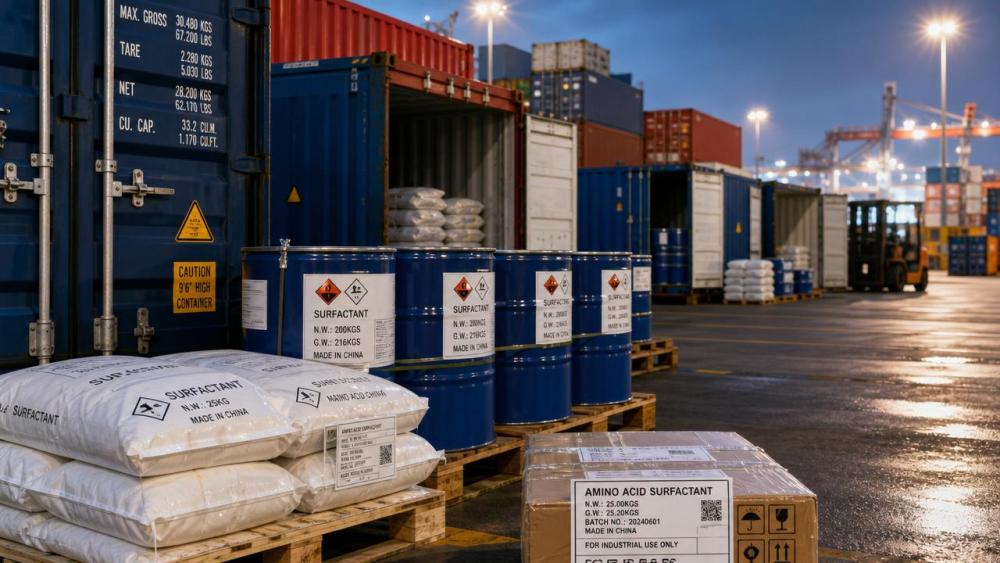
According to an announcement by Mexico’s Ministry of Economy on June 7, temporary special tariffs of 15% to 35% will apply from June 15, 2026, to 185 chemical products exported from China. The published list explicitly covers amino acid surfactants, including sodium N-acyl glutamate and potassium cocoyl glycinate, together with their precursor raw materials.
The confirmed commercial effect described in the event summary is that the measure will directly raise procurement costs and increase delivery uncertainty for downstream detergent and infant and child personal care brands in Latin America purchasing Chinese-origin green surfactants.
Where the Trade Rule Change May Be Felt First
Pressure on export-facing chemical suppliers
From an industry perspective, exporters dealing in the listed surfactants and precursor materials may be affected first because the tariff change directly alters the landed-cost structure of shipments into Mexico. The business impact is likely to center on quotation validity, order confirmation, contract execution, and delivery scheduling. What deserves closer attention is whether product descriptions, customs documentation, and shipment planning are aligned with the listed tariff scope.
Procurement teams face a narrower cost window
Buyers of detergent and baby care ingredients may feel the change through higher import costs and less predictable delivery timing. Analysis shows that procurement teams should pay closer attention to whether current sourcing plans, supplier allocations, and replenishment cycles still match the new tariff environment, especially where Chinese-origin amino acid surfactants were previously used as stable input materials.
Supply-chain and distribution coordination becomes more sensitive
For supply-chain service providers and channel participants, the issue is not only price but also execution risk. Observably, when tariffs apply to both finished surfactants and precursor materials, scheduling, customs processing, and handoff timing may become more sensitive across the chain. Companies involved in logistics support, inventory coordination, and customer delivery commitments should therefore watch for changes in trade documents, order timing, and shipment arrangements.
What Companies Should Track Now
Review whether affected product scope touches current business
Analysis shows that companies should first verify whether their exported, procured, or distributed products fall within the announced list, including both amino acid surfactants and related precursor materials. This is a practical screening step for sales, sourcing, and compliance teams before making assumptions about exposure.
Check trade paperwork and technical product descriptions
What deserves closer attention is the consistency of product names, technical specifications, and trade documents used in quotes, contracts, shipping papers, and customer files. Where tariff treatment depends on how products are identified within the announced scope, clear and consistent documentation becomes a more immediate operational concern.
Reassess procurement timing and delivery commitments
From an execution perspective, downstream buyers and exporters may need to revisit purchase timing, shipment windows, and customer delivery promises. The event summary confirms rising cost and delivery uncertainty, but it does not provide detailed enforcement practice, so this should be treated as a monitoring point rather than a confirmed settled outcome for every transaction pattern.
Continue following official wording and market response
It is more appropriate to understand this stage as a live trade-rule development that already has an effective date but may still require close reading of official wording and subsequent implementation signals. Companies should therefore keep watching for clarifications in official expressions, customer procurement requirements, and any updates reflected in tender or purchasing documents.
How This Development Is Best Understood
Observably, this is not just a pricing story; it is a trade-rule signal with immediate relevance for product eligibility, sourcing discipline, and delivery management. Analysis shows that the inclusion of named amino acid surfactants and precursor materials makes the development especially relevant to businesses positioned between green ingredient supply and downstream formulation demand. At the same time, it would be premature to treat all market consequences as fixed, because the input provided does not include detailed enforcement practice or broader market feedback.
A Practical Reading for the Market
At this stage, the announcement is best read as an already effective policy change with direct implications for cost and shipment certainty in the affected product segment. A neutral industry reading is that companies should neither overstate the disruption nor ignore it: the most rational approach is to treat it as a concrete trade adjustment that requires closer review of exposure, documentation, procurement planning, and execution conditions.
Basis of This Article and What Still Needs Verification
This article is generated from the user-provided news title, event date, and event summary. For developments of this kind, commonly relevant source types include official government announcements, trade or customs authority releases, industry association updates, standards-related documents, and reporting by established business or industry media.
No specific official source link was provided in the input, so the exact official link remains to be verified on an ongoing basis. Observably, the areas that still require continued checking include detailed implementation language, any later clarification of scope, changes in procurement or tender documents, market feedback from affected participants, and how companies adjust execution in response to the tariff measure.
Related News
- When does amino acid surfactant powder improve cleanser mildness?Oct 05, 2026Surfactant Chemistry Architect
- When to Seek Shampoo Formulation Support for Foam, Mildness, or Stability IssuesAug 07, 2026Surfactant Chemistry Architect
- FDA Tightens GRAS Data Requirements for Amino Acid SurfactantsJul 20, 2026Surfactant Chemistry Architect
- Amino Acid Surfactant Prices Rise on Coconut Oil TightnessJul 15, 2026Surfactant Chemistry Architect
Related News
- 00
0000-00
How to interpret active matter on a surfactant specification sheet - 00
0000-00
What Quality Checks Should You Run on Fragrance Ingredient Suppliers? - 00
0000-00
How to assess a flavor chemistry manufacturer's batch consistency - 00
0000-00
What drives fragrance ingredients price changes in bulk orders? - 00
0000-00
How to assess a food antioxidants distributor’s traceability practices
Surfactant Chemistry Architect
Weekly Insights
Stay ahead with our curated technology reports delivered every Monday.