





On July 5, 2026, the US FDA issued a formal GRAS reaffirmation letter tied to high-purity hyaluronic acid produced through microbial fermentation, sending a clear regulatory signal to dietary supplement and functional food participants working across sourcing, manufacturing, export documentation, and compliance review. The development deserves attention not simply because a safety conclusion was restated, but because the acceptance criteria named in the letter are directly relevant to how suppliers present process control, product specification, and technical evidence in commercial and regulatory settings.
What the FDA letter confirms
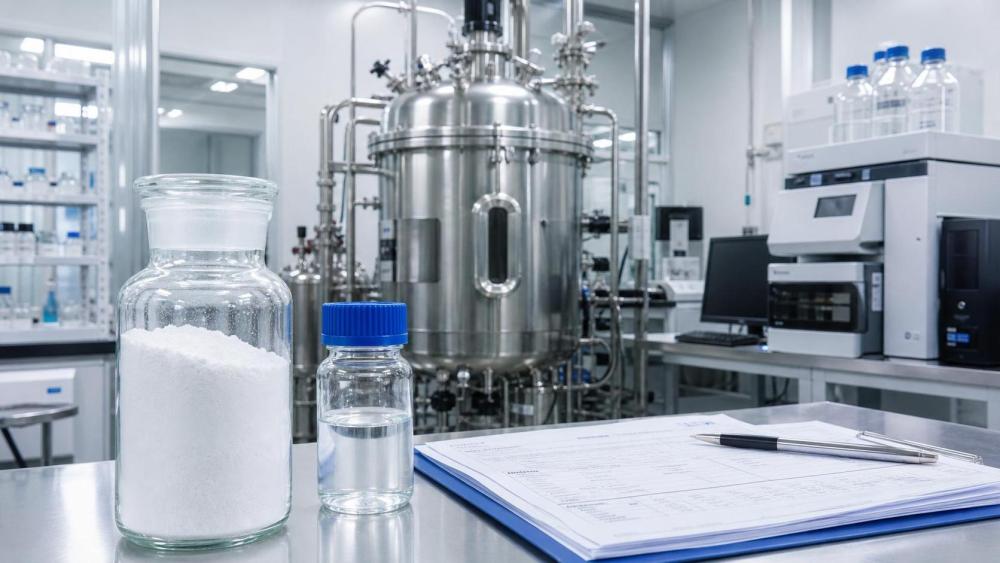
According to the provided event summary, the FDA Office of Food Additive Safety issued a formal GRAS Notice response for GRN No. 1052 concerning hyaluronic acid with a purity of at least 95% produced via recombinant Bacillus subtilis fermentation. The notice reaffirms the safety of this ingredient for use in dietary supplements and functional foods.
The same summary states that the letter validates current Chinese and Korean manufacturing processes related to this production route. It also explicitly identifies two acceptance points: stability under gastric pH and the absence of endotoxin carryover.
Where the compliance signal may travel across the chain
For ingredient producers and contract manufacturers
From an industry perspective, these companies may be affected first because the FDA letter points attention to product purity, fermentation route, and process-related safety controls. In practical terms, the impact is likely to center on technical dossiers, batch specifications, manufacturing descriptions, and the way supporting evidence is organized for customers or downstream regulatory review.
What deserves closer attention is whether existing product files clearly align with the elements explicitly cited in the letter, especially around gastric pH stability and control of endotoxin carryover. That does not create a new published rule by itself in the input provided, but it does sharpen the compliance focus around how this ingredient is substantiated.
For buyers, brand owners, and formulation teams
Procurement and formulation functions may also feel the effect because supplier selection for hyaluronic acid used in dietary supplements and functional foods can become more documentation-driven after a reaffirmation of this kind. Analysis shows that buyers may need to look more closely at purity thresholds, fermentation route descriptions, and the completeness of technical support materials when comparing suppliers.
The commercial implication is less about headline availability and more about qualification discipline: purchasing teams may need to confirm whether supplier files, product claims support, and quality records are consistent with the acceptance logic reflected in the FDA communication.
For exporters and cross-border supply teams
Observably, the reference to current Chinese and Korean manufacturing processes matters for companies involved in export trade and cross-border supply arrangements. The immediate relevance is not that every transaction condition has changed, but that regulatory-facing product narratives may now be expected to match the validated production context more precisely.
That means export documentation, product descriptions, specification sheets, and customer-facing compliance materials may require tighter alignment. Supply chain service providers and trading firms should also watch whether downstream customers begin requesting more explicit proof tied to purity, fermentation origin, and safety-related process controls.
What companies should review now
Check whether technical files match the accepted scope
Analysis shows that companies handling this ingredient should review whether their technical materials clearly describe the same core scope reflected in the event summary: at least 95% purity, microbial fermentation using recombinant Bacillus subtilis, and use in dietary supplements and functional foods. If commercial materials describe the product more broadly than the accepted scope, that gap may become a practical compliance issue in customer review or market access discussions.
Pay closer attention to evidence around the cited criteria
The event summary specifically names gastric pH stability and absence of endotoxin carryover. For that reason, test reports, quality summaries, and supporting technical documents in these areas may receive greater scrutiny. The input does not provide an enforcement protocol or filing checklist, so it is more appropriate to treat this as a priority review point rather than a confirmed new execution standard.
Prepare for tighter customer and audit questions
What deserves closer attention is how this reaffirmation may influence buyer questionnaires, qualification forms, and audit discussions. Companies may need to ensure that certificates, specifications, process summaries, and traceability records can support consistent answers where customers ask how the ingredient is made and how process-related safety concerns are controlled.
Watch for downstream wording changes in commercial documents
Observably, one practical area to monitor is whether tender documents, supplier approval templates, product requirement sheets, or import review materials begin using more precise wording around fermentation origin, purity threshold, or supporting safety evidence. The provided information does not confirm that such changes have already occurred, so this remains a live monitoring point rather than an established market outcome.
How this should be read at this stage
From an industry perspective, this development is better understood as an execution signal with immediate documentation relevance than as a standalone market expansion event. The formal reaffirmation matters because it ties safety acceptance to identifiable technical criteria and to a defined manufacturing route, which can influence how industry participants frame compliance and supplier qualification.
At the same time, analysis shows that the broader commercial effect still depends on how customers, auditors, and downstream market gatekeepers apply this signal in practice. The event therefore sits between a confirmed regulatory milestone and a wider compliance trend that still requires observation.
Why the market should keep tracking it
The industry significance of this event lies in its specificity. A formal FDA GRAS reaffirmation for high-purity hyaluronic acid from microbial fermentation does more than repeat a safety position; it highlights the type of evidence and product definition that may matter most in review, procurement, and trade communication. For companies already active in this space, the immediate task is not to assume a fully changed rulebook, but to confirm that their documents, claims support, and supplier controls can stand up to closer technical scrutiny.
It is more appropriate to understand this update as a grounded regulatory signal that has already landed at the documentation and qualification level, while its wider impact on trade practice, customer requirements, and market execution still needs to be observed carefully.
Basis of this article
This article is based on the user-provided news title, event date, and event summary. The specific official source link was not provided in the input, so the underlying document and any later related communications still need to be verified on an ongoing basis.
For events of this type, relevant source categories typically include official regulatory announcements, notices from competent authorities, trade or customs information, industry association updates, standard-setting documents, and reporting by authoritative media. Further observation should focus on any later clarification of regulatory wording, certification or compliance interpretation, procurement document changes, industry feedback, and how companies implement the signal in actual supply and delivery practice.
Related News
- Galderma Marks 30 Years of Hyaluronic Acid Injectable InnovationOct 24, 2026Cosmeceutical Formulator
- Sihuan Pharmaceutical’s Two Self-Developed Aesthetic Products Approved in Hong KongOct 21, 2026Cosmeceutical Formulator
- Does Low-Molecular-Weight Hyaluronic Acid Work Better in Leave-Ons?Oct 23, 2026Cosmeceutical Formulator
- How high purity actives for serums reduce formula instability riskSep 30, 2026Cosmeceutical Formulator
Related News
- 00
0000-00
2026 Osong Cosmetics and Beauty Expo Concludes in South Korea - 00
0000-00
How to compare cosmetic active compounds by their cost in use - 00
0000-00
HKBU Showcases DR2 Following NMPA Registration as a New Cosmetic Ingredient - 00
0000-00
How to use ingredient market insights to forecast sourcing costs - 00
0000-00
Galderma Marks 30 Years of Hyaluronic Acid Injectable Innovation
Cosmeceutical Formulator
Weekly Insights
Stay ahead with our curated technology reports delivered every Monday.