





On June 26, 2026, Brazil's health regulator ANVISA announced a new review route that materially changes the registration timetable for certain baby and infant personal care products using microencapsulated fragrances. For formulations that meet the ISO 16128 natural content threshold of at least 90% and include complete release kinetics data, the approval cycle is being reduced from an average of 112 days to 22 working days. The update also matters beyond registration timing alone, because it affects dossier preparation, laboratory documentation, sourcing decisions, and export planning for fragrance suppliers, product manufacturers, testing providers, and companies serving the Brazil market.
What ANVISA Has Formally Announced
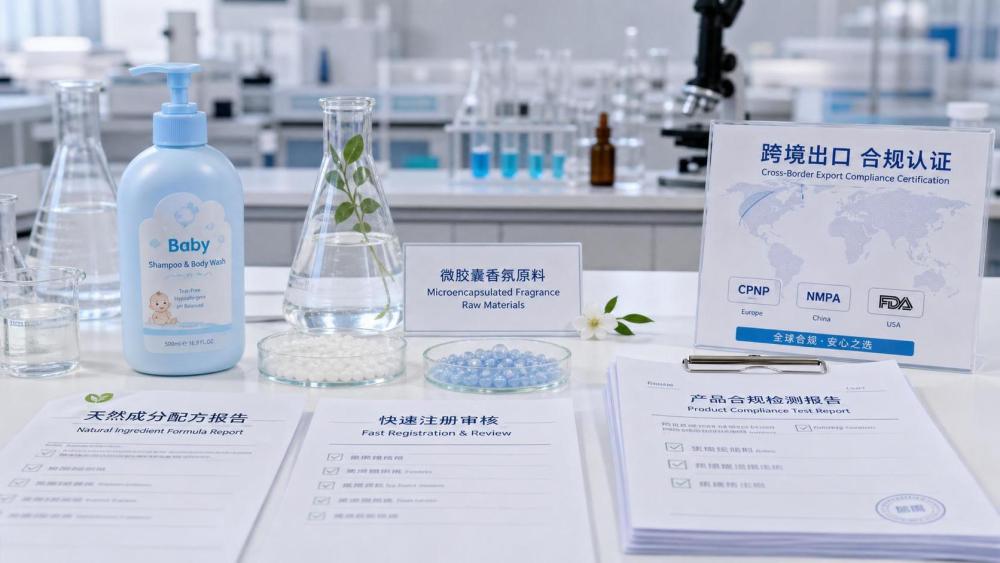
According to the information provided, ANVISA launched the “Fragrance FastTrack” program on June 26, 2026. The program applies to microencapsulated fragrances used in baby and infant wash and care products when two stated conditions are met: the fragrance must have natural content of at least 90% under ISO 16128, and its release kinetics data must be complete.
Within that route, the registration review period has been shortened from a previous average of 112 days to 22 working days. The provided information also states that this channel accepts in vitro skin penetration reports issued by China CMA-accredited laboratories.
Where the Operational Impact Is Likely to Appear
For exporters supplying the Brazil baby care market
From an industry perspective, exporters are likely to feel the impact first in registration scheduling and shipment planning. A shorter review window can change how companies sequence dossier submission, launch timing, and customer delivery commitments. What deserves closer attention is whether internal export documentation, technical files, and supporting test reports are already organized around the fast-track conditions rather than the previous review timeline.
For fragrance and ingredient sourcing teams
Observably, procurement teams may need to pay closer attention to whether a microencapsulated fragrance can actually support the fast-track pathway. The practical issue is not only price or supply continuity, but also whether the ingredient can demonstrate ISO 16128 natural content at or above 90% and whether release kinetics data are complete enough for use in registration materials. This can make supplier qualification and document collection more time-sensitive than before.
For manufacturers preparing product registrations
Analysis shows that manufacturers of baby and infant wash and care products may need to adjust dossier assembly workflows. The rule change is relevant because faster review does not remove the need to match the submission package to stated eligibility conditions. The main operational impact is likely to fall on regulatory affairs, formulation documentation, and coordination with upstream ingredient providers and test laboratories.
For testing and compliance service providers
The acceptance of in vitro skin penetration reports from China CMA-accredited laboratories is a notable compliance signal for testing service providers and companies relying on external laboratory support. It may affect laboratory selection, report preparation, and cross-border document use. At the same time, it is more appropriate to understand this as a defined acceptance point within the provided event description, not as a broader conclusion about all test items or all product categories.
What Companies Should Review Now
Check whether the fast-track entry conditions are actually met
Companies should first verify whether the relevant microencapsulated fragrance fits the stated scope and whether the ISO 16128 natural content threshold and release kinetics documentation are already in place. Analysis shows that the benefit of a shorter review cycle depends on eligibility, so incomplete technical substantiation could limit the practical value of the new route.
Reassess dossier readiness and supporting reports
What deserves closer attention is the completeness and consistency of technical documents used for registration. Where companies plan to rely on in vitro skin penetration reports from China CMA-accredited laboratories, they should review whether report format, scope, and accompanying documentation align with the submission strategy. The provided information confirms acceptance of such reports within this channel, but it does not provide broader procedural detail, so execution should be handled cautiously.
Adjust procurement and launch timing carefully
Observably, a reduction from 112 days to 22 working days can influence procurement cycles, production scheduling, and customer delivery expectations. Even so, companies should avoid treating the shorter review period as an unconditional outcome across all products. It is more appropriate to build planning scenarios around eligibility, document readiness, and any subsequent clarification in official wording or implementation practice.
Monitor follow-on interpretation in market documents
From an industry perspective, businesses should watch for how this change is reflected in later compliance guidance, customer requirements, tender documents, and supplier qualification requests. The event description establishes the fast-track opening and its stated conditions, but it does not provide the full downstream execution framework. That makes follow-up monitoring a practical compliance task rather than a formality.
How This Signal Should Be Read
Analysis shows that this update is best read as a concrete execution signal rather than a general policy mood shift. The announced reduction in review time, the defined technical thresholds, and the stated acceptance of reports from China CMA-accredited laboratories together point to an operationally relevant change for eligible products. At the same time, observably, the market still needs to watch how consistently the pathway is applied in practice, how documentation expectations are interpreted, and whether later clarifications reshape submission behavior.
Why the Market Should Stay Measured
The significance of this development lies in its direct effect on registration timing and document strategy for a specific product and ingredient scenario. It should not be overstated as a blanket shift for all personal care products or all fragrance applications. At present, it is more appropriate to understand the announcement as a targeted rule implementation with immediate practical value for qualified submissions, while keeping attention on how the requirements are executed in real workflows.
Basis of This Article
This article is generated from the user-provided news title, event date, and event summary. For events of this type, relevant source categories typically include regulator announcements, official releases, trade or customs authority updates, industry association materials, standards documents, and reporting by established sector media. A specific official source link was not provided in the input, so the exact original publication path still requires further verification. Follow-up observation should focus on implementation details, compliance interpretation, documentation practice, changes in tender or customer requirements, industry feedback, and how companies execute under the new pathway.
Related News
- How to Choose Fragrance Ingredients for Diffusers That Stay Stable in Oil BasesAug 04, 2026Aromatics & Perfumery Fellow
- How to Choose Aroma Ingredients for Candles Based on Scent Throw and Wax CompatibilityAug 03, 2026Aromatics & Perfumery Fellow
- Home Diffuser Series Technical Guide for Fragrance BuyersJul 21, 2026Aromatics & Perfumery Fellow
- EU Bans More Microencapsulated Fragrance AllergensJul 16, 2026Aromatics & Perfumery Fellow
Related News
- 00
0000-00
Bairun Nine-Month Profit Up 20.4% to RMB 662m; Flavors and Fragrances Also Grow - 00
0000-00
How biomimetic peptides work in anti-aging skincare formulations - 00
0000-00
2026 Osong Cosmetics and Beauty Expo Concludes in South Korea - 00
0000-00
How to compare cosmetic active compounds by their cost in use - 00
0000-00
HKBU Showcases DR2 Following NMPA Registration as a New Cosmetic Ingredient
Aromatics & Perfumery Fellow
Weekly Insights
Stay ahead with our curated technology reports delivered every Monday.