





Effective 1 May 2026, the Government of India introduced a temporary zero-tariff regime for 87 products—including pharmaceutical excipients and cosmetic intermediates—aimed at accelerating import clearance and reducing input costs for domestic formulation manufacturers in the pharma and personal care sectors.
Policy Rollout Confirmed for May 2026
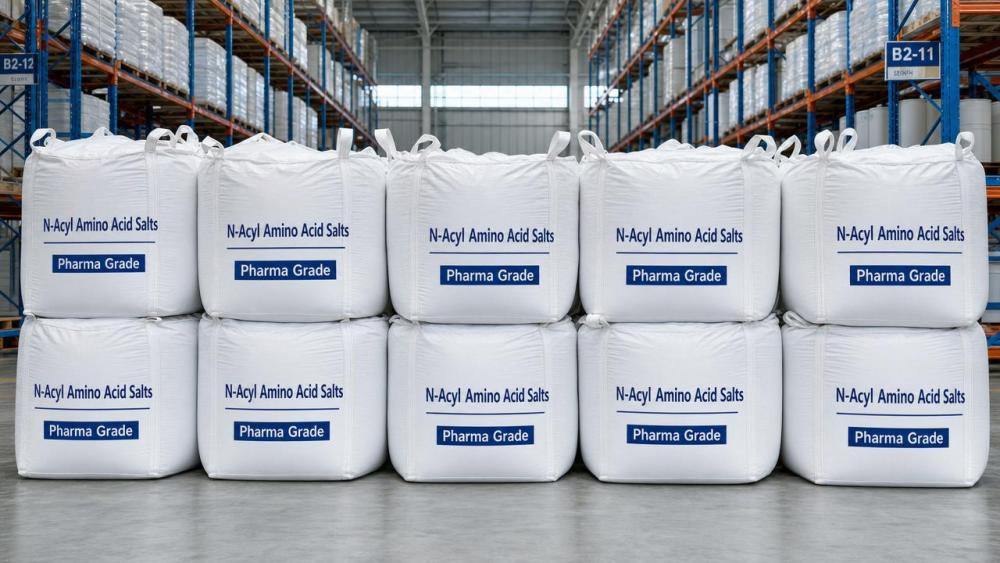
Starting in May 2026, India implemented a three-month duty-free import window for 87 designated chemical products. The list explicitly includes N-acyl amino acid salts, a category encompassing sodium cocoyl glycinate and other amino acid–based surfactants. This measure applies to imports destined for use in pharmaceutical ointment bases and mild skincare formulations targeting sensitive skin. The initiative is designed to lower landed costs and expedite customs clearance, with an anticipated 40% reduction in order-to-delivery lead time for qualifying shipments.
Impact Across Supply Chain Roles
Export-oriented trading companies
These firms gain immediate cost and speed advantages when shipping eligible amino acid surfactants to India. Faster customs processing reduces demurrage exposure and improves cash flow predictability—but requires strict adherence to HS code classification and origin documentation to qualify for the tariff exemption.
Formulators and ingredient buyers
Pharmaceutical and cosmetic manufacturers sourcing raw materials for final product assembly now face revised procurement timelines and budgeting assumptions. The tariff suspension lowers total landed cost per kilogram, potentially enabling reformulation or margin improvement—but only if suppliers can reliably meet Indian regulatory labeling and traceability requirements under the new regime.
h3>Contract manufacturers and toll processorsEntities engaged in blending, micronization, or packaging of amino acid surfactants must verify whether their value-added services fall within India’s definition of ‘import for further processing’. Clarification on whether tolling arrangements retain eligibility is pending official guidance.
Logistics and compliance service providers
Custody, documentation, and customs brokerage partners need updated tariff databases and trained staff to identify and validate N-acyl amino acid salt entries against the official 87-product list. Misclassification risks disqualification—and potential penalties—under India’s real-time customs monitoring systems.
Key Operational Considerations for Exporters
Verify product-specific HS code alignment
Eligibility hinges on precise Harmonized System classification—not just chemical nomenclature. Exporters must cross-check their declared HS codes against India’s published list, as ‘sodium cocoyl glycinate’ may be classified under multiple subheadings depending on purity, concentration, and accompanying additives.
Prepare for accelerated delivery planning
With projected 40% shorter order fulfillment cycles, procurement teams should revise safety stock levels, forecast demand more dynamically, and coordinate closely with Indian importers on warehouse readiness and local regulatory documentation (e.g., CDSCO registration support letters, where applicable).
Confirm documentation validity for fast-track clearance
Although tariffs are suspended, standard import requirements—including Certificate of Origin, GMP-related declarations, and full technical specifications—remain mandatory. Incomplete or non-standard documentation will delay release, negating the benefit of zero duty.
Strategic Implications for Global Suppliers
Analysis shows this is not merely a short-term fiscal stimulus but a signal of India’s growing focus on import substitution through selective regulatory facilitation. From an industry perspective, the inclusion of N-acyl amino acid salts—a high-performance, biodegradable alternative to traditional anionic surfactants—reflects tightening environmental and safety expectations in downstream applications. What deserves closer attention is how quickly Indian regulators may formalize these exemptions into longer-term preferential treatment, especially given rising global scrutiny of surfactant biocompatibility in dermal and mucosal contact products. It is more appropriate to understand this as a test case for green chemistry incentives within India’s broader pharmaceutical and cosmetics regulatory modernization agenda.
What This Means for Industry Stakeholders
This temporary tariff suspension represents a targeted opportunity—not a structural shift—for exporters of amino acid–based surfactants. Its significance lies less in duration than in precedent: it marks the first time India has explicitly prioritized this class of biosourced, low-irritancy surfactants in trade policy. For global suppliers, success depends on agility in documentation, precision in classification, and responsiveness to local regulatory nuance—not just price competitiveness.
Source Attribution & Monitoring Guidance
This article synthesizes information provided in the user-submitted title, event date (1 May 2026), and summary. Specific official source links were not provided in the input and should be verified continuously. Stakeholders are advised to monitor updates from the Indian Ministry of Commerce and Industry, the Directorate General of Foreign Trade (DGFT), and the Central Drugs Standard Control Organization (CDSCO) for implementation guidelines, list amendments, and post–3-month policy decisions. Ongoing observation is recommended for clarification on customs valuation rules, certificate-of-origin verification protocols, and sectoral feedback from Indian formulators regarding quality acceptance thresholds.
Related News
- 2026 Osong Cosmetics and Beauty Expo Concludes in South KoreaOct 26, 2026Prof. Elian Thorne
- How to compare cosmetic active compounds by their cost in useOct 26, 2026Prof. Elian Thorne
- HKBU Showcases DR2 Following NMPA Registration as a New Cosmetic IngredientOct 25, 2026Cosmeceutical Formulator
- How to use ingredient market insights to forecast sourcing costsOct 25, 2026Prof. Elian Thorne
Related News
- 00
0000-00
2026 Osong Cosmetics and Beauty Expo Concludes in South Korea - 00
0000-00
How to compare cosmetic active compounds by their cost in use - 00
0000-00
HKBU Showcases DR2 Following NMPA Registration as a New Cosmetic Ingredient - 00
0000-00
How to use ingredient market insights to forecast sourcing costs - 00
0000-00
Galderma Marks 30 Years of Hyaluronic Acid Injectable Innovation
Industry Global
Weekly Insights
Stay ahead with our curated technology reports delivered every Monday.