





Why do cosmetic ingredient compliance standards matter so much now?
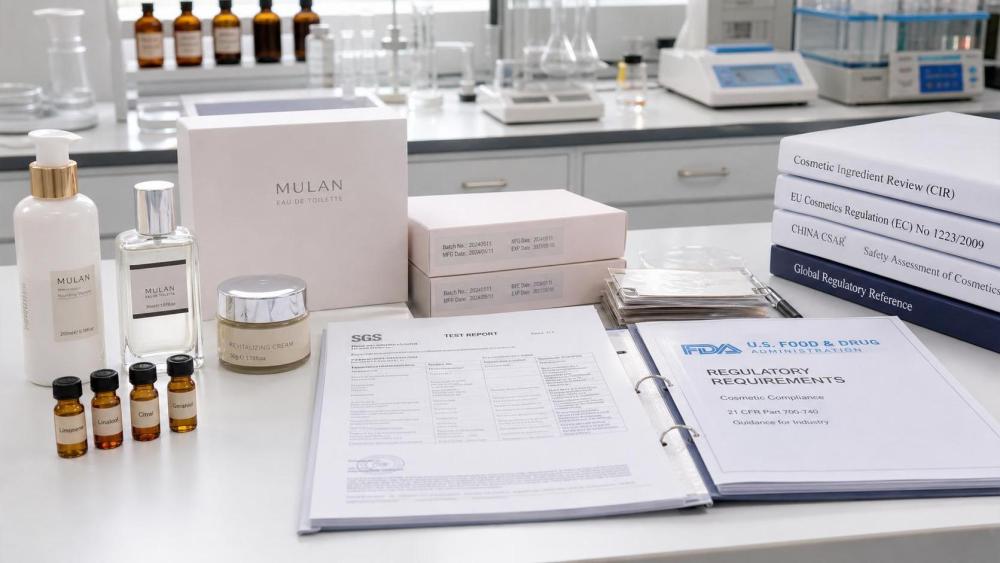
Cosmetic ingredient compliance standards are no longer a back-office issue. They shape launch timing, label accuracy, fragrance use, and long-term brand credibility.
In practice, most regulatory problems start earlier than expected. They often begin with ingredient sourcing, incomplete supplier files, or unclear fragrance restrictions.
That is why IFRA and FDA basics deserve close attention. They answer different questions, yet both affect whether a formula is commercially ready.
For companies working across beauty, fragrance, and broader FMCG categories, the challenge is even more connected. A single portfolio may include surfactants, essential oils, preservatives, and high-end actives.
This cross-category view is where FFAI’s industry lens becomes useful. Its coverage of flavors, fragrances, preservatives, and cosmetic actives reflects how compliance decisions rarely sit in isolation.
A fragrance allergen issue can affect claims. A preservative question can affect market access. An active ingredient dossier can change the acceptable risk profile of the entire formula.
So when people search for cosmetic ingredient compliance standards, they usually want more than definitions. They want a usable framework for review, approval, and release.
IFRA and FDA basics: are they regulating the same thing?
Not exactly. This is one of the most common points of confusion.
IFRA mainly addresses fragrance safety through standards developed from toxicological assessment and industry practice. Its focus is fragrance materials and how they may be used in specific product categories.
FDA, by contrast, oversees cosmetics under U.S. law. That includes labeling, adulteration, misbranding, color additive rules, and overall product safety expectations.
A simple way to read this is: IFRA helps determine whether a fragrance composition is used within accepted safety limits, while FDA addresses whether the finished cosmetic is legally compliant in the U.S. market.
The difference matters because a formula can meet one expectation and still fail another. An IFRA-conforming fragrance does not automatically make the finished product FDA-compliant.
The reverse is also true in practical review. A product label may appear acceptable, yet its fragrance load or category use may conflict with the latest IFRA standard.
This is why cosmetic ingredient compliance standards should be checked at both ingredient and formula level, not only at the final packaging stage.
A quick comparison helps
That table is basic, but it captures the operational split. Cosmetic ingredient compliance standards work best when both sides are reviewed together.
When is an IFRA certificate enough, and when is it clearly not?
An IFRA certificate is important, but it is not a complete compliance file. It only answers a limited, although critical, part of the fragrance safety question.
It is usually enough to confirm that a fragrance compound can be used up to a certain level in a named product category. That helps during formulation and internal release checks.
It is not enough when reviewing broader cosmetic ingredient compliance standards. You still need to verify ingredient nomenclature, allergens, label impact, claims alignment, and any market-specific restrictions.
A common example is a body mist using a fragrance approved under one IFRA category, while the actual product exposure pattern fits another category with a lower limit.
Another example involves hybrid products. A scented scalp treatment may involve fragrance review, active ingredient review, and claim review at the same time.
This is where broader ingredient intelligence matters. FFAI often tracks how fragrance chemistry, surfactant systems, and premium cosmetic actives interact in commercial formulas, not as isolated materials.
That kind of integrated view is useful because compliance risk often appears at the interfaces between functions, such as fragrance plus preservation, or active delivery plus skin exposure.
A practical review checklist
- Confirm the IFRA version and issue date.
- Match the product to the correct IFRA category.
- Check maximum use level against actual fragrance dosage.
- Review whether fragrance allergens affect labeling.
- Verify the supplier name, formula reference, and document traceability.
- Check whether claims or product format create extra FDA concerns.
What does FDA expect when reviewing cosmetic ingredient compliance standards?
FDA does not pre-approve most cosmetic ingredients or finished cosmetics before marketing, but that does not mean the standard is light.
The responsibility sits with the company placing the product on the market. The product must not be adulterated or misbranded, and its safety must be supported.
In real workflows, the review usually centers on several points: ingredient legality, contamination risk, color additive status, labeling accuracy, and whether claims push the product toward drug territory.
This last point is especially important for anti-aging products. High-end actives like peptides, fermented extracts, or Pro-Xylane-inspired systems may be marketable, but claims need discipline.
Saying a formula improves the appearance of fine lines is one thing. Saying it rebuilds skin structure or treats a medical condition creates a different regulatory profile.
For cosmetic ingredient compliance standards, documentation quality matters as much as the ingredient itself. A technically acceptable raw material can still create problems if records are inconsistent.
More mature review teams usually maintain a dossier that connects specification, COA, allergen data, safety rationale, label copy, and change control in one traceable path.
Documents that usually deserve early review
Where do teams usually get cosmetic ingredient compliance standards wrong?
The most frequent mistake is treating compliance as a single document request. Real compliance is a chain of decisions, not one certificate.
Another weak point is ingredient change control. A fragrance reformulation, preservative source switch, or active purity shift may look minor, yet the compliance impact can be large.
There is also a timing problem. Reviews often happen too late, after artwork, claims, or launch materials are already fixed.
In actual operations, the stronger approach is to review cosmetic ingredient compliance standards at three points: raw material onboarding, formula lock, and pre-market release.
Some teams also underestimate cross-border complexity. IFRA and FDA basics are essential, but export products may also need alignment with EU fragrance allergen expectations or CPNP-related preparation.
That wider perspective aligns with FFAI’s strategic intelligence model. It follows not only ingredient science, but also the market and regulatory signals that shape formula viability.
In other words, cosmetic ingredient compliance standards should support business continuity, not merely audit survival.
Typical red flags worth escalating
- Outdated IFRA certificate with no current revision check.
- Claims that imply treatment, repair, or physiological change.
- Supplier documents using inconsistent ingredient names.
- No clear impurity limits for sensitive actives or botanical extracts.
- Late discovery that color additives lack correct approval status.
How should a company build a workable review process?
A workable process is usually simpler than people expect, but it must be disciplined. Cosmetic ingredient compliance standards become manageable when responsibilities and trigger points are clear.
Start with ingredient classification. Separate fragrance materials, preservatives, surfactants, colorants, and cosmetic actives because each group raises different review questions.
Then define document gates. No raw material should move forward without core identity, specification, traceability, and safety support.
Next, connect formula review to intended market and product format. A rinse-off cleanser, leave-on serum, and fine fragrance product may all use similar materials, but exposure assumptions differ.
Finally, keep a structured update cycle. Standards evolve, supplier formulas change, and claims drift over time. Cosmetic ingredient compliance standards need maintenance, not one-time approval.
For organizations managing complex ingredient portfolios, external intelligence can support this process. FFAI’s focus on sensory chemistry, preservative systems, and premium actives reflects the kind of joined-up monitoring that modern product pipelines need.
The practical goal is straightforward: reduce rework, prevent avoidable nonconformity, and make market-readiness easier to defend.
A sensible next-step framework
- Map all cosmetic ingredients by function and market destination.
- Review fragrance materials against current IFRA limits.
- Check FDA-facing risks in labels, claims, and color additive use.
- Build a document matrix for each raw material and finished product.
- Set review triggers for reformulation, supplier change, or claim updates.
At a basic level, IFRA and FDA answer different compliance questions. In daily work, however, both shape whether a cosmetic formula is safe, supportable, and ready for market.
The best way to handle cosmetic ingredient compliance standards is to treat them as an integrated review system. That means checking fragrance conformity, legal fit, documentation strength, and claim discipline together.
The next useful move is to audit one active project from raw material file to final label. That exercise usually reveals where standards are clear, where records are weak, and where process updates are overdue.
Related News
- How to verify a cosmetic nanotechnology supplier's safety documentationOct 04, 2026Dr. Chloe Vance
- How to set a control sensory flavour standard for panel consistencySep 27, 2026Dr. Chloe Vance
- How to verify compliance documents for cosmetic active compoundsSep 19, 2026Dr. Chloe Vance
- How to verify food grade flavor formulation ingredients for safetySep 18, 2026Dr. Chloe Vance
Related News
- 00
0000-00
Bairun Nine-Month Profit Up 20.4% to RMB 662m; Flavors and Fragrances Also Grow - 00
0000-00
How biomimetic peptides work in anti-aging skincare formulations - 00
0000-00
2026 Osong Cosmetics and Beauty Expo Concludes in South Korea - 00
0000-00
How to compare cosmetic active compounds by their cost in use - 00
0000-00
HKBU Showcases DR2 Following NMPA Registration as a New Cosmetic Ingredient
Dr. Chloe Vance
Weekly Insights
Stay ahead with our curated technology reports delivered every Monday.