





On 10 July 2026, Ningbo Port began applying a stricter hazardous goods declaration requirement to supercritical CO₂ essential oil extracts, including products such as lavender, tea tree, and rosemary extracts. The change matters because it shifts these shipments into a clearer dangerous goods compliance path at the port level, affects export documentation before container gate-in, and can directly influence shipment timing for exporters, buyers, logistics operators, and companies managing delivery commitments.
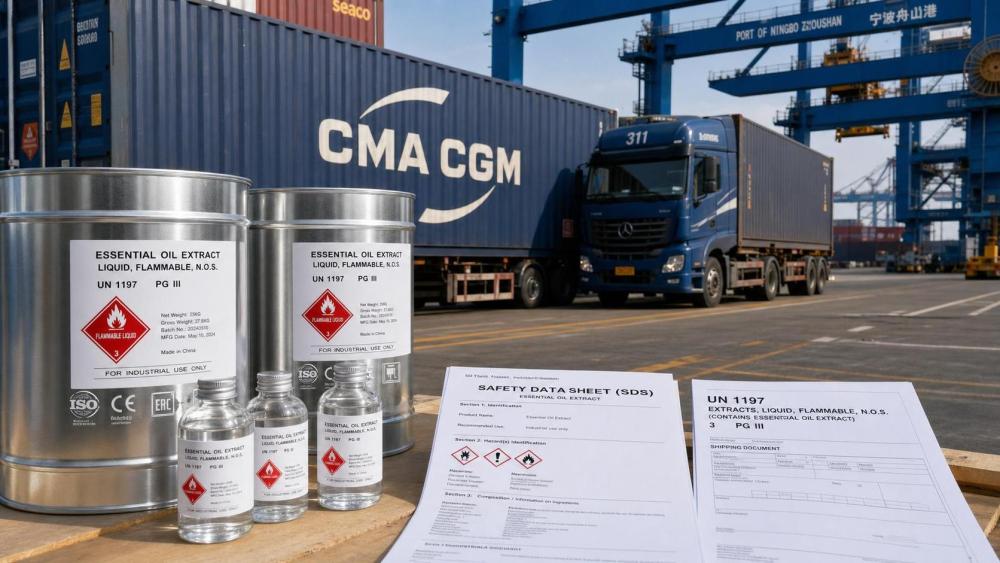
Ningbo port now applies Class 3 declaration to these extract shipments
The confirmed change is that, effective 10 July 2026, Ningbo Port requires all supercritical essential oil shipments to be declared as Class 3 flammable liquids under UN 1224/1225. This applies even where the concentration is diluted below 20%, which reverses prior practice.
Exporters must now provide an SDS carrying GHS hazard pictograms, the relevant UN number, and confirmation of transport category before containers are allowed to gate in. If the documentation is incomplete, shipments may face clearance delays of up to 48 hours.
Where the new requirement is likely to be felt first
Export scheduling moves closer to document readiness
From an industry perspective, exporters handling supercritical CO₂ extracts are the first group affected because the new rule ties container gate-in more closely to hazardous goods paperwork. The main impact is on pre-shipment preparation, document review, and booking coordination. What deserves closer attention is whether internal export files already reflect the required Class 3 declaration, UN number, and transport category confirmation before cargo reaches the port.
Procurement and buyers may see timing risk in fulfillment
Buyers and procurement teams may be affected through delivery timing rather than product demand itself. Analysis shows that where documents are incomplete, the stated possibility of a 48-hour clearance delay can disrupt receipt planning, especially for orders aligned to fixed shipment windows. The practical issue to watch is whether suppliers can provide the required SDS and transport details early enough to avoid last-minute gate-in problems.
Logistics service providers face tighter pre-gate checks
Supply chain and freight service providers are likely to feel the change in cargo acceptance and handover stages. Observably, the rule raises the importance of checking whether the shipment file already contains GHS hazard pictograms, the UN number, and transport category confirmation before container movement is arranged. For operators managing port entry steps, the compliance risk is less about downstream transport and more about whether the file is complete at the point of gate-in.
Processing and trading firms may need to revisit product file handling
Processing manufacturers and trading companies dealing in these extract categories may need to pay closer attention to how product documentation is prepared and transmitted for export use. Analysis shows that the rule change is relevant not only to shipping staff but also to teams maintaining SDS records and shipment classifications. The issue is whether existing internal assumptions based on prior practice still match the port's current declaration expectation.
What companies should watch in the near term
Check whether current SDS files match the new filing expectation
Companies shipping affected extracts should first review whether their SDS files already include the required GHS hazard pictograms and align with the UN declaration now expected at Ningbo Port. The key point is not to assume that older documentation prepared under prior practice will still be accepted without revision.
Bring classification review forward in the shipping workflow
Observably, the new requirement makes classification review an earlier step in the export process rather than a final filing action. Firms should pay close attention to whether transport category confirmation is available before container gate-in planning begins, because the summary provided indicates that incomplete paperwork can affect release timing.
Adjust delivery and procurement planning for possible delay exposure
Analysis shows that even a limited delay window can matter when cargo is moving against fixed shipping or replenishment schedules. Exporters, buyers, and planners should therefore watch whether the new rule changes lead times in practice and whether shipment promises need additional buffer where documentation is still being standardized.
Continue monitoring execution wording and operational interpretation
The summary confirms the new requirement and its immediate documentation elements, but it does not provide further operational detail. For that reason, companies should continue watching for later clarification on execution wording, filing expectations, and any practical interpretation that may shape how consistently the rule is applied in day-to-day shipment handling.
Why this looks more like an execution signal than a broad policy debate
Analysis shows that this update is best understood first as an implemented compliance change at the port handling level rather than as a general policy discussion. The effective date is explicit, the declaration category is explicit, and the required supporting documents before gate-in are explicit. At the same time, it remains important to observe how consistently the requirement is applied in practice, how market participants adapt their files, and whether any follow-on clarification changes the operational burden.
How the market should read this development now
At this stage, it is more appropriate to understand the Ningbo Port change as a concrete execution requirement with immediate effects on export preparation, documentation control, and shipment timing for supercritical CO₂ extracts. The current signal is not about broader market transformation, but about a sharper compliance threshold at the port interface that relevant companies need to incorporate into routine trade and delivery planning.
Basis of this article and what still needs verification
This article is based on the user-provided news title, event date, and event summary. For developments of this type, commonly relevant source categories may include official notices, regulator releases, customs or trade authority information, industry association updates, standard-setting documents, and reporting from authoritative industry media.
No specific official source link was provided in the input, so the underlying official publication path still needs ongoing verification. Further observation is also needed on detailed execution wording, certification and classification practice, tender or shipping document adjustments, market feedback, and how companies implement the requirement in actual export operations.
Related News
- Which essential oil applications suit sensitive skincare formulas?Sep 28, 2026Aromatics & Perfumery Fellow
- Essential Oil Extracts Price: What Drives Cost Differences in 2026Jul 12, 2026Aromatics & Perfumery Fellow
- Supercritical Essential Oil Applications: Best Uses by Product TypeJul 10, 2026Aromatics & Perfumery Fellow
- Ningbo Tightens CO₂ Extract Shipping DeclarationsJul 09, 2026Aromatics & Perfumery Fellow
Related News
- 00
0000-00
2026 Osong Cosmetics and Beauty Expo Concludes in South Korea - 00
0000-00
How to compare cosmetic active compounds by their cost in use - 00
0000-00
HKBU Showcases DR2 Following NMPA Registration as a New Cosmetic Ingredient - 00
0000-00
How to use ingredient market insights to forecast sourcing costs - 00
0000-00
Galderma Marks 30 Years of Hyaluronic Acid Injectable Innovation
Aromatics & Perfumery Fellow
Weekly Insights
Stay ahead with our curated technology reports delivered every Monday.