





On June 10, 2026, Food Standards Australia New Zealand (FSANZ) issued a proposed amendment that would allow plant sterols to be added to yogurt, cheese, and processed cheese in support of cardiovascular health claims. For dairy formulators, nutrition fortifier importers, clean-label brands, and suppliers linked to plant sterol ingredients, natural plant extracts, and compound stabilizers, the development is worth watching because it signals a clearer compliance pathway while also pointing to a potential new sourcing window rather than an immediate market conclusion.
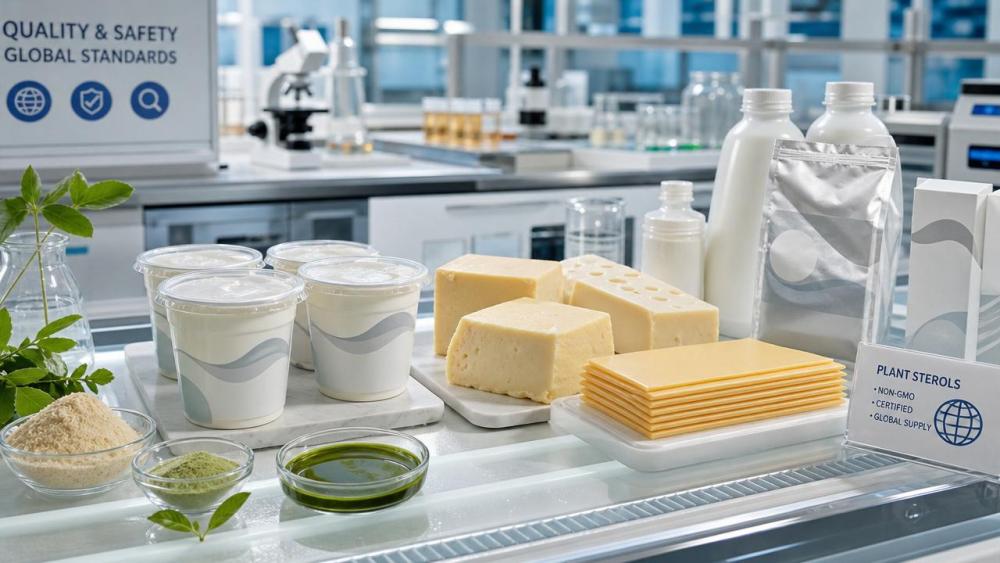
What the proposed amendment confirms
The confirmed information is limited but commercially relevant. FSANZ formally released the proposal on June 10, 2026, and the proposal covers the use of plant sterols in yogurt, cheese, and processed cheese. The stated purpose is to support cardiovascular health claims. The input information also identifies plant sterols as a natural antioxidant and functional food ingredient, and notes strong alignment with export supply chains for natural plant extracts, plant sterol raw materials, and compound stabilizers.
The same information indicates that the proposal is being read by the market as a clearer compliance access signal for overseas dairy formulators, importers of nutritional fortifiers, and clean-label brands. At this stage, the confirmed fact is the release of a proposed amendment, not the final implementation of a completed rule.
Why different parts of the supply chain are paying attention
Formulation teams see a clearer compliance direction
From an industry perspective, dairy formulation businesses are likely to focus first on product design opportunities in yogurt, cheese, and processed cheese. The practical impact is not only about whether plant sterols can be included, but also about whether product positioning tied to cardiovascular health can move closer to a compliant framework in the Australia-New Zealand market.
Ingredient traders and importers may face earlier sourcing discussions
For ingredient trading companies and importers of nutritional fortifiers, the proposal may affect upstream purchasing discussions before any final business conversion happens. What deserves closer attention is whether customers begin requesting supply readiness, technical documentation, and communication on ingredient positioning as they assess possible product launches or reformulations.
Suppliers tied to natural extracts and stabilizer systems may gain relevance
The input information highlights strong supply-chain synergy with exported natural plant extracts, plant sterol raw materials, and compound stabilizers. Analysis shows that this matters not only to sterol suppliers themselves, but also to supporting ingredient businesses whose materials may be involved in making a finished dairy formulation commercially workable for overseas customers.
What companies should monitor now
Watch the wording of subsequent official updates
The immediate priority is to distinguish between a proposed amendment and a finalized requirement. Companies following this development should pay close attention to how later official language develops, because policy direction and business execution do not move at the same speed.
Prepare product and document discussions by application segment
Businesses serving yogurt, cheese, and processed cheese customers may need to organize internal discussions by category rather than treating dairy as a single segment. Observably, the relevant customer questions are likely to center on application fit, claim-related positioning, and how ingredient packages are presented in commercial negotiations.
Align procurement readiness with delivery reality
For suppliers and traders, the useful response is not to assume immediate volume expansion, but to prepare for customer inquiries on supply continuity, supporting materials, and delivery coordination. The proposal creates attention, but commercial conversion still depends on how customers interpret later regulatory wording and project timing.
Keep customer communication precise and non-excessive
Because the current development is a regulatory signal rather than a confirmed end-state, companies should keep external communication disciplined. It is more appropriate to describe the move as an opening for compliance assessment and sourcing preparation, not as proof of finalized demand.
How this development is best understood at this stage
Analysis shows that this is best read as a policy and market signal with practical sourcing implications, rather than as a completed regulatory outcome. The proposal matters because it narrows uncertainty for companies involved in functional dairy ingredients, especially those linked to plant sterols and related natural ingredient systems.
At the same time, continued attention is necessary. Observably, the industry still needs to track whether the proposal moves forward in a form that supports actual product launches, procurement decisions, and customer commitments. For that reason, the development sits between short-term commercial preparation and longer-term market validation.
A measured takeaway for exporters and buyers
The current significance of the FSANZ proposal lies in the clarity of direction it provides. It points to a potentially more accessible path for plant sterol use in selected dairy categories and therefore draws attention from formulators, importers, and ingredient-linked exporters.
A neutral reading is still the most appropriate one. The news should be understood as an actionable regulatory signal and a possible procurement window, while final business decisions remain dependent on subsequent official wording and customer-side implementation plans.
Basis of this article and what still needs verification
This article is based on the user-provided news title, event date, and event summary. For developments of this kind, commonly relevant source types include official notices, company statements, industry association updates, authoritative media coverage, and standards organization documents.
No specific official source link was provided in the input, so the exact official link still needs to be verified on an ongoing basis. The main follow-up points to monitor are any subsequent FSANZ wording, any change in the proposal's status, and how the proposed direction translates into actual procurement and formulation activity.
Related News
- How to assess a food antioxidants distributor’s traceability practicesOct 11, 2026Food Preservation Scientist
- How natural antioxidants for oils can prevent rancidity in storageSep 25, 2026Food Preservation Scientist
- How to choose natural antioxidants for beverages with longer shelf lifeAug 23, 2026Food Preservation Scientist
- EU Tightens MRLs for Three Pesticides, Prompting Raw Material Checks for Natural Antioxidant ExportsAug 17, 2026Food Preservation Scientist
Related News
- 00
0000-00
Bairun Nine-Month Profit Up 20.4% to RMB 662m; Flavors and Fragrances Also Grow - 00
0000-00
How biomimetic peptides work in anti-aging skincare formulations - 00
0000-00
2026 Osong Cosmetics and Beauty Expo Concludes in South Korea - 00
0000-00
How to compare cosmetic active compounds by their cost in use - 00
0000-00
HKBU Showcases DR2 Following NMPA Registration as a New Cosmetic Ingredient
Food Preservation Scientist
Weekly Insights
Stay ahead with our curated technology reports delivered every Monday.