





On May 25, 2026, China’s State Administration for Market Regulation (SAMR) announced the detection of banned synthetic preservatives—BHA and BHT—in seven food products labeled as containing ‘natural antioxidants’ (e.g., tea polyphenols, rosemary extract). This development directly affects exporters of natural antioxidant ingredients, importers in regulated markets (notably the EU and Japan), and downstream food manufacturers relying on ‘clean-label’ claims—making it a high-priority signal for supply chain integrity and regulatory compliance.
Event Overview
On May 25, 2026, SAMR issued a public notification listing 40 batches of non-compliant food products. Among them, seven batches were labeled with natural antioxidants—including tea polyphenols and rosemary extract—but were found to contain prohibited synthetic preservatives BHA (butylated hydroxyanisole) and/or BHT (butylated hydroxytoluene). The notification is publicly available on SAMR’s official website and forms the sole confirmed factual basis for this report.
Industries Affected by Segment
Export-Oriented Ingredient Suppliers
Suppliers exporting tea polyphenol or rosemary extract to the EU and Japan face heightened scrutiny: the SAMR findings are likely to trigger increased unannounced (‘fly-in’) inspections by foreign regulators. Impact manifests as longer customs clearance times, elevated rejection risks at ports of entry, and potential suspension of supplier registrations under EU Regulation (EC) No 852/2004 or Japan’s Food Sanitation Act enforcement protocols.
Food Manufacturers Using ‘Natural’ Antioxidant Claims
Brands marketing products with ‘natural preservative’, ‘clean-label’, or ‘no synthetic additives’ statements may face label compliance challenges—not only in China but also in export markets where such claims are legally binding. Mislabeling risk now extends beyond ingredient sourcing to verification of manufacturing process controls and third-party documentation.
Third-Party Testing & Certification Providers
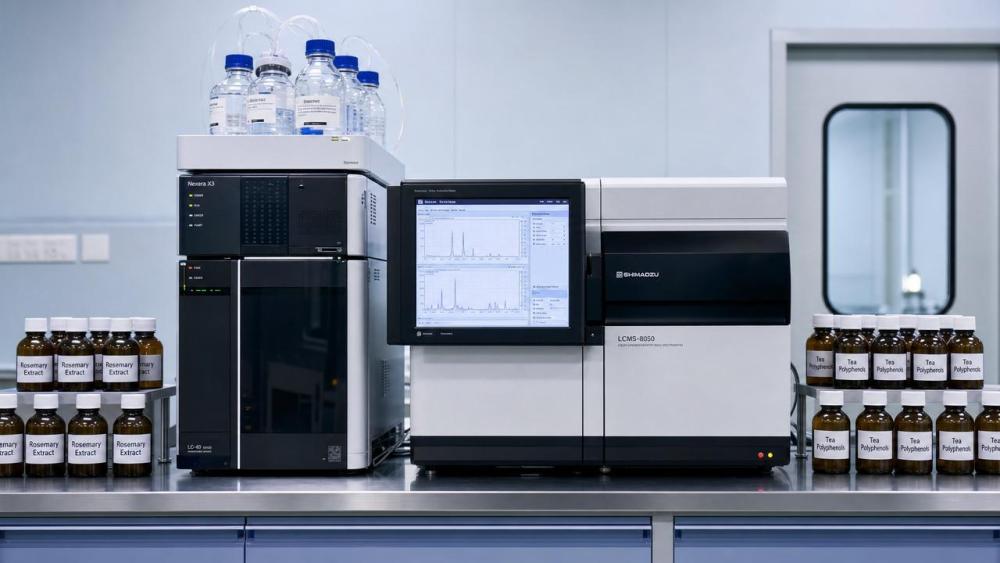
The SAMR notice explicitly references growing reliance on isotopic (δ13C) and fingerprint chromatographic profiling to verify ‘natural authenticity’. Demand for these advanced analytical services is expected to rise, particularly among exporters needing pre-shipment verification for EU/Japan market access.
Importers and Distributors in Regulated Markets
EU and Japanese importers of Chinese-origin natural antioxidant ingredients must now reassess due diligence protocols. Under EU Regulation (EU) 2017/625, importers bear legal responsibility for verifying the compliance of imported food business operators—making upstream audit trails and raw material certification more critical than before.
Key Focus Areas and Practical Responses for Stakeholders
Monitor Official Updates from SAMR and Foreign Regulators
Track follow-up notices from SAMR—including potential revisions to GB 2760 (China’s food additive standard) or guidance on ‘natural’ labeling—and parallel communications from EFSA, Japan’s MHLW, or the EU Commission. Do not treat this as an isolated incident; it may inform upcoming technical barriers.
Prioritize Verification for High-Risk Categories and Markets
Focus immediate verification efforts on tea polyphenol and rosemary extract lots destined for EU or Japanese customers. Confirm whether current Certificates of Analysis include δ13C isotope data and HPLC-MS fingerprint profiles—not just assay and heavy metal tests.
Distinguish Between Regulatory Signals and Operational Requirements
While δ13C + fingerprint testing is emerging as a de facto expectation, it is not yet codified in mandatory Chinese or international standards. Treat it as a commercial prerequisite—not a legal mandate—until formally adopted in harmonized regulations.
Strengthen Documentation and Traceability Protocols Now
Ensure batch-level traceability from raw herb harvest or green tea leaf sourcing through extraction, purification, and packaging. Retain supporting documents (e.g., solvent usage logs, temperature/time records during processing) that can corroborate natural origin claims if challenged.
Editorial Perspective / Industry Observation
Observably, this SAMR notification functions less as an enforcement outcome and more as a regulatory early-warning signal—highlighting a widening gap between ‘natural’ labeling practice and verifiable scientific authenticity. Analysis shows that regulators are shifting from end-product testing toward upstream verification of process integrity. From an industry perspective, the emphasis is no longer solely on *what* is added, but *how* and *from where* the ingredient originates—and whether its biochemical signature aligns with declared natural status. Continued attention is warranted, as similar findings could catalyze formal amendments to labeling guidelines or mutual recognition frameworks.
Conclusion: This notification does not represent a new regulation, but rather a concrete indicator of tightening expectations around natural ingredient authenticity—especially at the export interface. It is better understood as a validation of existing due diligence gaps, not a sudden policy pivot. Stakeholders should treat it as a prompt to align verification practices with evolving market-level expectations—not as a trigger for emergency overhauls.
Source: State Administration for Market Regulation (SAMR), People’s Republic of China — Public Notification dated May 25, 2026. Note: Ongoing observation is required for any subsequent technical guidance, standard revisions, or bilateral inspection updates issued by SAMR, EFSA, or Japan’s Ministry of Health, Labour and Welfare.
Related News
- 2026 Osong Cosmetics and Beauty Expo Concludes in South KoreaOct 26, 2026Prof. Elian Thorne
- How to compare cosmetic active compounds by their cost in useOct 26, 2026Prof. Elian Thorne
- HKBU Showcases DR2 Following NMPA Registration as a New Cosmetic IngredientOct 25, 2026Cosmeceutical Formulator
- How to use ingredient market insights to forecast sourcing costsOct 25, 2026Prof. Elian Thorne
Related News
- 00
0000-00
2026 Osong Cosmetics and Beauty Expo Concludes in South Korea - 00
0000-00
How to compare cosmetic active compounds by their cost in use - 00
0000-00
HKBU Showcases DR2 Following NMPA Registration as a New Cosmetic Ingredient - 00
0000-00
How to use ingredient market insights to forecast sourcing costs - 00
0000-00
Galderma Marks 30 Years of Hyaluronic Acid Injectable Innovation
Industry Global
Weekly Insights
Stay ahead with our curated technology reports delivered every Monday.