





The European Chemicals Agency (ECHA) has proposed an update to Annex II of the EU Cosmetics Regulation, expanding restrictions on impurities in rosemary extract—a widely used natural antioxidant. Although the exact event date was not specified in the source material, the draft revision was published by ECHA on 28 May 2026. This development directly affects manufacturers and suppliers operating in food, feed, and cosmetics sectors globally, driven by newly identified oxidation-derived contaminants requiring tighter control.
Confirmed Regulatory Proposal
On 28 May 2026, ECHA released a draft amendment to Annex II, proposing to classify four newly identified oxidation by-products—particularly carnosic acid quinone derivatives—as restricted impurities in rosemary extract. The proposal sets a maximum combined concentration limit of ≤5 ppm for these substances across food, animal feed, and cosmetic applications. The revised Annex II is expected to enter into force in Q4 2026.
Supply Chain Impact Across Key Roles
Export-oriented trading companies
These entities face immediate compliance verification requirements before shipment. Under the new rules, customs clearance and market access in the EU may be delayed or denied without updated certificates of analysis (CoA) confirming impurity levels below 5 ppm—especially for bulk rosemary extract shipments.
Raw material procurement specialists
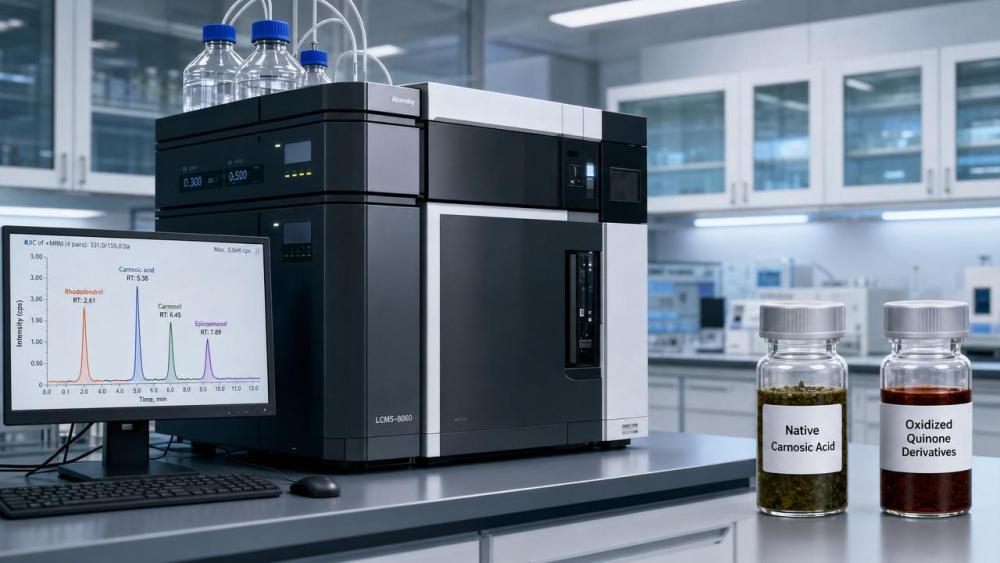
Purchasing teams must now reassess supplier qualification criteria. Historical specifications for ‘total rosmarinic acid’ or ‘solvent residue’ are insufficient; new technical due diligence must include validated analytical methods (e.g., LC-MS/MS) capable of detecting trace quinone derivatives.
Extraction and formulation manufacturers
Production processes—including traditional ethanol or acetone extraction—may no longer meet the proposed purity threshold. Manufacturers will need to evaluate process capability against the new limits, particularly regarding oxidative stability during drying, storage, and packaging.
Supply chain service providers
Third-party testing labs, certification bodies, and logistics partners supporting EU-bound rosemary-based products must upgrade method validation packages and align reporting formats with ECHA’s emerging impurity profiling expectations—potentially affecting turnaround time and cost structures.
Key Compliance Priorities for Enterprises
Re-evaluate existing impurity testing protocols
Current QC methods often omit carnosic acid quinone derivatives. Companies should verify whether their accredited labs can detect and quantify all four targeted compounds at sub-ppm levels using reference standards and validated LC-MS/MS or HPLC-DAD workflows.
Assess production process suitability
The draft regulation implicitly favours supercritical CO₂ extraction coupled with low-temperature molecular distillation—a combination shown to minimise thermal oxidation and preserve native carnosic acid integrity. Firms relying on high-heat or prolonged solvent evaporation steps should conduct comparative impurity profiling studies.
Update technical documentation for EU market access
Product dossiers, Cosmetic Product Safety Reports (CPSRs), and food contact declarations must now explicitly address the presence—or absence—of the four listed oxidation by-products, including batch-specific test data and justification of analytical uncertainty margins.
Engage proactively with upstream suppliers
Contract manufacturers and botanical extractors must co-develop new quality agreements specifying impurity thresholds, retention time requirements, and retest intervals. Traceability from harvest to final extract becomes critical—not only for compliance but also for root-cause investigation if non-conformities arise.
Industry Observation: A Shift Toward Oxidation-Controlled Botanical Processing
Analysis shows this proposal reflects a broader regulatory evolution: from regulating only intentional ingredients toward stringent oversight of process-induced degradation products. From an industry perspective, it signals growing emphasis on oxidative stability as a core quality attribute—not just for rosemary, but for other phenolic botanicals (e.g., green tea, oregano). What deserves closer attention is the implied shift in technical benchmarking: purity is no longer defined solely by active compound content, but by the fidelity of molecular structure preservation throughout processing. This raises barriers for facilities lacking inert-atmosphere handling, real-time oxidation monitoring, or advanced separation capabilities.
Strategic Takeaway for Global Suppliers
This ECHA initiative underscores that ‘natural’ does not equate to ‘regulatorily exempt’. Rather, it intensifies scrutiny on how natural ingredients are handled, stabilised, and characterised. For global suppliers, timely adaptation hinges less on reformulation and more on upgrading analytical rigor, refining extraction engineering, and embedding oxidation control as a systematic quality parameter—not an afterthought.
Source Attribution and Monitoring Guidance
This article is generated exclusively from the user-provided title, event timing note (‘not specified’), and summary. Specific official source links were not provided in the input and should be verified continuously. Stakeholders are advised to monitor upcoming ECHA public consultations, final adoption timelines, transitional provisions, enforcement guidance documents, and any updates to harmonised standards (e.g., EN ISO/IEC 17025-compliant testing protocols) issued by EU national authorities.
Related News
- 2026 Osong Cosmetics and Beauty Expo Concludes in South KoreaOct 26, 2026Prof. Elian Thorne
- How to compare cosmetic active compounds by their cost in useOct 26, 2026Prof. Elian Thorne
- HKBU Showcases DR2 Following NMPA Registration as a New Cosmetic IngredientOct 25, 2026Cosmeceutical Formulator
- How to use ingredient market insights to forecast sourcing costsOct 25, 2026Prof. Elian Thorne
Related News
- 00
0000-00
2026 Osong Cosmetics and Beauty Expo Concludes in South Korea - 00
0000-00
How to compare cosmetic active compounds by their cost in use - 00
0000-00
HKBU Showcases DR2 Following NMPA Registration as a New Cosmetic Ingredient - 00
0000-00
How to use ingredient market insights to forecast sourcing costs - 00
0000-00
Galderma Marks 30 Years of Hyaluronic Acid Injectable Innovation
Industry Global
Weekly Insights
Stay ahead with our curated technology reports delivered every Monday.