





On 19 May 2026, the Council of the European Union adopted new steel import measures—raising tariffs from 25% to 50% and slashing the duty-free quota by 47% to 18.3 million tonnes per year. While formally targeting steel imports, the policy is expected to significantly increase input costs for manufacturers of food packaging and personal care containers—including tinplate cans, aluminum-plastic composite tubes, and aerosol cans—making this development highly relevant for packaging suppliers, FMCG formulation teams, and contract manufacturers in Europe and export markets.
Event Overview
The Council of the European Union formally approved revised steel import rules on 19 May 2026. Under the new regulation, the applied tariff rate on certain imported steel products has been increased from 25% to 50%. Concurrently, the annual duty-free import quota has been reduced by 47%, settling at 18.3 million tonnes. These changes are now in effect as adopted legislation.
Industries Affected
Raw Material Procurement Teams (e.g., FMCG, Food & Beverage, Personal Care)
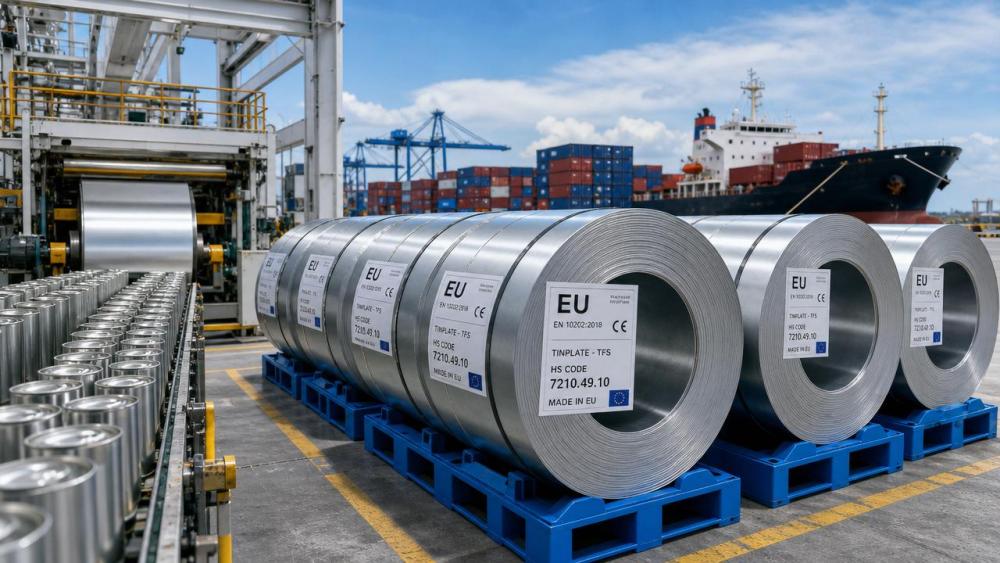
These teams source tinplate, electrolytic tin-coated steel, and other steel-based substrates for can manufacturing. The tariff hike directly raises landed cost of primary packaging materials. As the policy targets steel—not finished cans—the impact manifests upstream, affecting procurement budgets before conversion into final packaging units.
Contract Packaging & Can Manufacturing Firms
Firms producing food-grade metal cans or aerosol containers rely on imported steel coils or blanks. Higher input tariffs compress margins unless fully passed through—a challenge given long-term supply agreements and competitive tendering practices. Cost recalibration may delay new line investments or capacity expansions planned for 2026–2027.
Supply Chain & Logistics Providers Supporting Packaging Imports
Providers managing customs clearance, bonded warehousing, or quota allocation services face increased complexity. With quotas cut nearly in half, real-time monitoring of quota exhaustion and tariff classification accuracy become critical to avoid unexpected duties or shipment delays at EU ports.
What Stakeholders Should Monitor and Do Now
Track official tariff line updates and quota utilization reports
The European Commission publishes monthly quota usage data for safeguard measures. Procurement and compliance teams should monitor these releases closely—especially for HS codes covering cold-rolled tinmill products (e.g., 7210.70, 7212.40) and seamless steel tubes (7304.19), which underpin key packaging formats.
Review current steel-based packaging SKUs for tariff exposure and substitution feasibility
Not all steel-containing packaging items fall under the same tariff treatment. Companies should audit existing bill-of-materials against the updated EU Combined Nomenclature and assess whether alternative substrates (e.g., coated aluminium, laminated steel with lower tariff classifications) offer viable near-term mitigation—without compromising shelf life or regulatory compliance.
Distinguish between policy adoption and operational implementation
While the regulation entered force upon Council adoption, customs authorities may require updated documentation or verification steps over Q3 2026. Businesses should confirm with their EU import agents whether pre-clearance validations or origin certifications (e.g., EUR.1) are now mandatory for affected shipments.
Prepare contingency plans for procurement and supplier communication
Given an estimated 8–12% pass-through cost increase to end-packaging buyers, procurement teams should initiate early dialogue with Tier-1 can suppliers to clarify timing, allocation mechanisms, and potential volume-based adjustments—before Q3 2026 commercial negotiations begin.
Editorial Observation / Industry Perspective
Observably, this measure functions less as a one-off trade correction and more as a structural signal: the EU is tightening steel supply conditions not only for strategic autonomy but also to recalibrate cost incentives across downstream industrial users. Analysis shows the 47% quota reduction—more impactful than the tariff hike alone—suggests deliberate pressure on import dependency, particularly for high-volume, low-margin packaging applications. From an industry perspective, the move appears calibrated to accelerate substitution discussions already underway in sustainable packaging R&D, though technical and regulatory constraints remain significant barriers to rapid transition. Current attention should focus less on reversal likelihood and more on how quickly procurement and engineering teams align cost models with new landed-cost baselines.
This is not yet a full market disruption—but it is a confirmed inflection point for cost planning cycles in food and personal care packaging. The policy’s immediate effect lies in budget recalibration, not supply interruption; its longer-term significance hinges on whether parallel initiatives (e.g., domestic tinplate investment, recycling infrastructure upgrades) follow in response.
Information Source: Council of the European Union — Official Press Release, 19 May 2026. Note: Implementation details—including customs enforcement protocols and product scope clarifications—are still being finalized by the European Commission and remain subject to update through mid-2026.
Related News
- 2026 Osong Cosmetics and Beauty Expo Concludes in South KoreaOct 26, 2026Prof. Elian Thorne
- How to compare cosmetic active compounds by their cost in useOct 26, 2026Prof. Elian Thorne
- HKBU Showcases DR2 Following NMPA Registration as a New Cosmetic IngredientOct 25, 2026Cosmeceutical Formulator
- How to use ingredient market insights to forecast sourcing costsOct 25, 2026Prof. Elian Thorne
Related News
- 00
0000-00
2026 Osong Cosmetics and Beauty Expo Concludes in South Korea - 00
0000-00
How to compare cosmetic active compounds by their cost in use - 00
0000-00
HKBU Showcases DR2 Following NMPA Registration as a New Cosmetic Ingredient - 00
0000-00
How to use ingredient market insights to forecast sourcing costs - 00
0000-00
Galderma Marks 30 Years of Hyaluronic Acid Injectable Innovation
Industry Global
Weekly Insights
Stay ahead with our curated technology reports delivered every Monday.