





On May 20, 2026, the International Fragrance Association (IFRA) issued its 52nd Edition Standard Revision, mandating release kinetics testing for microencapsulated fragrances in simulated skin and food matrices — effective for all new product registrations starting January 1, 2027. This update directly affects Chinese OEM manufacturers of microencapsulated fragrance products exporting to the EU, Japan, and Middle Eastern markets, raising technical compliance thresholds and third-party testing costs.
Event Overview
On May 20, 2026, IFRA published the Q2 2026 revision of its standards — the 52nd Edition — which, for the first time, includes ‘release kinetics of microencapsulated fragrances under simulated skin/food conditions’ as a mandatory compliance test. As confirmed in the official announcement, all newly registered fragrance products must submit third-party release curve reports beginning January 1, 2027.
Impact on Specific Industry Segments
Microencapsulated Fragrance OEMs (China-based)
These manufacturers are directly impacted because their export-ready formulations must now undergo standardized release profiling before registration. The requirement introduces new validation steps beyond traditional stability or allergen screening — particularly for products targeting personal care (e.g., wash-off creams, leave-on lotions) and food-contact applications (e.g., flavored chewing gum, functional confectionery).
Export-Focused Formulation & Regulatory Affairs Teams
Regulatory departments at fragrance houses and contract developers must now integrate release kinetics data into dossier submissions for IFRA-compliant markets. This affects timelines for product launch planning, especially where regional authorities (e.g., EU CPNP, Japan MHLW, GCC GSO) reference IFRA standards in safety assessments.
Third-Party Testing Laboratories Serving Export Clients
Labs accredited for ISO/IEC 17025 and experienced in diffusion modeling or in vitro release testing (IVRT/IVRT-like protocols) face increased demand for method development, inter-lab validation, and reporting aligned with IFRA’s newly defined parameters (e.g., pH, temperature, matrix composition, sampling intervals).
What Relevant Companies or Practitioners Should Focus On — and How to Respond
Monitor IFRA’s forthcoming technical guidance documents
While the May 2026 announcement confirms the mandate, IFRA has not yet published detailed protocols for release curve measurement (e.g., acceptable matrices, instrumentation, data normalization). Companies should track IFRA’s Technical Committee updates and subscribe to its official communications channel for methodological clarifications expected in late 2026.
Prioritize high-volume export categories for early method adaptation
Analysis shows that skin-applied products (e.g., deodorants, body mists) and food-grade encapsulates (e.g., powdered beverage mixes, chewable supplements) represent the largest share of current microcapsule exports from China to IFRA-aligned markets. Firms should allocate initial testing resources to these categories to align with anticipated audit focus areas.
Distinguish between regulatory signal and enforceable implementation
Observably, the January 2027 effective date applies only to newly registered products — not legacy formulations already listed in IFRA’s existing compliance database. Companies maintaining active IFRA certificates for existing items do not need immediate retesting, unless reformulating or expanding into new application types.
Initiate internal capability mapping and lab engagement now
Current more suitable preparation includes auditing internal R&D capacity for release kinetics studies, identifying qualified external labs with IFRA-recognized methodology experience, and updating technical documentation templates to include release profile metadata fields ahead of submission deadlines.
Editorial Perspective / Industry Observation
This revision is best understood not as an isolated technical update, but as a signal of IFRA’s broader shift toward functionally grounded safety assessment — moving beyond static ingredient limits to dynamic exposure modeling. From an industry perspective, it reflects growing regulatory attention to delivery system behavior, especially where controlled release may alter bioavailability or dermal absorption profiles. Analysis suggests this is an early-stage standardization effort: while mandatory, the lack of finalized test specifications means enforcement will likely emphasize documentation completeness and scientific plausibility over strict pass/fail thresholds in the initial phase.
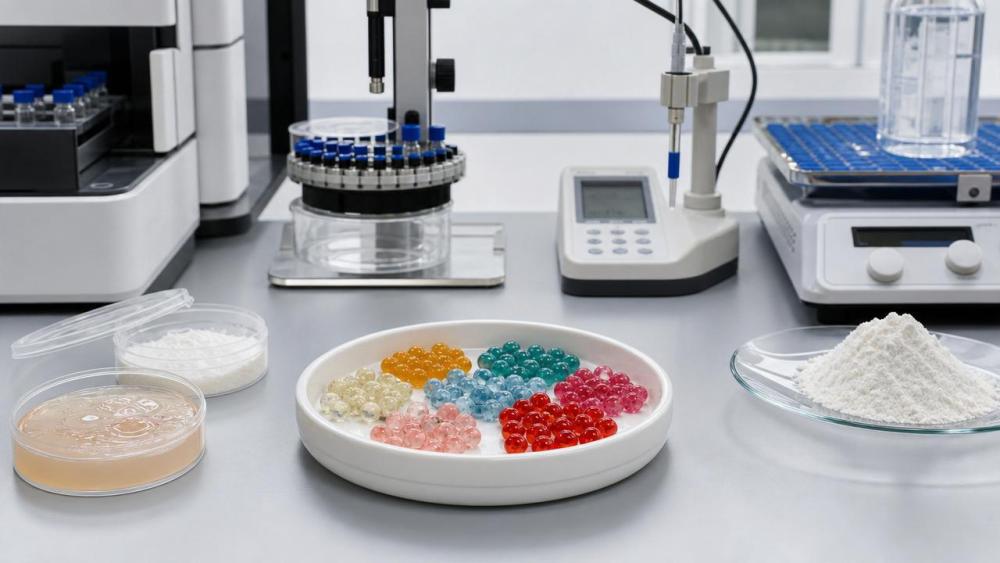
It is therefore more accurate to view this development as a procedural inflection point than an immediate compliance cliff — one that rewards proactive method alignment over reactive certification.
Concluding, this IFRA revision marks a structural evolution in fragrance regulatory expectations, emphasizing performance-based evidence for delivery systems. It does not invalidate current practices but introduces a new layer of technical due diligence for new product introductions. Current understanding is best framed as: a mandatory reporting requirement with phased operational maturity — requiring attention, not alarm.
Source: International Fragrance Association (IFRA), Official Announcement No. 52 — Q2 2026 Revision, published May 20, 2026.
Note: IFRA’s detailed test protocol document remains pending; its publication and any potential transitional provisions are subject to ongoing observation.
Related News
- 2026 Osong Cosmetics and Beauty Expo Concludes in South KoreaOct 26, 2026Prof. Elian Thorne
- How to compare cosmetic active compounds by their cost in useOct 26, 2026Prof. Elian Thorne
- HKBU Showcases DR2 Following NMPA Registration as a New Cosmetic IngredientOct 25, 2026Cosmeceutical Formulator
- How to use ingredient market insights to forecast sourcing costsOct 25, 2026Prof. Elian Thorne
Related News
- 00
0000-00
2026 Osong Cosmetics and Beauty Expo Concludes in South Korea - 00
0000-00
How to compare cosmetic active compounds by their cost in use - 00
0000-00
HKBU Showcases DR2 Following NMPA Registration as a New Cosmetic Ingredient - 00
0000-00
How to use ingredient market insights to forecast sourcing costs - 00
0000-00
Galderma Marks 30 Years of Hyaluronic Acid Injectable Innovation
Industry Global
Weekly Insights
Stay ahead with our curated technology reports delivered every Monday.