





Image Placement Plan
Place one visual near the opening section to illustrate batch-level digital traceability for imported natural thickeners, including COA files, shelf-life data, and logistics records.
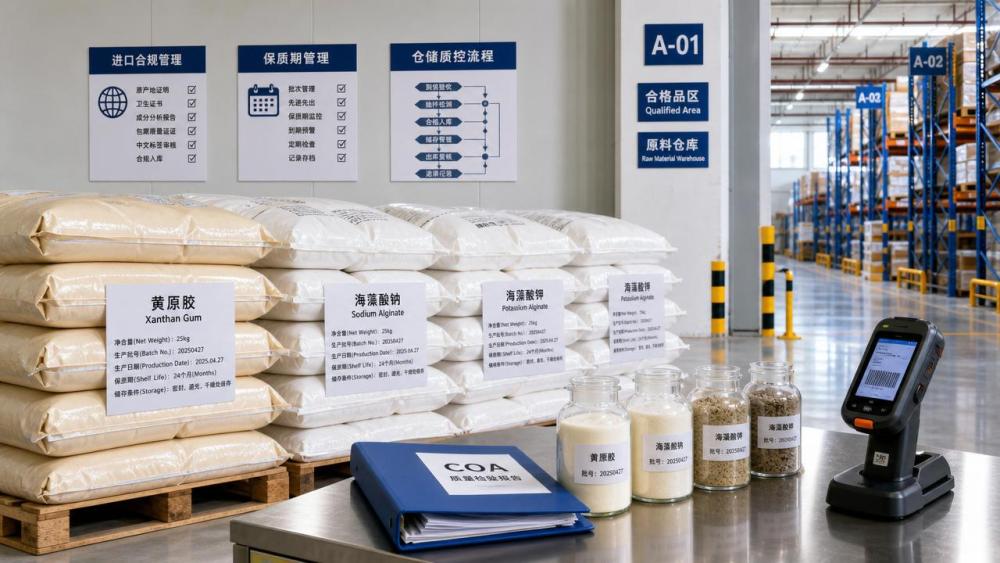
Effective June 1, 2026, Vietnam’s product traceability system under the Ministry of Industry and Trade becomes mandatory for chemicals and chemical-containing products, including natural thickeners. The change affects import flows for Xanthan gum, alginates, and similar products because overseas suppliers must register on the designated platform and upload batch-level compliance and logistics information before goods can be accepted at ports.
What Has Been Confirmed So Far
From June 1, 2026, Vietnam will require mandatory use of its product traceability system for chemicals and products containing chemicals, including natural thickening agents.
Overseas suppliers of imported Xanthan gum, alginates, and related products must complete company registration through the Vietnam-designated platform.
For each batch, suppliers are required to upload COA documents, production dates, shelf-life information, and logistics tracking records in real time.
Goods from companies that have not completed registration will be refused at the port.
How the Rule May Affect Industry Participants
Import and direct trading companies
Direct trading companies are likely to feel the impact first because port acceptance is tied to supplier registration and batch data submission. Their affected business steps may include supplier onboarding, purchase order confirmation, shipment scheduling, customs coordination, and customer delivery commitments.
They may need to pay closer attention to whether each overseas supplier has completed platform registration and whether batch data has been uploaded before cargo arrival.
Raw material buyers
Companies purchasing Xanthan gum, alginates, or other natural thickeners as raw materials may face changes in procurement verification. The reason is that incoming materials must be supported by traceable batch information, including COA, production date, shelf life, and logistics route records.
Key affected areas include supplier qualification checks, incoming material review, inventory planning, and backup supplier selection.
Processing and manufacturing companies
Manufacturers using imported natural thickeners in formulations may need to align internal quality systems with external traceability requirements. The rule may affect production release, batch documentation, quality record matching, and material traceability during processing.
They should monitor whether imported batches can be linked consistently with internal production records, especially where COA files and shelf-life data are used for quality release decisions.
Supply chain service providers
Logistics providers, customs service companies, warehousing operators, and trade compliance service providers may be affected because logistics tracking information must be uploaded for each batch. Their operational role may expand from transport execution to data coordination.
They may need to ensure that shipment milestones, logistics documents, and batch identifiers are captured accurately enough to support platform reporting.
Practical Compliance Priorities for Companies
Confirm platform registration before shipment
Overseas suppliers should treat registration on the Vietnam-designated platform as a pre-shipment compliance requirement. Since unregistered companies’ goods will be refused at the port, buyers and traders should verify registration status before confirming dispatch.
Standardize batch document preparation
Each batch must be supported by COA, production date, shelf-life information, and logistics tracking records. Companies should prepare a consistent document checklist for Xanthan gum, alginates, and similar natural thickeners to reduce the risk of incomplete uploads.
Link procurement schedules with data readiness
Delivery planning should account for the time needed to collect, review, and upload batch information. Procurement teams may need to adjust order timelines so that documentation and platform submission are completed before port handling.
Strengthen supplier qualification management
Supplier evaluation should include the ability to maintain accurate batch data and upload it through the required platform. This is especially relevant for buyers relying on multiple overseas suppliers for natural thickener imports.
Industry Reading: Compliance Moves Closer to Batch-Level Control
From an industry perspective, this requirement suggests that trade compliance for natural thickeners is moving beyond conventional document exchange and toward platform-based, batch-level traceability.
Analysis shows that the most immediate pressure may fall on companies with fragmented document workflows, because COA files, production dates, shelf-life information, and logistics records must be connected to specific batches in a timely manner.
What deserves closer attention is the possible shift in procurement rules. Buyers may increasingly prefer suppliers that can provide structured compliance data before shipment rather than after arrival.
It is more appropriate to understand this as a compliance process change rather than a product quality change. The confirmed requirement concerns registration, document upload, and traceability reporting; any broader market impact will depend on implementation details and industry response.
Closing View
The mandatory launch of Vietnam’s traceability requirement for chemicals and chemical-containing products creates a clearer compliance checkpoint for imported natural thickeners such as Xanthan gum and alginates.
For industry participants, the main significance lies in earlier preparation, more disciplined batch documentation, and closer coordination between suppliers, buyers, manufacturers, and logistics partners. The actual business impact should be assessed cautiously as implementation proceeds.
Information Basis and Items to Watch
This article is based on the user-provided news title, event date, and event summary concerning Vietnam’s mandatory product traceability system for chemicals and chemical-containing products from June 1, 2026.
Relevant source types for continued verification may include official notices from the responsible Vietnamese authorities, platform operation guidance, customs implementation instructions, and industry compliance updates.
Specific official source links were not provided in the input and should be verified continuously.
Further monitoring is needed for detailed implementation rules, certification and document review practices, tender or specification changes, port enforcement standards, and feedback from affected industry participants.
Related News
- How to assess a bio-based thickener manufacturer's batch consistencyOct 16, 2026Food Rheology Expert
- Verifying halal status of hydrocolloid ingredients in the Middle EastOct 15, 2026Food Rheology Expert
- Why Can Xanthan Gum Lose Viscosity After Adding Electrolytes?Oct 18, 2026Food Rheology Expert
- How Do You Test Hydrocolloid Viscosity After Changing a Thickener?Oct 17, 2026Food Rheology Expert
Related News
- 00
0000-00
2026 Osong Cosmetics and Beauty Expo Concludes in South Korea - 00
0000-00
How to compare cosmetic active compounds by their cost in use - 00
0000-00
HKBU Showcases DR2 Following NMPA Registration as a New Cosmetic Ingredient - 00
0000-00
How to use ingredient market insights to forecast sourcing costs - 00
0000-00
Galderma Marks 30 Years of Hyaluronic Acid Injectable Innovation
Food Rheology Expert
Weekly Insights
Stay ahead with our curated technology reports delivered every Monday.