




On May 11, 2026, the European Commission adopted Regulation (EU) 2026/XXXX approving a preparation of Pediococcus pentosaceus NCIMB 12674/DSM 35357 for use in feed for all animal species. For companies involved in fermented natural antioxidants, feed ingredients, pet food applications, and preservation-oriented meat products, the development deserves attention because it links an approved feed-use microorganism with downstream narratives around carotenoids, vitamin E homologues, and polyphenol derivatives.
What the approval confirms
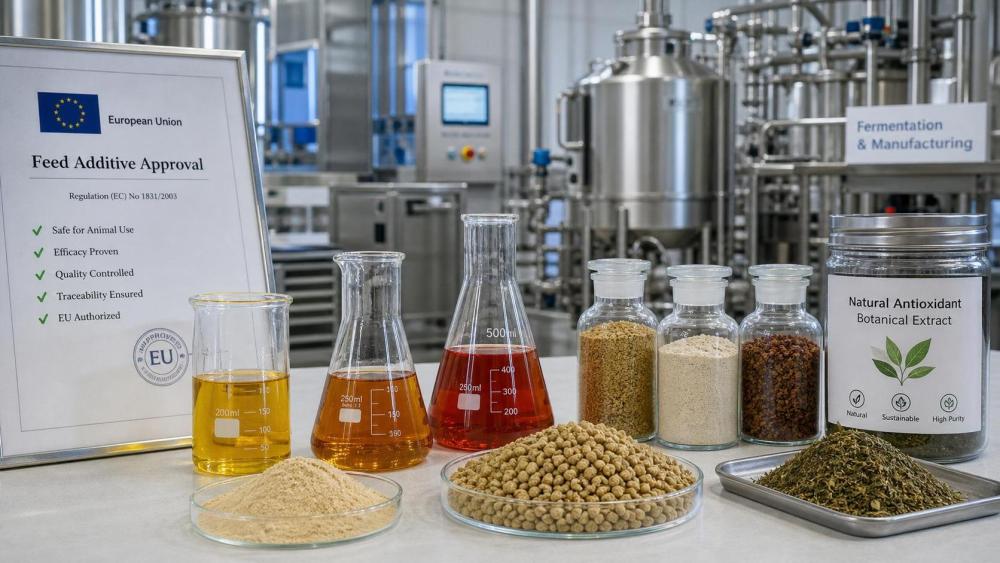
The confirmed event is the EU approval of a preparation based on Pediococcus pentosaceus NCIMB 12674/DSM 35357 for all animal feed under Regulation (EU) 2026/XXXX, dated May 11, 2026.
According to the provided information, this strain can efficiently biosynthesize carotenoids, vitamin E homologues, and polyphenol derivatives. The same information indicates that this approval creates a new EU-side basis for functional positioning and downstream application support for China’s exported fermented natural antioxidants, including astaxanthin and tocotrienols.
The provided summary also states that the approval may strengthen premium positioning in pet food and in preservation-related applications for organic meat products.
Where the commercial impact may emerge first
Exporters of fermented natural antioxidants
From an industry perspective, these exporters may be affected first because the approval improves the regulatory and application context surrounding fermentation-derived antioxidant ingredients. The main impact is likely to be felt in product positioning, customer discussions, and the way exporters explain use cases linked to feed and downstream animal-product applications.
What deserves closer attention is whether customers in the EU begin to reference this approval in specification reviews, formulation discussions, or claim-related communication.
Feed and ingredient buyers
Buyers of feed-related materials may pay closer attention because the approved strain is now connected to all animal feed use in the EU. The business impact may show up in sourcing assessments, ingredient screening, and evaluation of alternatives that align with natural or fermentation-based narratives.
Observably, procurement teams will need to distinguish between what the approval directly covers and what still requires separate product-level substantiation in actual purchasing decisions.
Pet food and preservation-focused application teams
Pet food brands and companies working on preservation in organic meat products may view this as a useful supporting signal because the provided information explicitly points to these application areas. The potential effect is less about immediate automatic uptake and more about stronger downstream justification when discussing premium formulations or preservation-oriented concepts.
What deserves closer attention is how application teams translate a regulatory development into compliant, customer-facing technical communication.
Supply chain and documentation service providers
Supply chain intermediaries, compliance support teams, and documentation-focused service providers may also be affected because approvals like this often raise expectations around dossiers, specifications, and communication consistency. The practical impact may appear in document preparation, claim support files, and coordination between exporters and EU customers.
Analysis shows that document readiness may become more important where fermentation-derived antioxidants are sold on both technical performance and regulatory credibility.
What companies should watch now
Track the exact official wording
Companies should focus on the exact language of Regulation (EU) 2026/XXXX and any related official expressions used in the approval context. Analysis shows that small differences in wording can matter when translating a regulatory event into product communication, sales materials, or customer responses.
Separate policy signal from immediate business use
The approval is a concrete regulatory event, but actual commercial use still depends on how customers, importers, and downstream formulators interpret and apply it. What deserves closer attention is the gap between an EU approval signal and practical acceptance in contracts, specifications, or application development.
Prepare customer-facing documentation
Exporters and suppliers should review whether their technical files, product descriptions, and supporting documents clearly explain the relevance of fermentation-derived antioxidant ingredients in light of the approval. Observably, this is especially important when discussing astaxanthin, tocotrienols, or related antioxidant positioning with EU-facing customers.
Prioritize application conversations with the clearest fit
Based on the provided information, pet food and preservation-related organic meat applications appear to be the most immediate areas for commercial dialogue. Analysis shows that companies may benefit from focusing first on business segments where premium positioning and functional differentiation already matter.
Why this looks more like a signal than a finished outcome
Analysis shows that this development should not be read as an automatic expansion of market demand, but rather as a meaningful regulatory and commercial signal. It indicates that fermentation-linked natural antioxidant narratives may gain stronger support in EU-facing animal nutrition and downstream application discussions.
At the same time, it is more appropriate to understand this as an event that still requires follow-through. The approval itself is clear, but its full business effect will depend on how it is referenced in procurement, formulations, technical substantiation, and customer acceptance.
How to read the development at this stage
At this stage, the approval matters because it strengthens the context in which fermented natural antioxidants can be discussed in the EU market, especially for exporters seeking clearer downstream application support. It does not by itself settle all commercial questions, but it does offer a more concrete basis for communication around feed-related relevance and premium application potential.
From an industry perspective, it is more appropriate to understand this as a medium-term signal with near-term implications for positioning, documentation, and customer engagement, rather than as an immediately complete market result.
Basis of this article and points for follow-up verification
This article is based on the user-provided news title, event date, and event summary. For developments of this kind, commonly relevant source types may include official regulatory notices, company announcements, industry association updates, authoritative media coverage, and standard-setting or technical documents.
A specific official source link was not provided in the input, so the exact text and any subsequent interpretive materials still require ongoing verification. Follow-up attention should focus on the final official wording of the EU measure, any related compliance interpretations, and how market participants apply the development in real business settings.
Related News
- How to choose natural antioxidants for beverages with longer shelf lifeAug 23, 2026Food Preservation Scientist
- EU Tightens MRLs for Three Pesticides, Prompting Raw Material Checks for Natural Antioxidant ExportsAug 17, 2026Food Preservation Scientist
- China Customs Tightens Export Filing for Food Ingredients, Raising Clearance RisksAug 16, 2026Food Preservation Scientist
- How food antioxidants for oils help prevent rancidityAug 16, 2026Food Preservation Scientist
Related News
- 00
0000-00
How to select aroma chemical ingredients for better fragrance stability - 00
0000-00
How natural food pigments for bakery hold color during baking - 00
0000-00
How to verify compliance documents for cosmetic active compounds - 00
0000-00
How to verify food grade flavor formulation ingredients for safety - 00
0000-00
How to assess an anti-aging ingredients manufacturer’s batch consistency
Food Preservation Scientist
Weekly Insights
Stay ahead with our curated technology reports delivered every Monday.