





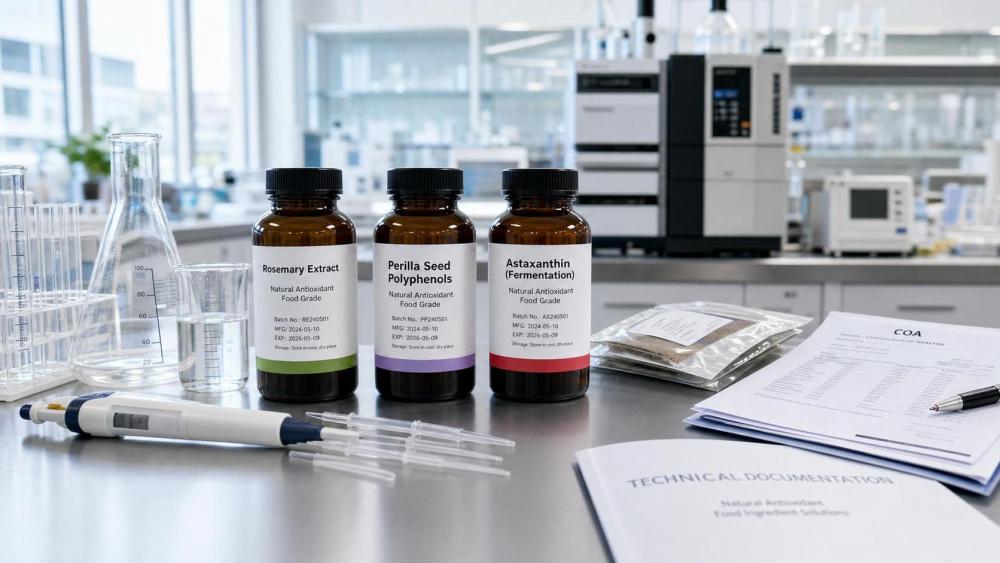
On June 16, 2026, the U.S. FDA updated its GRAS list and recognized three natural antioxidants—rosemary acid derivatives, perilla seed polyphenol complexes, and fermented astaxanthin—as generally recognized as safe for use in food preservation and functional enhancement. For exporters of natural antioxidants, especially suppliers aiming at the U.S. market, this is not just a product update but a compliance signal that may affect ingredient market access, customer formulation review, procurement decisions, and supporting documentation requirements.
What the FDA update confirms
The confirmed facts are limited but commercially relevant. According to the provided information, the FDA updated the GRAS list on June 16, 2026 and formally recognized rosemary acid derivatives, perilla seed polyphenol complexes, and fermented astaxanthin as GRAS substances. These three ingredients are described as applicable to food preservation and functional reinforcement. The same update also provides compliance backing for Chinese natural antioxidant exporters entering the U.S. market and is described as helping reduce formulation registration costs for downstream customers.
Where the practical impact may appear first
Export suppliers facing U.S. market entry reviews
From an industry perspective, exporters are likely to feel the impact first because GRAS recognition directly relates to how ingredients are presented to U.S. customers in compliance discussions. The immediate business relevance may lie in product positioning, regulatory communication, customer approval cycles, and the preparation of technical files used in export transactions and buyer review.
Food manufacturers evaluating formulation choices
For processors and brand-side manufacturers, the update may matter at the formulation review stage. Since the three substances are recognized for preservation and functional enhancement use, procurement and R&D teams may pay closer attention to whether these ingredients can be incorporated with lower regulatory friction than before. What deserves closer attention is not only ingredient selection itself, but also how supporting compliance materials are organized during internal and customer-side review.
Procurement and supply chain service providers
Companies involved in sourcing, documentation coordination, and delivery planning may also be affected. Analysis shows that when a compliance status becomes clearer, buyers often shift attention to document consistency, specification matching, supplier qualification files, and traceability arrangements. In practice, this means supply chain participants may need to align product descriptions, transaction documents, and delivery records more carefully with the updated GRAS context.
What companies should monitor next
Check how compliance claims are presented
Companies should review how they describe these ingredients in quotations, technical sheets, and commercial discussions. The key point is to keep claims aligned with the confirmed GRAS recognition described in the provided information, without extending into unsupported regulatory or performance statements.
Prepare documentation for customer review
Observably, the value of this update may depend heavily on documentation readiness. Exporters and suppliers should pay attention to technical documents, test materials, product specifications, and other files that customers may request when assessing ingredient acceptance, formulation use, and procurement qualification.
Watch for changes in execution language
It is more appropriate to understand this as a rule-related signal with practical commercial consequences, but not as a complete answer to every downstream execution question. Companies should therefore continue watching for how customers, procurement teams, and market-facing documents interpret the updated GRAS status in actual transactions.
Coordinate delivery and traceability expectations
Where cross-border supply is involved, businesses should also keep an eye on traceability, after-sales response, and quality consistency. The provided information supports a compliance advantage, but companies still need to make sure delivery files and post-shipment support remain consistent with customer review expectations.
How this change is best understood at this stage
Analysis shows that this development is best read as an already landed compliance change with direct signaling value for market access, rather than as a broad policy story requiring abstract interpretation. At the same time, it would be premature to treat it as a fully exhausted market outcome. The more relevant observation is that regulatory recognition can quickly influence buyer confidence and registration-related workload, but the pace of real commercial conversion still depends on how the update is reflected in procurement behavior, formulation review, and documentation practice.
Why the market should stay measured
This update matters because it links regulatory recognition with practical export use cases for natural antioxidants. A cautious reading is still necessary. The current signal is strongest in compliance positioning and customer-side cost reduction for formulation registration, while broader effects on trade flow, supplier competition, and category adoption should still be observed through actual market execution.
Basis of this article
This article is generated from the user-provided news title, event date, and event summary. For events of this kind, commonly relevant source types may include official notices, regulator releases, trade or customs information, industry association updates, standard-setting documents, and reporting by established industry media. A specific official source link was not provided in the input, so it still requires follow-up verification. What also remains worth monitoring includes later execution details, certification interpretation, changes in buyer documentation requirements, market feedback, and how companies implement the update in practice.
Related News
- How to choose natural antioxidants for beverages with longer shelf lifeAug 23, 2026Food Preservation Scientist
- EU Tightens MRLs for Three Pesticides, Prompting Raw Material Checks for Natural Antioxidant ExportsAug 17, 2026Food Preservation Scientist
- China Customs Tightens Export Filing for Food Ingredients, Raising Clearance RisksAug 16, 2026Food Preservation Scientist
- How food antioxidants for oils help prevent rancidityAug 16, 2026Food Preservation Scientist
Related News
- 00
0000-00
How to verify compliance documents for cosmetic active compounds - 00
0000-00
How to verify food grade flavor formulation ingredients for safety - 00
0000-00
How to assess an anti-aging ingredients manufacturer’s batch consistency - 00
0000-00
How formulation tips prevent flavor separation in beverage applications - 00
0000-00
How biodegradable surfactants for laundry affect cold-water cleaning
Food Preservation Scientist
Weekly Insights
Stay ahead with our curated technology reports delivered every Monday.