





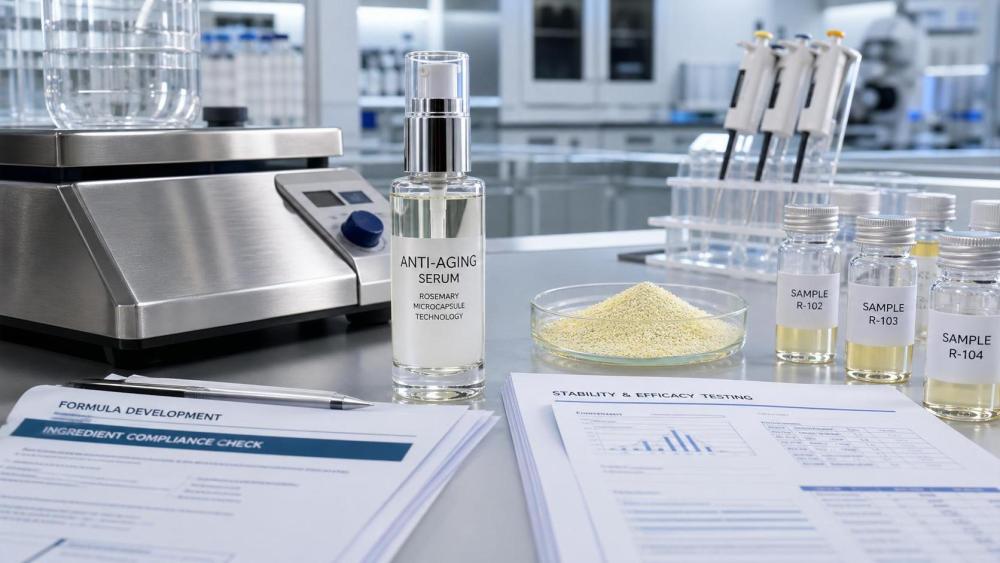
On 8 July 2026, IFRA released Amendment 54 and revised the exposure threshold for microencapsulated rosmarinic acid used in leave-on anti-aging serums, reducing the maximum dermal exposure limit by 30%. The update matters beyond a single ingredient adjustment: EU and US brands using encapsulated natural antioxidants may need reformulation, while ingredient suppliers and technical service providers are likely to face closer scrutiny over dose-response validation and supporting documentation.
What IFRA Changed on 8 July
According to the provided event information, IFRA announced revised exposure thresholds for microencapsulated rosemary antioxidants in cosmetics through Amendment 54 on 8 July 2026. The confirmed change is a 30% reduction in the maximum dermal exposure limit for microencapsulated rosmarinic acid when used in leave-on anti-aging serums. The stated basis for the revision is new in vitro transdermal absorption data.
The same event summary also indicates that this change is forcing reformulation for EU and US brands that use encapsulated natural antioxidants. It further notes rising demand for validated dose-response testing reports from ingredient suppliers.
Where the Pressure Is Likely to Appear First
Brand owners working with leave-on serum formulas
From an industry perspective, the most immediate pressure is likely to fall on cosmetic brands selling leave-on anti-aging serums in the EU and US when those formulas rely on microencapsulated rosmarinic acid or related encapsulated natural antioxidant positioning. The impact would mainly show up in formulation review, claims support alignment, and product continuity planning.
Ingredient suppliers asked to prove tolerance and exposure assumptions
Analysis shows that suppliers of encapsulated rosemary-derived antioxidant ingredients may face stronger requests for technical substantiation. The event summary specifically points to higher demand for validated dose-response testing reports, which means supplier documentation, data readiness, and response speed could become more commercially important in customer discussions.
Manufacturing and technical service teams managing change control
For contract manufacturers, formulation teams, and regulatory support providers, the likely impact is operational rather than purely strategic. What deserves closer attention is the need to translate a lower exposure threshold into practical reformulation work, specification review, and coordination with brands and raw material partners on timelines and evidence packages.
What Companies Should Watch Now
Check whether affected SKUs are tied to leave-on anti-aging use
What deserves closer attention is product scope. The confirmed event details refer specifically to microencapsulated rosmarinic acid in leave-on anti-aging serums, so companies should first identify whether existing or pipeline products fall directly within that use context before treating the update as broader than the provided facts support.
Separate the rule change from the implementation workload
Analysis shows that the rule change itself is clear in the summary, but the practical burden sits in execution. Businesses should distinguish between the confirmed threshold reduction and the internal work required to assess formula impact, supplier data sufficiency, and reformulation timing for EU and US market activity.
Prepare for deeper supplier documentation reviews
Because the event summary highlights increased demand for validated dose-response testing reports, procurement, regulatory, and technical teams should pay closer attention to the quality and completeness of supplier files. In practice, this may affect qualification reviews, documentation exchanges, and customer-facing compliance communication.
Monitor whether official wording or related guidance develops further
Observably, this type of update can trigger follow-on clarification needs in business workflows even when the headline change is already known. Companies should therefore watch for any further official wording, interpretive context, or implementation-related communications connected to Amendment 54, while keeping internal assessments anchored to confirmed facts.
Why This Looks Like More Than a Routine Ingredient Adjustment
Observation: this development is better understood as a targeted regulatory and technical signal rather than as a broad market conclusion. The combination of a lower dermal exposure threshold, a specific ingredient format, and a cited in vitro absorption basis suggests that encapsulation technology and evidence quality may receive greater attention in category-specific compliance review.
At the same time, it is more appropriate to understand this as an active area to watch rather than a fully settled long-term outcome. The confirmed information points to reformulation pressure and stronger data demands, but it does not by itself establish how widely those effects will spread beyond the stated applications and markets.
How to Read the Update at This Stage
In practical terms, this IFRA update signals a near-term compliance and formulation issue for companies tied to leave-on anti-aging serums using microencapsulated rosmarinic acid, especially in EU and US business contexts. The broader industry meaning lies in the growing importance of ingredient-level validation when delivery systems affect dermal exposure assumptions.
Current observation suggests this should be read as a concrete short-term operational change with possible longer-term signaling value. It does not yet justify sweeping conclusions, but it does warrant close attention from brands, suppliers, and service teams working around encapsulated natural antioxidant systems.
Basis of This Article and Ongoing Verification
This article is based on the user-provided news title, event date, and event summary related to IFRA's revised exposure thresholds for microencapsulated rosemary antioxidants in cosmetics. For this type of industry update, commonly relevant source categories may include official notices, company announcements, industry association releases, authoritative media coverage, and standard-setting documents.
The specific official source link was not provided in the input, so continued verification remains necessary. Areas that still merit follow-up include any further official wording tied to Amendment 54, additional implementation details, and whether market participants issue more concrete responses around reformulation and testing documentation.
Related News
- How to assess a food antioxidants distributor’s traceability practicesOct 11, 2026Food Preservation Scientist
- How natural antioxidants for oils can prevent rancidity in storageSep 25, 2026Food Preservation Scientist
- How to choose natural antioxidants for beverages with longer shelf lifeAug 23, 2026Food Preservation Scientist
- EU Tightens MRLs for Three Pesticides, Prompting Raw Material Checks for Natural Antioxidant ExportsAug 17, 2026Food Preservation Scientist
Related News
- 00
0000-00
2026 Osong Cosmetics and Beauty Expo Concludes in South Korea - 00
0000-00
How to compare cosmetic active compounds by their cost in use - 00
0000-00
HKBU Showcases DR2 Following NMPA Registration as a New Cosmetic Ingredient - 00
0000-00
How to use ingredient market insights to forecast sourcing costs - 00
0000-00
Galderma Marks 30 Years of Hyaluronic Acid Injectable Innovation
Food Preservation Scientist
Weekly Insights
Stay ahead with our curated technology reports delivered every Monday.