





On June 28, 2026, Brazil's health regulator ANVISA announced a dedicated fast-track route for Microencapsulated Fragrances used in infant and baby cleansing and care products. The change matters because it does not simply shorten a filing timeline; it ties faster registration to specific documentation, namely an ISO 16128-1 natural content declaration and a complete OECD TG 439 in vitro skin irritation report. For fragrance suppliers, infant care product manufacturers, exporters, testing providers, and procurement teams, the practical issue is whether existing technical files are already aligned with these entry requirements.
A narrower registration window with defined prerequisites
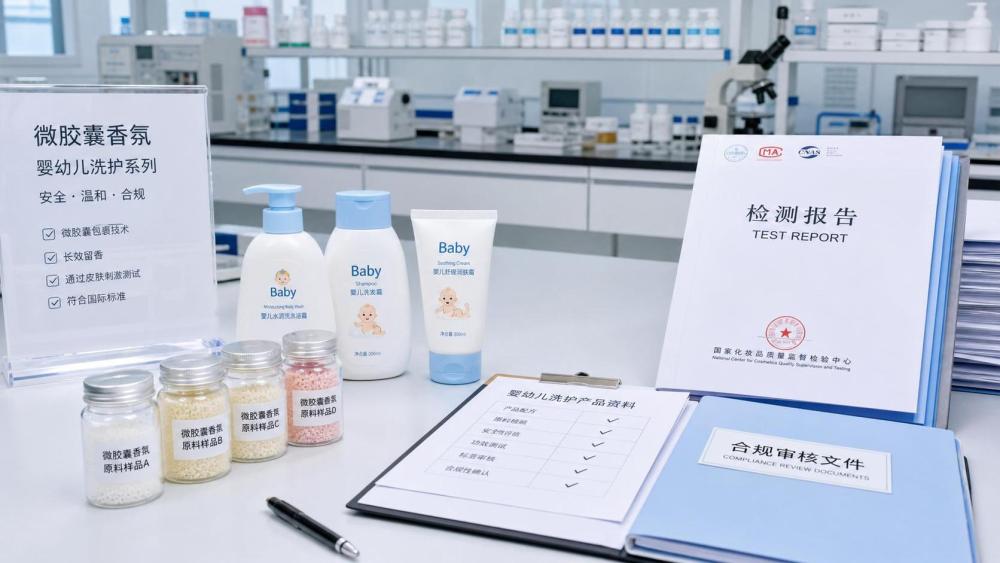
According to the provided event information, ANVISA announced on June 28, 2026 that it would launch a special rapid pathway for Microencapsulated Fragrances in infant and baby wash and care products. Under this route, the registration period is reduced from 90 working days to 22 working days. The accelerated path applies on the condition that applicants provide an ISO 16128-1 natural content declaration and a complete skin irritation in vitro test report under OECD TG 439.
Where the operational impact is likely to appear first
Formula and fragrance suppliers may face earlier document readiness pressure
From an industry perspective, suppliers of microencapsulated fragrance materials may be affected first because the fast-track route is linked to technical evidence rather than only to filing speed. The business impact is likely to appear in specification preparation, natural content substantiation, and the completeness of test documentation made available to downstream customers. What deserves closer attention is whether supply packages can support an ISO 16128-1 declaration format and a complete OECD TG 439 report without delaying customer submissions.
Infant care product manufacturers may need to re-sequence launch planning
Manufacturers of infant and baby cleansing products may see the main effect in regulatory planning, product registration scheduling, and launch coordination. A shorter formal review cycle can improve timing only when the dossier is submission-ready. In practice, compliance teams and product development teams may need to check whether products using microencapsulated fragrances are supported by the required documents before locking launch dates, packaging approvals, or market entry schedules.
Export and trade teams may need closer alignment with filing documents
For exporters and cross-border trade operators, the change may affect document coordination, customer commitments, and shipment planning. Analysis shows that a faster registration route can alter delivery expectations from buyers, but only for products that meet the stated prerequisites. Trade teams should therefore watch whether commercial timelines, contract terms, and technical submission files are aligned, especially where registration timing influences order confirmation or first shipment planning.
Testing and compliance service providers may see a shift in demand quality
Testing organizations and compliance support providers may be affected through demand for complete OECD TG 439 reporting and file review support tied to infant product submissions. The issue is not only more testing activity, but also whether reports are prepared in a form that can be used without creating registration gaps. For service providers, document completeness and consistency with the announced pathway may become a more immediate client requirement.
What companies should verify now
Check whether existing dossiers meet the fast-track threshold
Companies planning to use the accelerated route should first verify whether their current documentation genuinely satisfies the stated conditions. The key practical point is that the shorter review period appears to be conditional, so incomplete or inconsistent files may reduce the benefit of the faster route.
Review technical files used in procurement and supplier qualification
Procurement teams and supplier management functions should pay attention to how ISO 16128-1 declarations and OECD TG 439 reports are obtained, stored, and reviewed. Observably, this is relevant not only for regulatory filing but also for supplier onboarding, material substitution decisions, and purchase timing where infant care formulas contain microencapsulated fragrance components.
Watch for execution language and filing interpretation
The provided information confirms the launch of the pathway and its stated prerequisites, but it does not provide broader implementation detail. It is therefore more appropriate to understand this as an executed regulatory signal with some operational points still requiring observation, including filing interpretation, document expectations, and how consistently the route is applied in practice.
Reassess delivery assumptions tied to registration timing
Teams responsible for launch calendars, customer delivery promises, and export scheduling should avoid assuming that every relevant product will automatically move from a 90-working-day cycle to a 22-working-day cycle. Analysis shows that the timing benefit is linked directly to document readiness, so internal plans should distinguish between products that are already file-complete and those that still require testing or declaration support.
Why this looks more like an execution signal than a broad policy rewrite
Observably, the significance of this development lies in the combination of two elements: a sharply reduced registration timeline and clearly stated documentary prerequisites. That combination suggests a practical compliance signal for a defined product context rather than a general relaxation of oversight. From an industry perspective, the announcement is better read as an operational route that rewards dossier readiness. At the same time, because the provided information does not include wider implementation detail, market participants still need to watch how this pathway is interpreted in actual submissions and whether related commercial documents begin to reflect the new timing assumptions.
How this update is best understood at this stage
At this stage, the ANVISA announcement is most usefully understood as a concrete procedural change for infant and baby care products using microencapsulated fragrances, with direct implications for compliance preparation, supplier documentation, and launch sequencing. It should not yet be treated as proof of broader market outcomes. The immediate industry takeaway is straightforward: faster access appears possible, but only where the ISO 16128-1 declaration and complete OECD TG 439 reporting are already in place and usable for submission.
Basis of this article and what still needs verification
This article is based on the user-provided news title, event date, and event summary. For events of this kind, relevant source types typically include official regulator announcements, publications from supervisory authorities, trade or customs notices, industry association updates, standard-setting documents, and reporting by established industry media. A specific official source link was not provided in the input, so the exact original publication should be further verified. Follow-up monitoring is still needed on implementation detail, filing interpretation, documentation expectations, possible changes in tender or procurement documents, industry feedback, and how companies execute against the announced requirements.
Related News
- How to Choose Fragrance Ingredients for Diffusers That Stay Stable in Oil BasesAug 04, 2026Aromatics & Perfumery Fellow
- How to Choose Aroma Ingredients for Candles Based on Scent Throw and Wax CompatibilityAug 03, 2026Aromatics & Perfumery Fellow
- Home Diffuser Series Technical Guide for Fragrance BuyersJul 21, 2026Aromatics & Perfumery Fellow
- EU Bans More Microencapsulated Fragrance AllergensJul 16, 2026Aromatics & Perfumery Fellow
Related News
- 00
0000-00
2026 Osong Cosmetics and Beauty Expo Concludes in South Korea - 00
0000-00
How to compare cosmetic active compounds by their cost in use - 00
0000-00
HKBU Showcases DR2 Following NMPA Registration as a New Cosmetic Ingredient - 00
0000-00
How to use ingredient market insights to forecast sourcing costs - 00
0000-00
Galderma Marks 30 Years of Hyaluronic Acid Injectable Innovation
Aromatics & Perfumery Fellow
Weekly Insights
Stay ahead with our curated technology reports delivered every Monday.