





On May 15, 2026, Argentina moved to formally allow two methacrylate copolymers for use in dietary supplement coatings through Joint Resolution No. 2/2026 issued by ANMAT together with the Ministry of Agriculture. The update matters most to supplement ingredient suppliers, coating material exporters, manufacturers of solid dosage supplements, and supply chain teams handling market entry and customs clearance, because it defines where these materials can be used and where clear restrictions still apply.
What the Resolution Actually Confirms
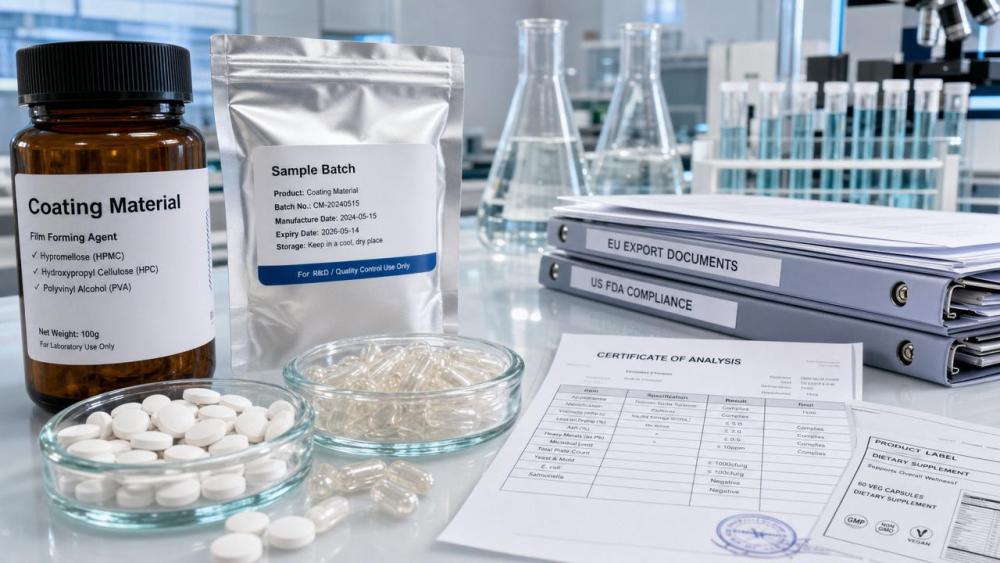
The confirmed change is the inclusion of basic methacrylate copolymer (INS 1205) and anionic methacrylate copolymer (INS 1207) in Argentina’s food code.
According to the information provided, the permitted use is limited to coatings for non-chewable solid dietary supplements. The maximum use level is 10%, and these substances are not permitted for products intended for infants and young children.
The same regulatory update is directly relevant to the compliance entry path and customs clearance route for Chinese exports of dietary supplement excipients, including enteric coating-grade polymers.
Where the Immediate Business Impact May Appear
For exporters of supplement excipients
From an industry perspective, this change may affect exporters most directly because the resolution gives a clearer compliance basis for certain coating polymers in the Argentine market. The key business impact is likely to center on product positioning, documentation alignment, and whether exported materials match the newly defined scope of use.
For supplement manufacturers using coated solid formats
Manufacturers of non-chewable solid dietary supplements may need to pay closer attention to formulation boundaries. Analysis shows that the practical relevance is not only the approval of the two substances, but also the fact that their use is tied to a specific dosage form, a maximum use threshold, and an exclusion for infant and young child products.
For customs and compliance service providers
What deserves closer attention is the operational side of compliance. Service providers involved in customs clearance, regulatory filing support, and shipment preparation may see this update as important because the rule can influence how ingredient purpose, product category, and supporting documents are reviewed in actual import procedures.
What Companies Should Watch Next
Check whether products fit the permitted use scenario
Companies should first distinguish between a general material approval and a use-specific permission. The information provided indicates that the two copolymers are allowed only for coating non-chewable solid dietary supplements, which means businesses should review whether their exported or manufactured products fall squarely within that scope.
Review use level and restricted population claims
Analysis shows that the 10% maximum use level and the prohibition for infant and young child products are likely to become focal points in product review and customer communication. Businesses handling formulations, product labels, or technical files should make sure those restrictions are reflected consistently in commercial and compliance materials.
Prepare supporting documents for trade execution
For exporters and supply chain teams, the practical issue is often not the rule text alone but whether supporting records can demonstrate alignment with the approved use conditions. This makes product specifications, application descriptions, and shipment-related documentation especially important for smoother customs handling.
Keep watching for further official clarification
Observably, one regulatory update does not automatically answer every implementation question. Companies involved in Argentina-bound business should continue monitoring whether there are additional official explanations, procedural interpretations, or related enforcement signals that affect how the rule is applied in practice.
How This Update Is Best Understood
Analysis shows that this is more than a routine ingredient listing update, because it connects regulatory text with actual market access conditions for supplement coating materials. At the same time, it is more appropriate to understand it as a targeted compliance development rather than a broad change affecting all supplement ingredients or dosage forms.
From an industry perspective, the most meaningful signal is that permitted use is being defined with clear boundaries: substance type, application scenario, maximum level, and excluded product groups. That makes the update relevant both for current transactions and for future product planning, but it also means companies should avoid reading it as an unrestricted authorization.
A Practical Reading for the Market
At this stage, the development is best read as a concrete regulatory opening with defined limits. It creates a clearer basis for the compliant use of two methacrylate copolymers in a specific supplement coating context, while leaving companies responsible for proving that their products, documents, and trade execution match the approved conditions.
For businesses connected to Argentine supplement trade, the issue is not simply whether the materials are now listed, but how precisely the listing translates into formulation control, customer communication, and customs readiness.
Basis of This Article
This article is based on the user-provided news title, event date, and event summary concerning Argentina’s approval of two methacrylate copolymers for use as dietary supplement coating agents.
For this type of development, relevant source categories usually include official regulatory notices, government announcements, company disclosures, industry association updates, authoritative media coverage, and standards-related documents. A specific official source link was not provided in the input, so the exact original publication path still requires ongoing verification.
Further observation should focus on any subsequent official wording, implementation clarification, or procedural interpretation related to compliance access and customs clearance for affected supplement excipients.
Related News
- How to Choose Fragrance Ingredients for Diffusers That Stay Stable in Oil BasesAug 04, 2026Aromatics & Perfumery Fellow
- How to Choose Aroma Ingredients for Candles Based on Scent Throw and Wax CompatibilityAug 03, 2026Aromatics & Perfumery Fellow
- Home Diffuser Series Technical Guide for Fragrance BuyersJul 21, 2026Aromatics & Perfumery Fellow
- EU Bans More Microencapsulated Fragrance AllergensJul 16, 2026Aromatics & Perfumery Fellow
Related News
- 00
0000-00
2026 Osong Cosmetics and Beauty Expo Concludes in South Korea - 00
0000-00
How to compare cosmetic active compounds by their cost in use - 00
0000-00
HKBU Showcases DR2 Following NMPA Registration as a New Cosmetic Ingredient - 00
0000-00
How to use ingredient market insights to forecast sourcing costs - 00
0000-00
Galderma Marks 30 Years of Hyaluronic Acid Injectable Innovation
Aromatics & Perfumery Fellow
Weekly Insights
Stay ahead with our curated technology reports delivered every Monday.