





Held in Tokyo from June 10 to 12, 2026, IFIA/HFE Japan highlighted more than a trade exhibition result: it pointed to a clearer market signal around Clean Label and functional flavor supply-chain alignment between Chinese ingredient suppliers and Japanese buyers. With 32 core Chinese companies organized by the China Food Additives and Ingredients Association and reported technical cooperation and order intentions exceeding US$120 million, the development deserves attention from exporters, procurement teams, formulators, compliance staff, and delivery managers because commercial demand is increasingly being tied to documentation, specification matching, and product-positioning requirements rather than price alone.
What the Tokyo event confirmed
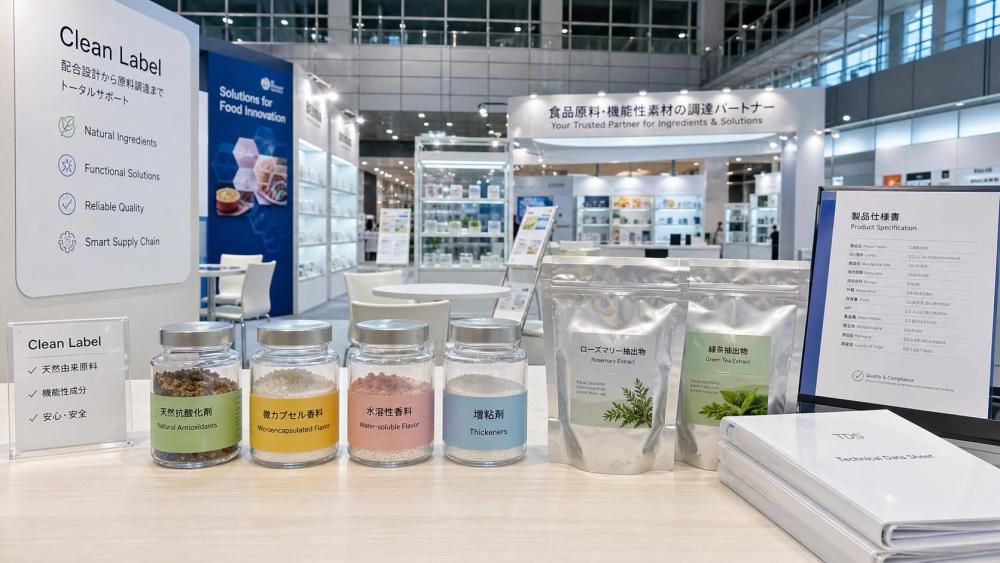
According to the provided event summary, IFIA/HFE Japan took place in Tokyo from June 10 to 12, 2026. The China Food Additives and Ingredients Association organized 32 key enterprises to participate. The featured product areas included natural antioxidants, microencapsulated flavors, water-soluble flavors, and Xanthan/alginates thickeners. Chinese exhibitors reached technical cooperation and order intentions worth more than US$120 million with Japanese buyers including Otsuka, Ajinomoto, and Lion. The event also showed faster China-Japan supply-chain coordination around Clean Label and functional flavor solutions.
Why this matters across trade and execution
Export sales are moving closer to specification-based trade
From an industry perspective, companies directly engaged in export trade may be affected because the product categories highlighted at the event are typically purchased through detailed technical review rather than simple spot transactions. The practical impact is likely to appear in specification alignment, sample confirmation, product claims, supporting documents, and delivery consistency. What deserves closer attention is whether sales teams can match buyer expectations on formulation language, application scenarios, and supporting compliance files during follow-up negotiations.
Procurement teams may face tighter screening at supplier onboarding
For raw-material buyers and procurement departments, the event suggests that sourcing interest is increasingly linked to Clean Label positioning and functional performance. Analysis shows that procurement decisions in these categories may place greater weight on ingredient descriptions, traceability materials, test records, and consistency of technical documentation. This does not confirm any new formal rule by itself, but it does signal that supplier qualification reviews may become more demanding in practice.
Manufacturing and formulation teams need closer coordination with compliance functions
Processors and formulation-driven manufacturers may be affected because natural antioxidants, microencapsulated flavors, water-soluble flavors, and thickening systems often require clear alignment between technical performance and commercial claims. The main impact is likely to fall on product development handoff, internal document control, customer-facing technical files, and batch-to-batch delivery standards. Companies involved in contract manufacturing or ingredient blending should pay attention to whether customer requirements begin to change at the documentation and validation stage before order conversion.
Supply-chain service providers may see more pressure on delivery assurance
For supply-chain service providers, the signal is less about volume alone and more about execution discipline. Observably, once cooperation moves from exhibition contact to purchase implementation, logistics coordination, shipment documentation, after-sales support, and quality traceability become more important. Businesses serving this trade flow should watch for stricter expectations on document completeness, shipment consistency, and response speed when technical questions arise after contracting.
What companies should watch next
Review how product claims are presented
Analysis shows that companies targeting Japanese buyers through the product categories mentioned in the event should recheck how they describe Clean Label and functional flavor attributes in quotations, technical sheets, and customer communications. The key point is not to assume a uniform market definition, but to ensure that wording, specifications, and supporting materials remain consistent across commercial and technical documents.
Prepare technical and quality files for follow-up discussions
What deserves closer attention is the quality of submission materials used after initial commercial contact. Exporters, account managers, and technical service teams should pay attention to the completeness of test reports, product specifications, traceability records, and other technical documents that may be requested during buyer review. The event summary does not provide execution details, so this should be understood as a practical watchpoint rather than a confirmed post-event requirement.
Monitor procurement and contract language changes
Observably, when technical cooperation and order intentions increase, one of the earliest operational shifts can appear in procurement documents, specification attachments, and supplier qualification questionnaires. Companies should monitor whether customer-side purchasing language, acceptance conditions, or delivery requirements become more detailed in follow-up negotiations tied to the highlighted ingredient categories.
Watch delivery, traceability, and after-sales expectations
From an industry perspective, commercial momentum only becomes durable when delivery execution matches technical commitments. Firms involved in export fulfillment should pay attention to quality traceability, complaint handling, and post-shipment technical response. At this stage, it is more appropriate to understand this as an area requiring closer preparation, not as evidence that a new unified enforcement standard has already taken effect.
A market signal stronger than a single exhibition result
Analysis shows that this development is best read as a practical execution signal rather than a stand-alone sales headline. The combination of buyer interest, cooperation intentions, and product focus around Clean Label and functional flavor solutions suggests that supply-chain coordination is becoming more specification-driven and documentation-sensitive. At the same time, the provided information does not establish a new formal regulation, certification regime, or binding trade rule on its own. That is why continued attention to customer requirements, document review standards, and procurement behavior remains necessary.
How this update is best understood now
At this stage, the event is more appropriately understood as evidence of accelerating market alignment in selected food ingredient categories, especially where technical performance and commercial positioning must move together. Its importance lies in the way it may influence sourcing expectations, supplier screening, and follow-up execution across export and procurement workflows. A cautious reading is still needed: the commercial outcome is clear, but the precise compliance, certification, and contract-level implications will depend on how buyers translate interest into formal purchasing and review requirements.
Basis of this article and what still needs verification
This article is generated from the user-provided news title, event date, and event summary. For events of this type, source categories commonly relevant to later verification may include official announcements, information released by regulatory authorities, customs or trade-administration updates, industry association materials, standards-body documents, and reporting by authoritative media. No specific official source link was provided in the input, so further verification is still needed. What remains worth monitoring includes later policy detail, certification interpretation, procurement document changes, industry feedback, and how participating companies implement follow-up cooperation in practice.
Related News
- How to Choose Fragrance Ingredients for Diffusers That Stay Stable in Oil BasesAug 04, 2026Aromatics & Perfumery Fellow
- How to Choose Aroma Ingredients for Candles Based on Scent Throw and Wax CompatibilityAug 03, 2026Aromatics & Perfumery Fellow
- Home Diffuser Series Technical Guide for Fragrance BuyersJul 21, 2026Aromatics & Perfumery Fellow
- EU Bans More Microencapsulated Fragrance AllergensJul 16, 2026Aromatics & Perfumery Fellow
Related News
- 00
0000-00
How to select aroma chemical ingredients for better fragrance stability - 00
0000-00
How natural food pigments for bakery hold color during baking - 00
0000-00
How to verify compliance documents for cosmetic active compounds - 00
0000-00
How to verify food grade flavor formulation ingredients for safety - 00
0000-00
How to assess an anti-aging ingredients manufacturer’s batch consistency
Aromatics & Perfumery Fellow
Weekly Insights
Stay ahead with our curated technology reports delivered every Monday.