





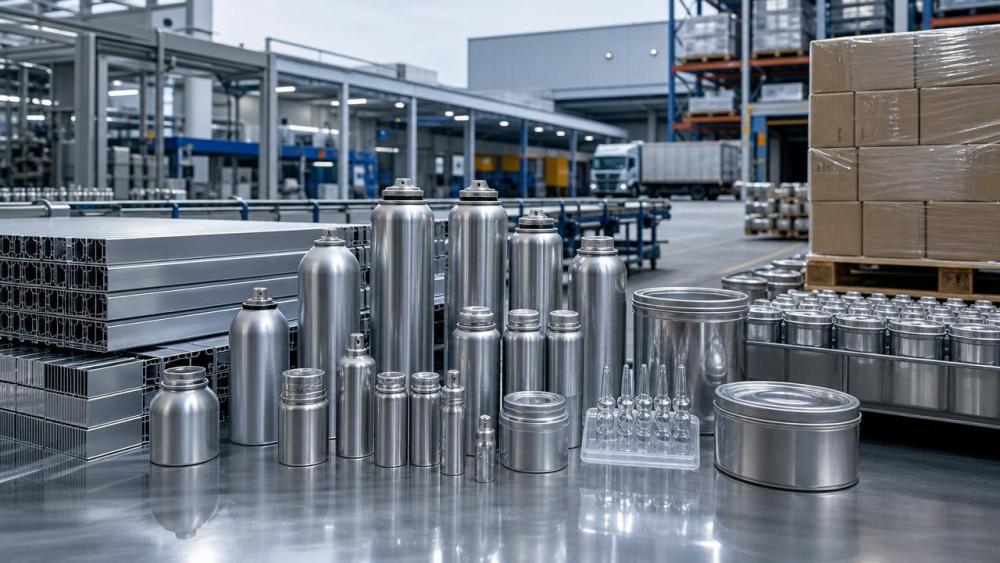
On May 28, 2026, New Zealand’s Ministry of Business, Innovation and Employment opened a safeguard investigation into imported aluminum profiles, including extruded aluminum profiles under tariff code 7604.21.0000b and related lines. While the move appears to center on construction-related materials, the development also matters for packaging used in higher-end food and cosmetic colorant applications other than natural food colorings, because aluminum profiles are used in sealed canning, aerosol cans, and vacuum ampoule packaging. For exporters, packaging converters, and buyers serving the New Zealand market, the issue deserves attention because any rise in aluminum import costs or longer lead times could pass through to packaging costs and minimum order quantities.
What Has Been Confirmed So Far
The confirmed facts are limited but commercially relevant. New Zealand’s Ministry of Business, Innovation and Employment initiated a safeguard investigation on May 28, 2026, covering imported aluminum profiles. The products involved include extruded aluminum profiles, with tariff code 7604.21.0000b specifically mentioned among the covered items. The information provided also makes clear that, beyond visible construction uses, aluminum profiles are widely used in packaging formats tied to higher-end food and cosmetic colorant products other than natural food colorings, especially sealed cans, aerosol packaging, and vacuum ampoules.
The same source information indicates that the investigation may raise the cost of imported aluminum in New Zealand and may lengthen delivery cycles. In turn, this may push up downstream packaging costs and minimum order quantities for the affected end uses. Exporters are advised to coordinate early with downstream packaging plants to assess substitution options.
Where Supply Chain Pressure May Appear First
Packaging converters face the earliest operational impact
From an industry perspective, packaging manufacturers and converters are among the first to feel the effect if the investigation changes aluminum sourcing conditions. Their exposure is tied to material procurement, production scheduling, and quotation cycles for sealed cans, aerosol cans, and vacuum ampoule packaging. What deserves closer attention is whether procurement lead times, input pricing, and order planning begin to shift before any final market adjustment becomes clear.
Exporters may see packaging become the hidden constraint
For exporters selling colorant-related products into or through the New Zealand market, the issue is not only the aluminum profile investigation itself but the risk that packaging becomes the bottleneck. Analysis shows that if packaging costs rise or minimum order quantities increase, exporters may face more difficult decisions on batch planning, contract execution, and customer pricing. This is especially relevant for products outside the natural food coloring category referenced in the source information.
Buyers and downstream brand owners need to watch order flexibility
Procurement teams and end-use buyers may be affected through less flexible packaging supply rather than immediate product shortages. Observably, if packaging plants respond to cost pressure with higher minimum order requirements or longer lead-time commitments, buyers may have to adjust replenishment timing, packaging specifications, or approval workflows. The practical issue is not only price, but whether procurement windows remain predictable.
Supply chain service providers may need to manage timing risk
Service providers involved in sourcing, scheduling, and fulfillment may also need to reassess timing assumptions. Their risk sits in coordinating upstream aluminum-related inputs with downstream packaging production and shipment commitments. What deserves closer attention is whether delivery timelines for packaging components begin to widen, creating knock-on effects for export readiness and customer communication.
What Companies Should Track Now
Follow official wording rather than market rumor
Analysis shows that the immediate priority is to monitor how the investigation is officially described and whether the scope of covered aluminum profile products becomes more operationally relevant for packaging users. Companies should separate confirmed procedural developments from assumptions about final cost outcomes.
Review packaging dependence by product line
Businesses supplying higher-end food or cosmetic colorant products other than natural food colorings should map which SKUs depend on aluminum-based sealed canning, aerosol can, or vacuum ampoule formats. This helps identify where cost sensitivity or lead-time exposure could become concentrated first.
Coordinate early with packaging plants and suppliers
The source information already points to early coordination with downstream packaging factories. In practice, this means checking alternative packaging pathways, confirming material specifications, and discussing whether substitute solutions are technically and commercially workable before procurement pressure intensifies.
Prepare customer communication around MOQ and timing
Where supply contracts depend on specific packaging formats, companies should prepare for discussions around minimum order quantities, fulfillment cycles, and quotation validity. The practical distinction here is important: a safeguard investigation is a policy process, while day-to-day business disruption usually appears first through procurement terms and delivery commitments.
Why This Looks More Like a Signal Than a Final Outcome
Observably, this development is better understood as an early supply chain signal rather than a settled market result. The confirmed event is the launch of a safeguard investigation, not a completed trade remedy outcome. That means the packaging sector linked to higher-end colorant applications is facing a period of uncertainty, not a confirmed end state.
From an industry perspective, the reason to keep watching is that the issue sits at the intersection of trade policy and packaging practicality. A measure aimed at imported aluminum profiles can matter far beyond the construction segment when those materials also support specialized packaging formats. The key question for companies is not whether disruption is already certain, but where exposure exists if cost and lead-time pressure begin to move downstream.
How the Market May Best Read This Development
At this stage, the news carries significance because it highlights how upstream trade investigations can quickly become a packaging issue for specialized downstream products. The immediate takeaway is not that all affected packaging costs will rise in the same way, but that supply chain participants with aluminum-dependent packaging should review their exposure now.
It is more appropriate to understand this as a development that requires continued observation. The investigation itself is a confirmed fact; the eventual business impact on pricing, lead times, and minimum order quantities remains an area for careful monitoring rather than a fixed conclusion.
Basis of This Article
This article is based on the user-provided news title, event date, and event summary concerning New Zealand’s safeguard investigation into imported aluminum profiles and the resulting pressure on packaging supply chains tied to higher-end food and cosmetic colorant applications other than natural food colorings. No specific official source link was provided in the input, so the official source link remains unconfirmed and should be continuously verified.
For this type of development, commonly relevant source categories may include official government notices, company statements, industry association updates, authoritative media reports, and standards-related documents. Further attention should remain on subsequent official wording, any clarification of product scope, and practical changes affecting packaging cost, delivery timing, and minimum order quantities.
Related News
- How to assess color stability from a natural food colors manufacturerOct 06, 2026Food Rheology Expert
- How natural food pigments for bakery hold color during bakingSep 20, 2026Food Rheology Expert
- EFSA Tightens MRLs for Natural Food ColorsAug 10, 2026Food Rheology Expert
- EFSA Updates Residue Limits for Natural Colorants, Drawing Attention to China’s Export Compliance PathwaysAug 08, 2026Food Rheology Expert
Related News
- 00
0000-00
Bairun Nine-Month Profit Up 20.4% to RMB 662m; Flavors and Fragrances Also Grow - 00
0000-00
How biomimetic peptides work in anti-aging skincare formulations - 00
0000-00
2026 Osong Cosmetics and Beauty Expo Concludes in South Korea - 00
0000-00
How to compare cosmetic active compounds by their cost in use - 00
0000-00
HKBU Showcases DR2 Following NMPA Registration as a New Cosmetic Ingredient
Food Rheology Expert
Weekly Insights
Stay ahead with our curated technology reports delivered every Monday.