





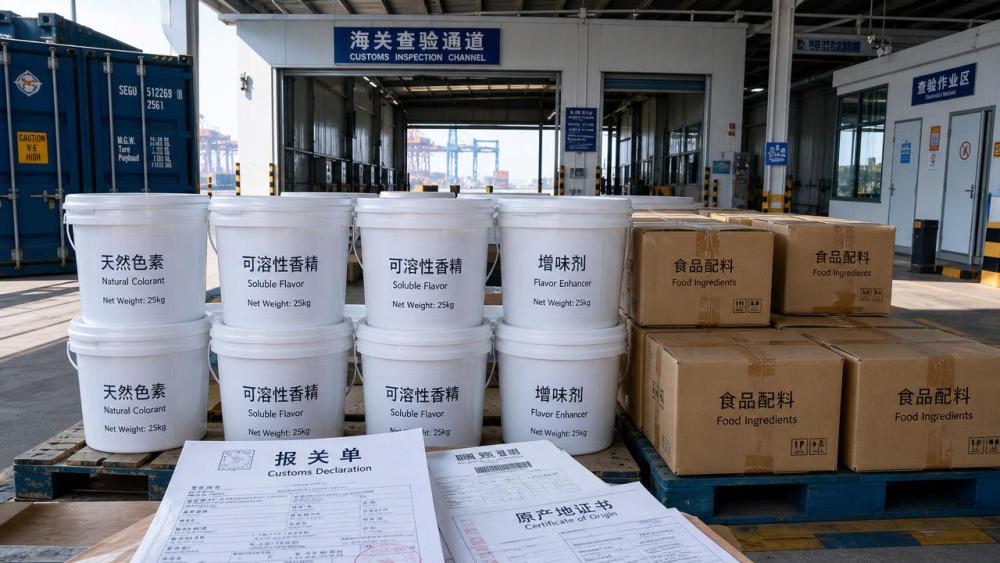
On June 7, 2026, New Zealand announced new requirements for registered food importers and imported food offered for sale, introducing a clearer compliance gate for food ingredients entering the market. From July 1, 2026, exporters shipping products such as natural colorants, water-soluble flavorings, and flavor enhancers to New Zealand must work through a locally registered importer certified by MPI, which makes this a practical issue for export routing, customs clearance, shelf access, and transaction planning across the ingredient supply chain.
A new access condition for imported food ingredients
The confirmed change is straightforward. New Zealand released the requirement on June 7, 2026, and set July 1, 2026 as the implementation date. Under this arrangement, companies exporting food ingredients to New Zealand, including natural colorants, water-soluble flavorings, and flavor enhancers, must have declarations handled by a local registered importer certified by MPI. Imported goods linked to an unregistered importer may neither clear customs nor be placed on sale. The change directly affects export pathways for natural food colorants such as curcumin and anthocyanins, as well as microencapsulated flavorings and water-soluble flavor substances.
Where the rule change is likely to be felt first
Export transactions now depend on local importer status
For exporters, the immediate issue is no longer limited to product preparation alone. The ability to move goods into New Zealand now also depends on whether the local declaration side is handled by an MPI-certified registered importer. From an operational perspective, this may affect customer onboarding, order confirmation, and shipment release timing. What deserves closer attention is whether importer qualifications are checked early enough in the sales and shipping process.
Procurement and formulation teams may face sourcing adjustments
Companies in New Zealand purchasing natural colorants, water-soluble flavorings, or related ingredient inputs may need to confirm that their upstream supply arrangements align with the new importer requirement. Analysis shows that procurement planning is likely to become more document-sensitive, especially where ingredients are used in products intended for sale without room for clearance delays. The practical focus is less about recipe change and more about whether the supply route remains compliant from entry to sale.
Distribution and market access become linked to compliance records
For channels and circulation businesses, the rule matters because the restriction is not only about border entry but also about the ability to place imported food on the market. This means distribution plans, inventory timing, and launch schedules may all depend on whether the importer side is properly registered. Observably, this connects trade compliance more directly with commercial availability.
Service providers may see stronger demand for documentation coordination
Supply chain and compliance service providers may also feel the impact, because clients will likely need more support in coordinating importer qualifications, shipment documents, and product files tied to market entry. This is an analytical observation rather than a confirmed outcome, but the rule clearly increases the importance of alignment between exporter, importer, and downstream seller.
What companies should review before the rule takes effect
Check importer arrangements before shipment booking
Companies selling affected ingredients into New Zealand should closely review whether their local counterpart is an MPI-certified registered importer under the new requirement. If that point is left until after commercial terms are agreed or cargo is ready, the risk may shift from regulatory uncertainty to shipment disruption.
Revisit product files and transaction documents
Even though the available information does not provide detailed implementation documents, companies should pay attention to whether product descriptions, declarations, and supporting materials are consistent with the new import pathway. Analysis shows that document readiness may become a practical compliance issue for natural colorants, microencapsulated flavorings, and water-soluble flavor substances that depend on smooth customs and sales approval.
Watch for further wording on execution standards
The current information confirms the registration requirement and the sales restriction, but does not provide a full execution framework. It is therefore more appropriate to understand this stage as a confirmed rule change with details still worth monitoring, especially around official interpretation, filing practice, and the exact compliance expectations attached to imported food offered for sale.
Adjust delivery and purchasing timelines cautiously
For exporters and buyers already planning supply after July 1, 2026, it would be prudent to review delivery schedules and procurement timing in light of the new importer condition. This is not a statement that delays will necessarily occur, but an observation that compliance dependency has moved closer to the transaction front end.
Why this looks like an execution signal, not just a policy headline
From an industry perspective, this development is more than a routine notice because it changes the practical route by which certain food ingredients reach the New Zealand market. Analysis shows that the key shift is procedural: market entry and sales eligibility are now tied more explicitly to the status of the local importer. At the same time, the information currently available is still limited, so the market should avoid assuming a fully settled operating model until more execution detail, commercial response, and enforcement practice become clearer.
How the market may best read this development now
The most reasonable reading at present is that this is a rule already moving into implementation, rather than a distant policy direction. For companies dealing in natural food colorants, water-soluble flavorings, flavor enhancers, and related ingredient categories, the main significance lies in compliance routing and sales eligibility rather than in a broader change to product demand itself. Observably, the near-term priority is to verify importer qualification arrangements and monitor how the requirement is applied in actual trade and sales processes.
Basis of this article and points that still need verification
This article is generated from the user-provided news title, event date, and event summary. For developments of this kind, relevant source types typically include official notices, releases from regulatory authorities, customs or trade administration updates, industry association communications, standard-setting documents, and reporting by authoritative media. The specific official source link was not provided in the input, so it still requires follow-up verification. What also remains worth tracking includes detailed implementation language, certification practice, filing expectations, procurement document changes, tender wording where relevant, industry feedback, and how companies execute the requirement in actual export and sales workflows.
Related News
- How to assess color stability from a natural food colors manufacturerOct 06, 2026Food Rheology Expert
- How natural food pigments for bakery hold color during bakingSep 20, 2026Food Rheology Expert
- EFSA Tightens MRLs for Natural Food ColorsAug 10, 2026Food Rheology Expert
- EFSA Updates Residue Limits for Natural Colorants, Drawing Attention to China’s Export Compliance PathwaysAug 08, 2026Food Rheology Expert
Related News
- 00
0000-00
2026 Osong Cosmetics and Beauty Expo Concludes in South Korea - 00
0000-00
How to compare cosmetic active compounds by their cost in use - 00
0000-00
HKBU Showcases DR2 Following NMPA Registration as a New Cosmetic Ingredient - 00
0000-00
How to use ingredient market insights to forecast sourcing costs - 00
0000-00
Galderma Marks 30 Years of Hyaluronic Acid Injectable Innovation
Food Rheology Expert
Weekly Insights
Stay ahead with our curated technology reports delivered every Monday.