




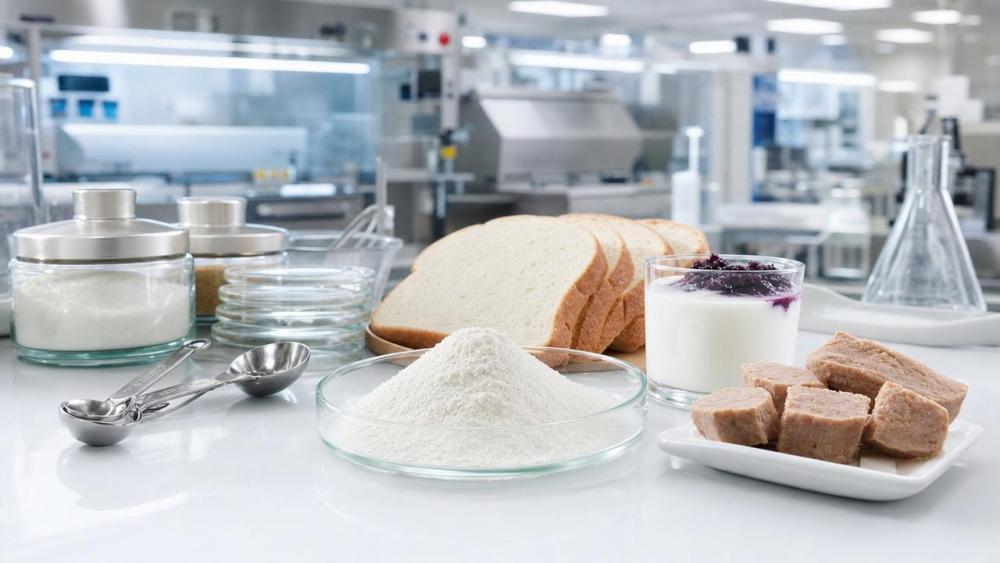
On June 5, 2026, the European Commission adopted Regulation (EU) 2026/1023, formally authorizing Inulin Propionate as a novel food for use in bakery products, dairy applications, and plant-based meat. For ingredient suppliers, food manufacturers, procurement teams, and formulation service providers, the development is worth close attention because it links regulatory approval with practical formulation questions around sugar management, anti-aging performance, natural preservation, and the replacement of part of potassium sorbate and modified starches.
What the approval confirms
According to the provided information, Inulin Propionate has been approved by the European Commission as a novel food and may be placed on the market under Regulation (EU) 2026/1023. The approved application scope mentioned in the input covers bakery, dairy, and plant-based meat. The material is described as having blood sugar control, anti-aging, and natural preservative functions, and the summary states that it can replace part of potassium sorbate and modified starches. The same information also indicates that this approval may support formulation upgrades involving Natural Antioxidants and Modified Starches.
Where the immediate business impact may appear
Formulation teams in processed foods
From an industry perspective, product development teams in bakery, dairy, and plant-based meat are the most directly affected because these are the application categories explicitly named in the approval summary. The main impact may appear in recipe design, where teams may reassess how preservation, texture, and functional positioning are combined within a single formulation system.
Ingredient sourcing and procurement decisions
Procurement functions may also be affected because the approved material is described as a partial substitute for potassium sorbate and modified starches. What deserves closer attention is not only whether substitution is technically feasible, but also how purchasing specifications, supplier documentation, and internal approval processes need to reflect a newly authorized ingredient category.
Suppliers serving natural preservation systems
For suppliers linked to natural preservatives, antioxidants, and texture systems, the update may influence how composite ingredient solutions are presented to customers. Analysis shows that the significance is less about a single ingredient alone and more about whether customers begin to evaluate combined systems that integrate preservation and thickening functions in a new way.
What companies should watch next
How official wording is applied in practice
Companies should closely review how the approved use in bakery, dairy, and plant-based meat is described in official materials and customer-facing documentation. The difference between regulatory approval in principle and practical product rollout often lies in how application scope, claims language, and technical communication are handled.
Which product lines are most likely to move first
The most relevant categories are the ones already named in the approval summary. Businesses active in those segments may need to identify whether ongoing projects involving sugar management, shelf-life support, or texture adjustment are appropriate places to evaluate Inulin Propionate within existing development pipelines.
Supplier files and compliance communication
Because this is a newly approved novel food, supplier qualification, specification sheets, and supporting compliance records are likely to become a practical focus. Observably, customer communication may need to distinguish clearly between what has been officially approved and what still requires internal validation before commercial use.
How substitution affects broader ingredient systems
The summary specifically mentions partial replacement of potassium sorbate and modified starches, so companies should pay attention to how that change affects broader formula balance. This is especially relevant where natural antioxidants and modified starch systems are already part of the product architecture.
Why this reads as a formulation signal, not just a single approval
Analysis shows that this development is more meaningful as a formulation signal than as a standalone regulatory headline. The approved uses and stated functions suggest a growing intersection between functional ingredients, natural preservation strategies, and texture system redesign. At the same time, it is more appropriate to understand this as an actionable but still developing industry signal, because the provided information confirms approval and application scope, but does not by itself establish how widely or how quickly companies will implement the ingredient across product portfolios.
How to read the development at this stage
At this stage, the approval can be read as a concrete regulatory change with potential downstream effects on ingredient selection in bakery, dairy, and plant-based meat. A neutral reading is that the news creates a clearer basis for commercial evaluation of Inulin Propionate, especially where companies are already reviewing natural preservative and thickening systems. It is more appropriate to understand the update as both a short-term operational cue for relevant product teams and a longer-term signal that composite ingredient systems may receive more attention.
Basis of this article
This article is generated from the user-provided news title, event date, and event summary. For developments of this type, commonly relevant source categories may include official regulatory notices, company announcements, industry association updates, authoritative media reports, and standard-setting documents. A specific official source link was not provided in the input, so the exact document trail still requires ongoing verification. If further follow-up is needed, the key areas to watch are subsequent official wording, market-side application in the named categories, and how businesses translate the approval into procurement and formulation practice.
Related News
- How to assess a food antioxidants distributor’s traceability practicesOct 11, 2026Food Preservation Scientist
- How natural antioxidants for oils can prevent rancidity in storageSep 25, 2026Food Preservation Scientist
- How to choose natural antioxidants for beverages with longer shelf lifeAug 23, 2026Food Preservation Scientist
- EU Tightens MRLs for Three Pesticides, Prompting Raw Material Checks for Natural Antioxidant ExportsAug 17, 2026Food Preservation Scientist
Related News
- 00
0000-00
2026 Osong Cosmetics and Beauty Expo Concludes in South Korea - 00
0000-00
How to compare cosmetic active compounds by their cost in use - 00
0000-00
HKBU Showcases DR2 Following NMPA Registration as a New Cosmetic Ingredient - 00
0000-00
How to use ingredient market insights to forecast sourcing costs - 00
0000-00
Galderma Marks 30 Years of Hyaluronic Acid Injectable Innovation
Food Preservation Scientist
Weekly Insights
Stay ahead with our curated technology reports delivered every Monday.