





For quality control and safety teams, food-grade antioxidants are no longer just shelf-life tools—they are compliance-sensitive ingredients shaped by GRAS interpretation, documentation quality, and labeling transparency. As regulatory scrutiny rises and clean-label expectations tighten, understanding the hidden risks behind approvals, usage limits, and declaration gaps is essential to protecting both product integrity and market access.
Why food-grade antioxidants now create more compliance pressure than many teams expect
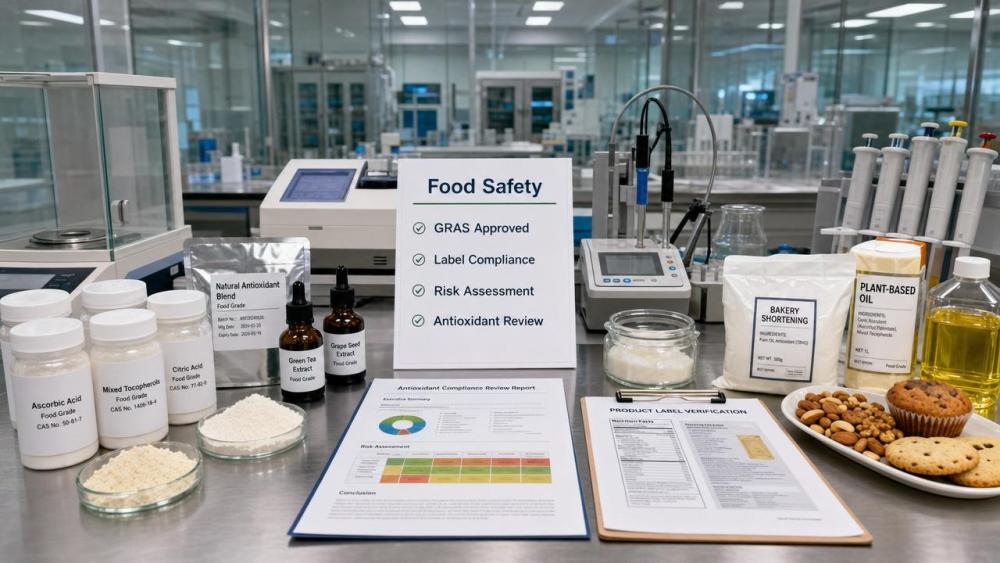
In many FMCG categories, food-grade antioxidants sit at the intersection of formulation science, supplier qualification, export compliance, and label review. They are often treated as routine additives until a customer audit, cross-border filing, or retailer clean-label review reveals missing evidence.
For QA, QC, and food safety managers, the real issue is not whether an antioxidant works. The issue is whether its regulatory basis, intended use, technical grade, carry-over logic, and declaration language can withstand scrutiny across markets.
This is where FFAI’s intelligence value matters. In preservation, texture, fragrance, active ingredients, and surfactant-linked FMCG systems, ingredient decisions rarely stand alone. An antioxidant choice can affect flavor stability, color retention, thermal processing, supplier cost, and consumer-facing claims at the same time.
- A GRAS position may be valid for one use pattern but not automatically suitable for all dosage levels, product matrices, or export destinations.
- A technically acceptable antioxidant may still trigger retailer rejection if the label name appears too synthetic for a clean-label positioning.
- A supplier specification may confirm purity, but fail to document processing aids, residual solvents, allergen risk, or origin details needed for downstream review.
That is why food-grade antioxidants should be managed as a risk category, not just a functional category.
What GRAS really means for food-grade antioxidants—and where teams misread it
One common mistake is assuming that GRAS status works like a universal approval badge. In practice, GRAS depends on intended conditions of use, scientific basis, exposure considerations, and the quality of supporting evidence.
For food-grade antioxidants, QA teams should separate three questions. First, is the substance recognized as safe under the relevant use conditions? Second, is the supplier’s material equivalent to the substance described in that basis? Third, does the finished product labeling and market claim strategy align with how the ingredient will be reviewed?
Typical GRAS-related gaps in antioxidant review
- Using a GRAS narrative from a similar ingredient family without checking whether the exact manufacturing route and composition match the purchased material.
- Ignoring matrix effects, such as fat-rich, emulsified, acidic, or heat-processed foods that may alter degradation behavior or effective use level.
- Overlooking cumulative exposure when the same antioxidant appears across multiple product lines consumed by similar population groups.
- Failing to distinguish between U.S. market logic and requirements that may differ in the EU, Middle East, or parts of Asia.
FFAI often sees that the documentation gap, not the toxicology gap, causes the commercial problem. A dossier may be scientifically defensible yet still incomplete for audit, customer onboarding, or import review.
The following table helps quality and safety teams screen food-grade antioxidants through a compliance lens rather than a purely technical lens.
This screening approach is especially useful when a business sells across retail, private label, foodservice, and export channels, where the same food-grade antioxidants may face different documentation expectations.
How labeling gaps happen even when the antioxidant itself is permitted
Labeling failures rarely start at the artwork stage. They usually begin much earlier, when procurement, R&D, and compliance teams do not align on ingredient identity, functional purpose, carry-over treatment, or customer claim strategy.
Food-grade antioxidants can appear simple on paper, but the declaration decision may depend on whether the ingredient is directly added, supplied in a blend, embedded in a flavor system, or introduced through an oil or botanical extract.
Where label review usually breaks down
- The ingredient is purchased as part of a compound system, but the full antioxidant subcomponents are not disclosed clearly enough for finished label assessment.
- A “natural” or “clean” commercial name is used internally, while the legal declaration name required by the destination market is more specific.
- The technical function changes by application. A material used for oxidative protection in one formula may be interpreted differently in another composite product.
- The finished brand team wants a short, consumer-friendly ingredient list, but the compliance team lacks evidence to justify omission or alternative wording.
This is particularly relevant in flavor-rich, color-sensitive, and oil-containing FMCG systems, where antioxidants may be hidden inside upstream ingredient blends. FFAI’s cross-category perspective is useful because preservation and sensory systems often overlap operationally, even if they are reviewed separately on paper.
The table below compares common labeling risk scenarios linked to food-grade antioxidants and shows what QC and safety teams should request before approving a material.
A label gap is often cheap to prevent and expensive to fix. Once packaging is printed, a missing antioxidant declaration can trigger rework, customer complaint, or hold-and-release costs that exceed the original ingredient savings.
Which food-grade antioxidants fit which applications best?
Selection should start with oxidation mechanism, processing stress, and consumer-facing label strategy. There is no universally best solution. The right antioxidant depends on fat composition, water activity, process temperature, target shelf life, flavor sensitivity, and market positioning.
Key selection questions for QA and safety teams
- Is the product highly unsaturated, spray-dried, fried, baked, emulsified, or retorted?
- Will the antioxidant face high-heat processing or long ambient storage?
- Is the brand using a clean-label, natural-positioned, or retailer-sensitive ingredient list?
- Does the product travel internationally, requiring multi-market regulatory alignment?
The next table is a practical application guide for food-grade antioxidants across common product systems.
This matrix shows why antioxidant selection should not be isolated from the broader formula architecture. In many products, thickeners, flavors, pigments, and oils alter oxidation behavior and therefore alter the best control strategy.
Procurement guide: what quality teams should demand before approving a supplier
A low-cost quote for food-grade antioxidants can create high downstream cost if the supplier cannot support audits, traceability, or label review. Procurement should not close on price and assay alone.
Minimum approval checklist
- Confirm specification boundaries, including assay, impurities, physical form, and any carriers or diluents.
- Request market-relevant compliance statements rather than generic declarations with undefined scope.
- Review manufacturing consistency, change notification policy, and lot-level traceability.
- Check application support for heat exposure, oxidation challenge, and compatibility with formula systems.
- Verify label guidance for each destination market, especially if private label or export channels are involved.
FFAI’s advantage is that supplier review can be connected to technical use reality. A documentation set that looks complete on paper may still be weak if it does not explain how the antioxidant performs in bakery heat, in flavor bases, or in oil-rich transcontinental distribution.
Cost, alternatives, and the clean-label tradeoff
Quality teams are often asked to support reformulation from conventional food-grade antioxidants to “natural” alternatives. The business case can be valid, but the tradeoffs must be explicit.
Natural-positioned solutions may improve label acceptance, yet they can bring higher cost-in-use, stronger odor notes, lower thermal robustness, or tighter sourcing variability. Conventional options may offer better stability control, but create retailer or consumer resistance depending on the market.
- If the main risk is heat-driven oxidation, thermal performance data should outweigh marketing language.
- If the main risk is retailer delisting due to label perception, declaration simplicity may justify a higher ingredient cost.
- If the product contains premium flavors or sensitive oils, sensory side effects should be tested before procurement commitment.
A sound decision compares total cost of ownership: ingredient price, dosage, shelf-life protection, relabeling risk, complaint exposure, and export flexibility.
Common misconceptions about food-grade antioxidants
“If it is GRAS, the label problem is solved.”
Not necessarily. GRAS logic does not replace destination-market declaration rules, customer-specific ingredient policies, or internal substantiation requirements for claims and omissions.
“Natural antioxidants always reduce regulatory risk.”
They may reduce perception risk, but can increase variability, standardization burden, or claim complexity if source materials and active markers are not tightly controlled.
“The supplier COA is enough for approval.”
A COA confirms a lot against a specification. It does not replace a full review of origin, processing route, declaration basis, market compatibility, and change control.
FAQ for quality control and safety managers
How should we evaluate food-grade antioxidants in a supplier blend?
Ask for more than the top-level blend name. You need enough compositional visibility to assess subcomponents, legal declaration implications, and any hidden carriers or stabilizers. If confidentiality applies, use controlled disclosure procedures rather than accepting a blind spot.
What is the biggest audit risk with food-grade antioxidants?
The biggest risk is inconsistency between what procurement bought, what R&D validated, what regulatory approved, and what the label team declared. When those four records diverge, auditors usually find the gap quickly.
When should we retest or revalidate an antioxidant system?
Retest after supplier change, process temperature change, oil source change, packaging change, shelf-life extension, export market expansion, or claim repositioning toward cleaner labels. These changes can alter both performance and compliance assumptions.
Are food-grade antioxidants only a concern for oils and fats?
No. They also matter in flavors, seasonings, emulsions, bakery systems, dry premixes, and products containing sensitive pigments or active botanical fractions. Oxidation control often protects sensory value as much as shelf life.
Why work with FFAI when reviewing food-grade antioxidants?
FFAI is built for ingredient decisions that cross technical, regulatory, and commercial boundaries. In food-grade antioxidants, that means linking GRAS interpretation, thermal behavior, shelf-life logic, clean-label pressure, and declaration clarity instead of reviewing each issue in isolation.
Our perspective is especially useful for companies managing complex FMCG portfolios, where one antioxidant choice can influence preservation, flavor integrity, color stability, and export acceptance at the same time.
- We help assess parameter fit, including processing stress, dosage logic, and formula compatibility.
- We support product selection decisions by comparing compliance readiness, label impact, and application suitability.
- We help teams review delivery expectations, documentation completeness, and market-specific certification concerns.
- We can assist with sample evaluation logic, quotation communication points, and custom screening frameworks for export or private-label projects.
If your team is facing uncertainty around food-grade antioxidants, you can reach out with a specific use case: formulation parameters, target markets, label constraints, supplier documents, expected delivery timing, or reformulation goals. That makes the review faster, more practical, and more aligned with actual risk.
Related News
- How to assess a food antioxidants distributor’s traceability practicesOct 11, 2026Food Preservation Scientist
- How natural antioxidants for oils can prevent rancidity in storageSep 25, 2026Food Preservation Scientist
- How to choose natural antioxidants for beverages with longer shelf lifeAug 23, 2026Food Preservation Scientist
- EU Tightens MRLs for Three Pesticides, Prompting Raw Material Checks for Natural Antioxidant ExportsAug 17, 2026Food Preservation Scientist
Related News
- 00
0000-00
2026 Osong Cosmetics and Beauty Expo Concludes in South Korea - 00
0000-00
How to compare cosmetic active compounds by their cost in use - 00
0000-00
HKBU Showcases DR2 Following NMPA Registration as a New Cosmetic Ingredient - 00
0000-00
How to use ingredient market insights to forecast sourcing costs - 00
0000-00
Galderma Marks 30 Years of Hyaluronic Acid Injectable Innovation
Food Preservation Scientist
Weekly Insights
Stay ahead with our curated technology reports delivered every Monday.