





Food-Grade Antioxidants: Natural vs Synthetic Options
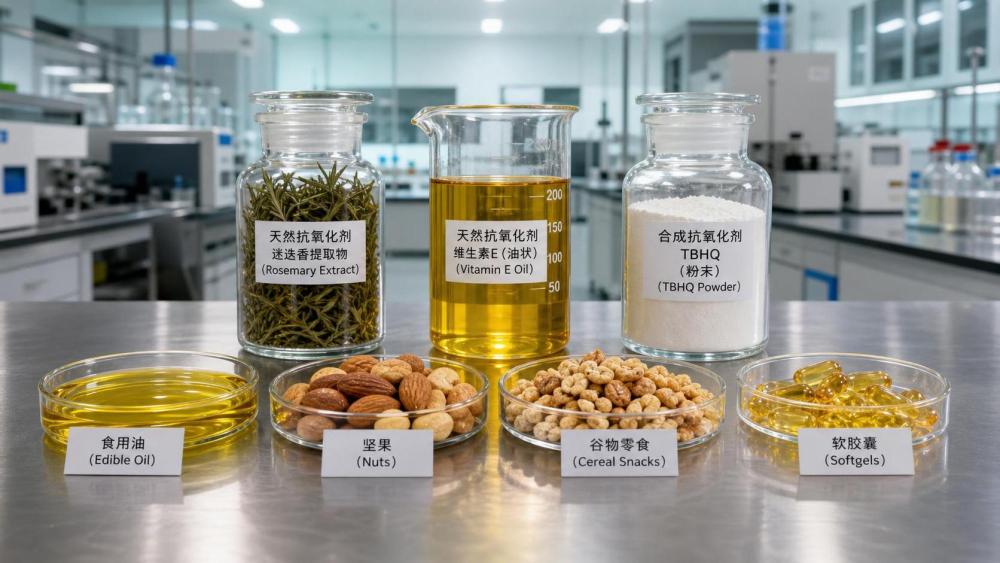
For technical evaluators, choosing food-grade antioxidants is rarely a simple natural-versus-synthetic debate.
The harder question is which option protects product quality under real process and storage conditions.
That means looking at oxidation pathways, heat load, oil phase composition, packaging, label claims, and cost-in-use together.
In practice, food-grade antioxidants perform very differently in bakery fats, meat systems, snacks, emulsions, beverages, and supplements.
Some natural options support clean-label positioning well, yet may show weaker persistence in harsh thermal or oxygen-rich environments.
Some synthetic options deliver stronger stability and predictable dosing, but may face consumer resistance or brand restrictions.
This is why food-grade antioxidants should be evaluated as part of a whole formulation and compliance strategy.
From FFAI’s market view, the strongest decisions come from matching antioxidant chemistry to shelf-life targets, process stress, and market expectations.
Why Food-Grade Antioxidants Matter in Modern Formulation
Food-grade antioxidants slow oxidation that causes rancidity, flavor loss, color fading, and nutrient degradation.
They are especially important in fats, oils, fat-containing powders, protein snacks, fried products, and fortified foods.
Oxidation does not only hurt sensory quality.
It can also reduce vitamin potency, shorten saleable life, and increase complaint risk across long supply chains.
More importantly, today’s product teams face tighter constraints than before.
They need food-grade antioxidants that work under processing stress while fitting regulatory, sensory, and labeling goals.
- Longer distribution windows increase oxidation exposure.
- Clean-label claims narrow the approved ingredient toolbox.
- High-unsaturated oils raise instability risk.
- Thermal processing can destroy weaker antioxidant systems.
- Premium products need both protection and pleasant flavor carryover.
So the right choice is not the most popular antioxidant, but the one that performs best in the intended matrix.
Natural Food-Grade Antioxidants: Strengths and Trade-Offs
Natural food-grade antioxidants usually include mixed tocopherols, rosemary extract, ascorbyl palmitate, green tea derivatives, and certain spice extracts.
Their biggest advantage is alignment with clean-label and plant-based positioning.
That matters in snacks, natural oils, dietary supplements, infant-adjacent concepts, and premium packaged foods.
Mixed tocopherols are widely used in edible oils, cereals, and nut-based products.
They are label-friendly, but their performance can vary depending on oil composition and exposure to heat.
Rosemary extract often offers stronger oxidation control, particularly in lipid-rich applications.
Still, sensory impact must be checked carefully, especially in delicately flavored systems.
This is where selection becomes practical rather than ideological.
Natural food-grade antioxidants can work very well, but they often need tighter formulation tuning.
- Best for label-sensitive products.
- Useful where marketing value supports higher ingredient cost.
- May require combination systems for stronger protection.
- Can introduce flavor, color, or dosage constraints.
- Performance often depends on extraction quality and standardization.
In short, natural food-grade antioxidants are attractive, but they are not automatically simpler to commercialize.
Synthetic Food-Grade Antioxidants: Where They Still Win
Synthetic food-grade antioxidants commonly include BHA, BHT, TBHQ, and propyl gallate, depending on regional approval scope.
They remain relevant because they deliver strong, repeatable oxidation control at relatively low use levels.
For fried snacks, shortenings, instant noodles, and certain processed fats, that reliability still matters.
TBHQ, for example, is often valued in unsaturated oil systems exposed to high thermal stress.
Compared with some natural alternatives, synthetic food-grade antioxidants may show better retention during demanding processing.
They can also improve formulation predictability when products scale across factories and geographies.
However, their weakness is no longer mainly technical.
It is commercial and reputational.
Many brand owners restrict synthetic food-grade antioxidants because of retailer policies or consumer perception.
- Strong thermal stability supports harsh processing.
- Low dosage can reduce cost-in-use.
- Performance is often more standardized lot to lot.
- Label acceptance may be weaker in premium channels.
- Regulatory limits must be checked market by market.
So synthetic food-grade antioxidants still win in some technical cases, but not always in market-facing ones.
Natural vs Synthetic Options: A Practical Evaluation Framework
A useful comparison starts with the product’s actual oxidation risk profile, not the ingredient category.
That means mapping the fat source, metal exposure, moisture activity, process temperature, oxygen ingress, and expected shelf life.
Then compare food-grade antioxidants against decision criteria that affect real launch success.
In many cases, the best answer is a blended system rather than a strict either-or choice.
Synergy with chelators, packaging barriers, and process controls can reduce the burden placed on any one antioxidant.
Key Questions Before Selecting Food-Grade Antioxidants
Selection improves when teams ask sharper questions early.
This avoids expensive late-stage reformulation or shelf-life surprises.
- What oxidation marker defines failure in this product?
- Does processing include frying, baking, retort, or spray drying?
- Is the brand committed to clean-label or natural positioning?
- Which export markets set the regulatory boundary conditions?
- Can flavor masking or color shift be tolerated?
- What is the true cost of a shorter shelf life?
These questions bring the discussion back to fit-for-purpose performance.
That is especially important when comparing food-grade antioxidants that look similar on paper but behave differently in production.
Application Scenarios Where the Choice Often Changes
The natural-versus-synthetic decision often changes by application.
Bakery fats may prioritize heat resistance and low flavor impact.
Premium granola may prioritize label clarity over maximum oxidation margin.
Processed meats may need support from cure systems, packaging, and rosemary-based solutions.
Nutritional oils and softgels often demand carefully balanced food-grade antioxidants with strong sensory protection.
- Fried snacks: synthetic options often remain technically competitive.
- Clean-label cereals: natural systems often fit better.
- Fish oil products: synergy systems are usually essential.
- Plant-based meats: flavor interaction must be screened early.
- Infused powders: process heat and carrier fat both matter.
This also explains why benchmark trials should mirror the final process, packaging, and storage route as closely as possible.
Regulatory and Commercial Fit Cannot Be Separated
Food-grade antioxidants are selected within regulatory limits, but compliance alone does not guarantee commercial suitability.
A permitted ingredient may still be rejected by retailers, certification programs, or internal brand policies.
This is where technical review should connect with market intelligence early.
FFAI tracks how ingredient compliance, process resilience, and buyer expectations increasingly move together.
The stronger strategy is to screen food-grade antioxidants against three gates at once.
- Technical fit with the food matrix.
- Regulatory fit across target markets.
- Commercial fit with brand and channel expectations.
When one of these gates is ignored, reformulation risk rises quickly.
How to Make the Final Decision
A strong decision starts with the failure mode that matters most.
If thermal stress and long shelf life dominate, synthetic food-grade antioxidants may still offer the clearest technical advantage.
If clean-label value and retailer acceptance dominate, natural food-grade antioxidants usually deserve first priority.
If the system is highly sensitive, a combined approach may be the most realistic route.
The most reliable path is to shortlist candidates, run application-specific trials, and compare oxidation data with sensory and cost outcomes.
That makes the evaluation of food-grade antioxidants evidence-based rather than assumption-based.
In today’s market, the winning antioxidant is not simply natural or synthetic.
It is the option that protects product integrity, survives the process, fits the label, and supports profitable scale.
That is the standard technical teams should use when selecting food-grade antioxidants for modern food systems.
Related News
- How to choose natural antioxidants for beverages with longer shelf lifeAug 23, 2026Food Preservation Scientist
- EU Tightens MRLs for Three Pesticides, Prompting Raw Material Checks for Natural Antioxidant ExportsAug 17, 2026Food Preservation Scientist
- China Customs Tightens Export Filing for Food Ingredients, Raising Clearance RisksAug 16, 2026Food Preservation Scientist
- How food antioxidants for oils help prevent rancidityAug 16, 2026Food Preservation Scientist
Related News
- 00
0000-00
How to verify compliance documents for cosmetic active compounds - 00
0000-00
How to verify food grade flavor formulation ingredients for safety - 00
0000-00
How to assess an anti-aging ingredients manufacturer’s batch consistency - 00
0000-00
How formulation tips prevent flavor separation in beverage applications - 00
0000-00
How biodegradable surfactants for laundry affect cold-water cleaning
Food Preservation Scientist
Weekly Insights
Stay ahead with our curated technology reports delivered every Monday.