





For quality control and safety managers, an effective cosmetic peptide delivery system for anti-wrinkle performance is not judged by marketing claims alone. It depends on peptide stability, skin penetration control, preservative compatibility, impurity risk, and compliant evidence that survives formulation scale-up and regulatory review. As anti-aging actives become more complex and premium-priced, understanding what truly governs delivery efficiency helps teams reduce safety uncertainty, protect product consistency, and support credible wrinkle-care claims in competitive global cosmetic markets.
In premium skin care, peptides are often positioned as molecular tools for visible wrinkle care. Yet their commercial value depends on whether the formula can protect them, release them, and document them consistently.
For FFAI’s ingredient intelligence perspective, peptide delivery is not only a cosmetic performance topic. It is a cross-functional quality, safety, procurement, and regulatory control issue.
What a Peptide Delivery System Must Control
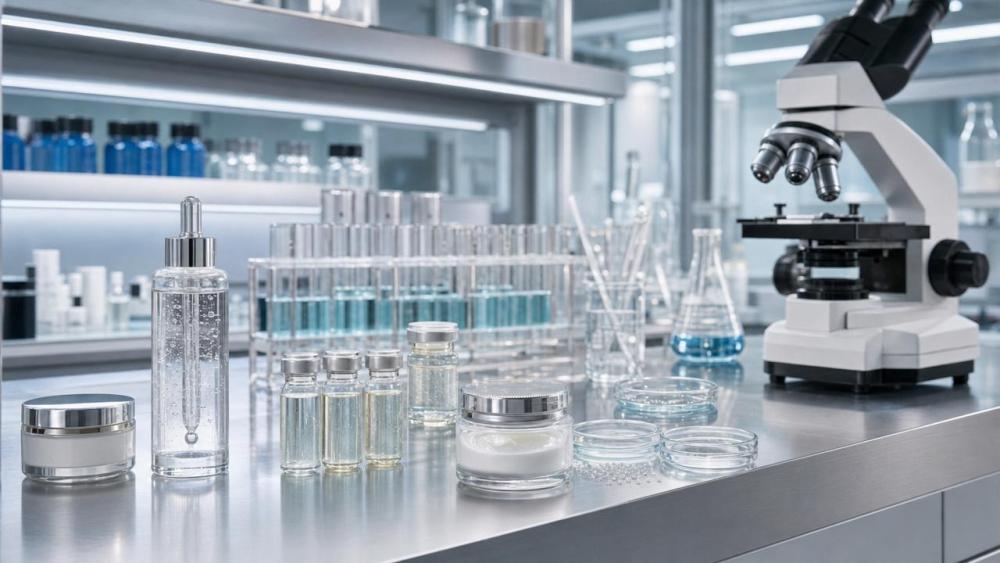
A cosmetic peptide delivery system for anti-wrinkle applications is designed to keep fragile peptide actives usable from raw material receipt to consumer application.
The system may involve liposomes, polymeric carriers, emulsions, encapsulation matrices, lamellar gels, or solubilizing blends. Each route changes risk exposure differently.
QC teams should evaluate delivery as a controlled chain with at least 5 links: identity, purity, dispersion, stability, and release behavior.
Peptide Stability Comes Before Efficacy Claims
Many cosmetic peptides are sensitive to pH, heat, oxidation, metal ions, and microbial challenge. A 3-month accelerated stability gap can become a launch delay.
Typical peptide-containing formulas are screened around pH 4.5–7.0, depending on peptide chemistry, preservative system, emulsifier selection, and skin compatibility targets.
Temperature cycling, commonly between 4°C and 45°C, helps reveal precipitation, color drift, viscosity loss, carrier rupture, or peptide degradation.
Penetration Control Is Not Unlimited Penetration
For cosmetic safety managers, the objective is targeted availability in relevant skin layers, not uncontrolled systemic exposure or aggressive barrier disruption.
A responsible cosmetic peptide delivery system for anti-wrinkle products balances deposition, retention, irritation potential, and claim boundaries under cosmetic regulations.
Key Control Points for QC Review
- Confirm peptide identity by supplier documentation and suitable analytical method, such as HPLC or LC-MS where applicable.
- Track assay variation with practical acceptance limits, often aligned to internal specifications such as 90%–110% of label target.
- Monitor particle size or droplet distribution when the carrier relies on nanoemulsion, liposomal, or vesicular architecture.
- Evaluate preservative compatibility before pilot scale, because antimicrobial systems may destabilize peptide carriers or alter release profiles.
Risk Factors That Matter in Formulation Scale-Up
Scale-up is where many elegant bench formulas become unstable. Mixing energy, heating sequence, hold time, and filling conditions can all affect peptide delivery.
A 1 kg laboratory batch may look acceptable, while a 300 kg production batch shows sedimentation, peptide loss, or microbial vulnerability after 4 weeks.
The following table helps QC and safety teams compare common delivery approaches before supplier approval, pilot validation, or claim substantiation planning.
The table shows why no single carrier is automatically safer or more effective. The correct choice depends on peptide chemistry, formula type, and evidence requirements.
Preservative Compatibility Is Often Underestimated
Preservatives protect the finished product, but they can also interact with vesicles, emulsifiers, proteins, chelators, and fragrance components.
A preservative efficacy test may pass at month 0, while peptide assay or carrier integrity declines after 30–60 days of storage.
For safety managers, the best practice is to evaluate antimicrobial robustness and peptide preservation together, not as separate approval gates.
Impurity and Residual Risk
Peptide ingredients may contain residual solvents, counterions, salts, synthesis by-products, microbial residues, or degradation fragments depending on manufacturing route.
A robust cosmetic peptide delivery system for anti-wrinkle formulas should not amplify impurity risks through heat, incompatible pH, or reactive excipients.
Practical Red Flags During Scale-Up
- Peptide assay drops more than 10% during pilot processing or initial accelerated storage.
- Carrier particle size shifts by more than 20% after temperature cycling.
- Formula viscosity changes outside the sensory or filling specification after 2 weeks.
- Preservative challenge results conflict with peptide stability or packaging compatibility data.
How QC Teams Should Evaluate Supplier Evidence
Supplier documents are useful only when they answer production and safety questions clearly. A brochure cannot replace a complete technical dossier.
For peptide actives, purchasing decisions should consider at least 6 evidence categories before commercial formula locking or international registration.
Documents That Support a Credible Ingredient Decision
A cosmetic peptide delivery system for anti-wrinkle programs should come with evidence connecting raw material quality to finished-product performance.
Safety teams should also check whether supplier data reflects the intended concentration range, application area, exposure frequency, and target market rules.
The table below outlines a procurement-oriented checklist for reviewing peptide delivery systems without relying on exaggerated anti-aging language.
The most valuable dossier is not the longest one. It is the one that connects analytical results, safety logic, and practical manufacturing behavior.
Claim Substantiation Must Match Cosmetic Boundaries
Anti-wrinkle claims should be supported by appropriate evidence, such as instrumental wrinkle evaluation, hydration data, elasticity testing, or controlled user assessment.
A 28-day or 56-day cosmetic study may support appearance-related claims when the design, endpoint, and product use conditions are reasonable.
However, wording that implies tissue repair, disease treatment, or drug-like reversal can create compliance exposure in multiple cosmetic markets.
Questions to Ask Before Approval
- Does the ingredient supplier provide test data at the same use level proposed in the formula?
- Are peptide assay methods suitable for the finished matrix, not only the neat raw material?
- Have packaging interactions been checked for pumps, droppers, airless systems, or flexible tubes?
- Can the claim language survive legal, regulatory, and retailer review in at least 2 target markets?
Implementation Workflow for Safer Anti-Wrinkle Launches
An implementation workflow turns peptide delivery from a marketing concept into a controlled manufacturing and safety practice.
For most B2B cosmetic programs, a 5-step pathway helps reduce rework before commercial production or retailer submission.
Step 1: Define the Peptide and Formula Environment
Start by mapping peptide type, target concentration, pH range, water activity, chelator level, fragrance load, and preservative system.
This stage usually takes 3–7 working days when raw material documents and prototype formulas are already available.
Step 2: Screen Compatibility Before Pilot Batch
Compatibility screening should include base formula, fragrance, colorant, thickener, surfactant traces, packaging material, and the selected peptide carrier.
A practical screening plan may use 3 temperatures, 2 light conditions, and 1 freeze-thaw cycle before deeper validation.
Step 3: Build Analytical and Microbiological Controls
Finished-product testing should be aligned with peptide risk. A formula with encapsulated peptides may need carrier integrity and assay monitoring.
Microbiological controls should include routine limits, preservative efficacy testing, and environmental monitoring where high-water formulas are produced.
Step 4: Validate Pilot and Production Consistency
Pilot validation should record mixing speed, addition sequence, temperature exposure, hold time, deaeration, filling pressure, and cleaning controls.
Commercial confidence improves when 3 consecutive lots meet peptide assay, microbiology, viscosity, appearance, and packaging compatibility specifications.
Step 5: Keep Post-Launch Surveillance Active
Post-launch monitoring should review complaints, returns, odor shifts, color change, separation, pump blockage, and safety feedback every 1–3 months initially.
This feedback loop protects the cosmetic peptide delivery system for anti-wrinkle claims after distribution stress and consumer storage variability.
Operational Metrics Worth Tracking
- Incoming peptide assay pass rate across approved suppliers and backup suppliers.
- Batch-to-batch viscosity variation, ideally controlled within formula-specific limits.
- Microbial test outcomes and preservative efficacy performance after formulation adjustments.
- Stability failure frequency by packaging type, climate zone, and storage duration.
Common Mistakes in Peptide Delivery Decisions
Many project failures come from assuming that a premium peptide automatically creates a premium product. Delivery determines how the active behaves in reality.
A cosmetic peptide delivery system for anti-wrinkle positioning must be reviewed as part of the whole formula, not as an isolated ingredient.
Mistake 1: Choosing the Highest Peptide Level First
More peptide does not always mean better formula performance. Higher levels may increase cost, irritation risk, instability, or claim scrutiny.
QC teams should evaluate a concentration ladder, such as 0.1%, 0.5%, and 1.0%, depending on supplier guidance and formula type.
Mistake 2: Ignoring Sensory and Rheology Effects
Carriers can change skin feel, tack, spreadability, residue, and viscosity. These properties influence consumer acceptance and manufacturing repeatability.
FFAI views this as a molecular sensory issue, similar to how thickeners shape mouthfeel and fragrances shape emotional perception.
Mistake 3: Treating Compliance as a Final Check
Regulatory review should begin before artwork, claims, and retailer documentation are finalized. Late-stage compliance correction often causes 2–6 weeks of delay.
Safety managers should align INCI naming, restricted substance checks, claim phrasing, and adverse event procedures early in development.
FAQ for Quality and Safety Managers
Is nano-sized delivery always better? Not necessarily. Smaller structures may improve dispersion but can raise stability, irritation, documentation, and regulatory questions.
Can one stability test confirm delivery performance? No. A stronger program combines assay, physical stability, microbiology, packaging compatibility, and real-time observation.
When should preservative testing begin? Begin during prototype screening, then repeat after formula lock and pilot scale to confirm performance.
Turning Peptide Delivery Intelligence into Safer Product Decisions
For anti-aging brands and ingredient buyers, delivery technology is valuable only when it is measurable, reproducible, safe, and commercially scalable.
The right cosmetic peptide delivery system for anti-wrinkle performance should protect peptide integrity, respect skin safety, and support compliant appearance-based claims.
FFAI connects molecular science, formulation risk, preservative logic, sensory expectations, and regulatory intelligence for teams managing high-value cosmetic actives.
If your team is comparing peptide carriers, reviewing supplier dossiers, or preparing a premium anti-wrinkle launch, request a tailored intelligence review.
Contact FFAI to discuss product details, assess technical risks, and obtain a customized solution for safer, more credible anti-aging formulations.
Related News
- How biomimetic peptides work in anti-aging skincare formulationsOct 27, 2026Cosmeceutical Formulator
- HKBU Showcases DR2 Following NMPA Registration as a New Cosmetic IngredientOct 25, 2026Cosmeceutical Formulator
- BASF to Debut Anti-Aging and Amino Acid Innovations at in-cosmetics Asia 2026Oct 22, 2026Cosmeceutical Formulator
- KANS Unveils “365 Cyclic Peptide” System for Technology-Based Anti-AgingOct 20, 2026Cosmeceutical Formulator
Related News
- 00
0000-00
Bairun Nine-Month Profit Up 20.4% to RMB 662m; Flavors and Fragrances Also Grow - 00
0000-00
How biomimetic peptides work in anti-aging skincare formulations - 00
0000-00
2026 Osong Cosmetics and Beauty Expo Concludes in South Korea - 00
0000-00
How to compare cosmetic active compounds by their cost in use - 00
0000-00
HKBU Showcases DR2 Following NMPA Registration as a New Cosmetic Ingredient
Cosmeceutical Formulator
Weekly Insights
Stay ahead with our curated technology reports delivered every Monday.