





On June 18, 2026, the latest freight index released by the Shanghai Shipping Exchange (SSE) showed a sharp rise in East China–Mediterranean shipping costs for 40-foot refrigerated containers. The move is tied to two concrete rule-related changes in shipping execution: the normalization of Red Sea rerouting and higher Suez Canal transit charges. For exporters, buyers, manufacturers, and logistics providers handling high-purity hyaluronic acid, amino acid surfactants, and microencapsulated fragrances, this matters not only as a price movement but as a change in delivery conditions, cost control, and trade execution.
What the latest freight index confirms
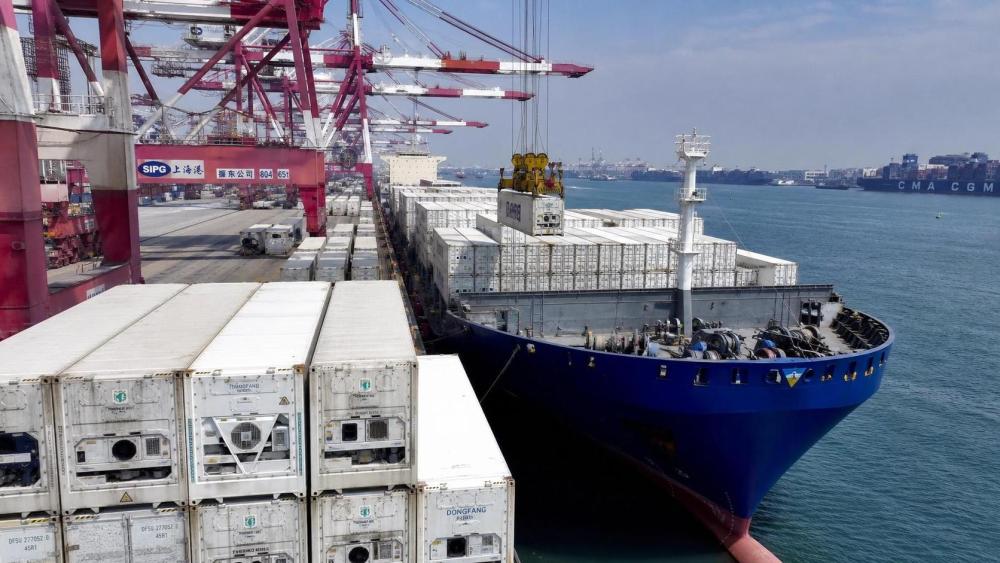
According to the SSE update issued on June 18, 2026, freight for 40-foot refrigerated containers from East China ports to Mediterranean coastal destinations such as Barcelona and Genoa rose 32% in one week to $3,820/FEU.
The summary provided states that the increase was associated with the combined effect of normalized Red Sea rerouting and an upward adjustment in Suez Canal transit charges.
The same route covers more than 60% of China’s export volume for high-purity hyaluronic acid, amino acid surfactants, and microencapsulated fragrances. Average delivery time on this route has also been extended by 5–7 days.
Where the operational pressure is likely to appear
Export contracts tied to refrigerated delivery windows
From an industry perspective, exporters shipping temperature-sensitive or schedule-sensitive goods on this lane may feel the impact first because the change affects both freight cost and transit time. The pressure is likely to appear in quotation validity, shipment scheduling, delivery commitment management, and coordination of export documents linked to dispatch timing.
What deserves closer attention is whether existing contract terms, booking arrangements, and shipping documents still match the new transport conditions. Even where no formal regulatory text is cited in the input, the freight change reflects a practical shift in trade execution conditions.
Procurement and production plans dependent on vessel timing
For procurement teams and processors connected to these exported product categories, the issue is not limited to freight expense. A 5–7 day extension in delivery cycle may affect replenishment rhythm, production planning, and batch release coordination where shipment timing interacts with customer acceptance or downstream scheduling.
Analysis shows that businesses should pay closer attention to how purchase orders, dispatch plans, and internal release schedules align with revised transit assumptions. This is especially relevant where reefer shipment timing is linked to quality retention, technical documentation handover, or customer delivery milestones.
Logistics and supply chain service providers facing execution adjustments
Supply chain service providers may be affected through route planning, booking management, transit risk communication, and documentary accuracy. Where routing patterns and canal charges shift, service providers may need to update cost assumptions and delivery notices used in customer coordination.
Observably, the key issue is less about a new standalone compliance rule and more about how existing trade and delivery obligations are performed under altered shipping conditions. That makes execution discipline, document consistency, and timing communication more important.
What companies should monitor now
Review shipment documents against longer lead times
Analysis shows that companies should check whether shipment schedules, commercial documents, and customer-facing delivery commitments remain consistent with the current 5–7 day extension indicated in the input. Where transport timing affects acceptance, release, or handover steps, mismatches may create avoidable disputes.
Reassess procurement and quotation assumptions
What deserves closer attention is whether freight-sensitive quotations, procurement cycles, and landed-cost assumptions still reflect the latest route conditions. The input confirms a rate jump and longer transit time, but it does not provide a formal long-term execution framework, so companies should treat this as an active operating variable rather than a settled baseline.
Watch for changes in official wording and market execution
Businesses should continue to monitor whether subsequent official freight updates, carrier execution practices, or trade documents begin to reflect a more stable rerouting and surcharge pattern. The current information supports attention to execution signals, but it does not by itself establish a complete or final rule framework for all transactions.
Focus on categories concentrated on this route
The route is stated to carry more than 60% of China’s export volume for high-purity hyaluronic acid, amino acid surfactants, and microencapsulated fragrances. For firms in these categories, closer review of booking priority, delivery commitments, technical file timing, and downstream service coordination is likely to be more important than broad market commentary.
How this should be read at this stage
Observably, this development is better understood as an execution signal in trade and logistics conditions rather than a standalone new regulation governing product compliance. The relevant change lies in how rerouting and canal charge adjustments are being transmitted into actual freight performance on a key export lane.
From an industry perspective, the practical significance is that cost, timing, and delivery reliability are being reshaped by operating-rule changes in maritime transit. Whether this becomes a sustained market norm still requires further observation through subsequent index releases, trade practice, and market feedback.
A measured takeaway for the market
At present, it is more appropriate to understand this event as a concrete reminder that shipping-rule execution and route-cost adjustments can quickly affect export delivery conditions for specific product groups. The confirmed facts point to a real change in transport cost and timing, while the broader commercial and compliance implications still depend on how companies, buyers, and service providers adjust in practice.
Basis of this article
This article is generated based on the user-provided news title, event date, and event summary. For this type of development, relevant source categories typically include official exchange releases, regulatory or trade authority notices, industry association updates, standard-setting documents, customs or trade administration information, and reporting by authoritative media.
A specific official source link was not provided in the input, so the original release path still needs to be verified on an ongoing basis. It also remains necessary to watch for later policy detail, certification-related execution interpretation, procurement document changes, market feedback, and company-level implementation.
Related News
- What does hyaluronic acid serum grade mean for cosmetic formulators?Sep 05, 2026Cosmeceutical Formulator
- Which transdermal delivery ingredients for skincare improve actives absorption without raising irritation riskAug 17, 2026Cosmeceutical Formulator
- FDA Opens New GRAS Route for High-Purity HAJul 24, 2026Cosmeceutical Formulator
- China Tightens HA Export Traceability RulesJul 14, 2026Cosmeceutical Formulator
Related News
- 00
0000-00
How to verify compliance documents for cosmetic active compounds - 00
0000-00
How to verify food grade flavor formulation ingredients for safety - 00
0000-00
How to assess an anti-aging ingredients manufacturer’s batch consistency - 00
0000-00
How formulation tips prevent flavor separation in beverage applications - 00
0000-00
How biodegradable surfactants for laundry affect cold-water cleaning
Cosmeceutical Formulator
Weekly Insights
Stay ahead with our curated technology reports delivered every Monday.