





For technical evaluators, flavor chemistry is more than aroma design. It is the control system behind taste stability during heating, filling, storage, and long-distance distribution. When volatile compounds, antioxidants, emulsifiers, and food matrices are understood as interacting chemical systems, flavor drift becomes easier to predict and manage. That means more consistent sensory performance, lower reformulation risk, and stronger confidence in safety and shelf-life decisions across the broader FMCG landscape.
Why flavor chemistry needs a checklist approach
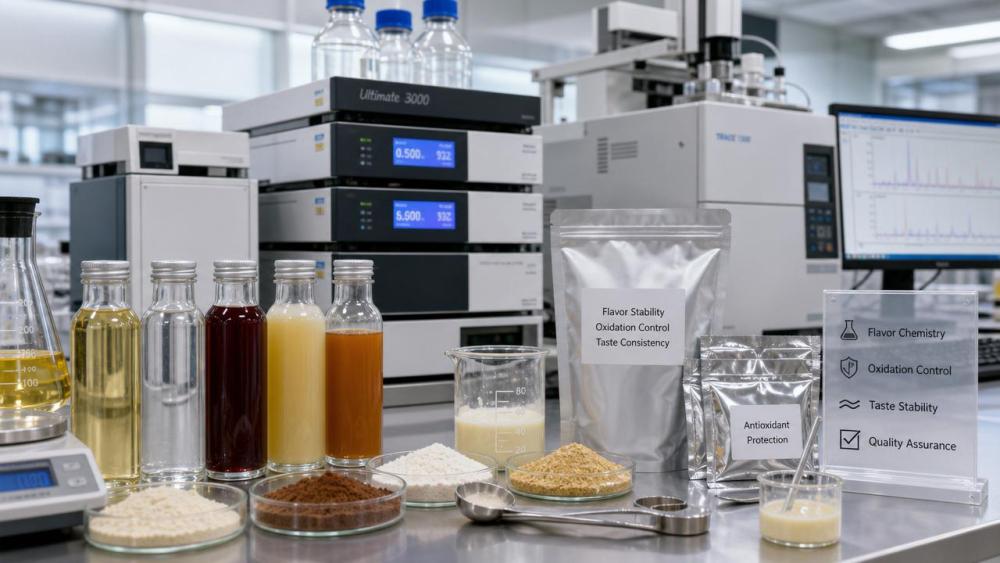
Taste instability rarely comes from one ingredient alone. It usually emerges from multiple stress points acting together. Oxygen ingress, pH shifts, thermal load, light exposure, trace metals, and packaging migration can all reshape aroma expression.
A checklist makes flavor chemistry practical. It turns sensory theory into repeatable decisions, reduces hidden formulation errors, and helps compare prototypes with a common technical language.
This matters across food, beverages, personal care, and active ingredient systems. In each case, molecular stability determines whether the intended sensory profile survives real commercial conditions.
Core flavor chemistry checklist for better taste stability
- Map volatile sensitivity before formulation. Identify which top notes oxidize, hydrolyze, evaporate, or react with proteins, sugars, acids, or minerals under realistic processing conditions.
- Measure oxygen exposure at each step. Review mixing, headspace, filling, and packaging permeability because oxygen often drives the earliest aroma loss and off-note formation.
- Check pH-dependent aroma behavior. Many aldehydes, esters, and sulfur compounds shift character or degrade faster when acidity changes during processing or storage.
- Validate heat tolerance under exact thermal profiles. Short high-temperature treatment and long moderate heating can create very different flavor chemistry outcomes.
- Review water activity and matrix structure. A dry snack, emulsion drink, and gel dessert trap and release volatiles in completely different ways.
- Pair antioxidants with the dominant degradation path. Choose systems that address lipid oxidation, radical formation, or metal-catalyzed reactions instead of applying generic protection.
- Assess emulsifier and hydrocolloid interactions. These ingredients can improve retention, but they may also mute brightness or delay flavor release.
- Screen packaging compatibility early. Sorption into seals, liners, or plastic walls can strip delicate notes and distort the intended flavor balance.
- Track sensory drift with instrumental support. Combine trained panels with GC-based volatile profiling to separate real chemistry change from perception noise.
- Stress-test against distribution reality. Include temperature cycling, light exposure, vibration, and storage duration that reflect export, retail, and consumer handling.
How flavor chemistry behaves in different application scenarios
Acidic beverages and functional drinks
In drinks, flavor chemistry often revolves around volatility, acid stability, and oxygen management. Citrus notes may appear vivid at first, then flatten as aldehydes oxidize or interact with dissolved oxygen.
Cloud systems, sweeteners, and fortification minerals also change perception. A flavor that performs well in water may fail in a vitamin drink because the matrix alters release timing and aftertaste.
Bakery, snacks, and heat-processed foods
Thermal processing challenges flavor chemistry in a different way. Some compounds flash off quickly, while others transform into cooked, caramelized, or sulfurous notes under oven or extrusion stress.
Fat oxidation is another major factor. Even when the base flavor is stable, oxidized oils can generate cardboard, painty, or rancid notes that dominate the final sensory profile.
Dairy, plant-based, and emulsified systems
Proteins and fats bind aroma compounds selectively. This can smooth harsh notes, but it can also suppress freshness. In plant-based systems, beany or green off-notes often compete with added flavors.
Effective flavor chemistry here requires balancing masking, release, and oxidation control. Hydrocolloids and emulsifiers should be reviewed not only for texture, but also for aroma delivery.
Fragrance-adjacent and sensory-led personal care formats
Although taste is not the endpoint, the same flavor chemistry principles often guide lip care, oral products, and fragranced wellness formats. Volatile retention, carrier compatibility, and oxidation control still define sensory consistency.
This is especially relevant where essential oils, cooling agents, or actives create cross-sensory effects. Chemical stability directly affects both consumer impression and compliance review.
Commonly overlooked risks in flavor chemistry
Ignoring trace metal catalysis
Very small amounts of iron or copper can accelerate oxidation dramatically. Water source, mineral premixes, and equipment contact surfaces should all be checked during root-cause analysis.
Assuming encapsulation solves everything
Encapsulation can protect volatiles, but release may become delayed, uneven, or incomplete. If the delivery system is mismatched, the flavor seems dull even when analytical retention looks strong.
Testing only fresh samples
Fresh sensory approval can hide long-term instability. Flavor chemistry decisions should include aged samples, accelerated stability, and packaging-stored controls before final sign-off.
Separating flavor from preservative strategy
Preservatives, antioxidants, and acidity regulators influence both shelf life and perception. Treating them as separate workstreams often leads to avoidable flavor losses or unexpected off-notes.
Practical execution steps that improve taste stability
- Build a degradation map for each key note, including oxidation, hydrolysis, thermal loss, light sensitivity, and matrix binding behavior.
- Run side-by-side trials with and without antioxidant, emulsifier, or hydrocolloid changes to isolate real flavor chemistry effects.
- Use packaging screening early, especially for citrus, herbal, dairy, and sulfur-containing systems with high sorption risk.
- Define acceptance using both sensory and analytical markers, such as key volatiles, peroxide indicators, and headspace retention trends.
- Align processing data with flavor review, including shear, fill temperature, residence time, deaeration, and cooling profile.
In intelligence-driven formulation work, this method reduces guesswork. It also connects flavor performance with preservation, rheology, packaging, and regulatory safety in one decision framework.
Summary and next-step action guide
Strong flavor chemistry practice protects much more than aroma intensity. It stabilizes product identity across shelf life, supports cleaner reformulation decisions, and improves confidence in global distribution readiness.
Start with a simple sequence: identify vulnerable notes, match protective tools to degradation pathways, test inside the real matrix, then verify under actual packaging and stress conditions.
When flavor chemistry is treated as a cross-functional control discipline, taste stability becomes measurable, defensible, and easier to scale. That is where better sensory consistency and stronger commercial outcomes begin.
Related News
- When heat stable flavor formulations are needed for UHT beveragesOct 04, 2026Aromatics & Perfumery Fellow
- How heat stable flavor formulations prevent aroma loss in baked goodsOct 03, 2026Aromatics & Perfumery Fellow
- Using 4-vinyl guaiacol flavour standard to calibrate sensory panelsOct 02, 2026Aromatics & Perfumery Fellow
- Garlic Powder Flavor Profiles and Their Role in Seasoning BlendsSep 28, 2026Aromatics & Perfumery Fellow
Related News
- 00
0000-00
2026 Osong Cosmetics and Beauty Expo Concludes in South Korea - 00
0000-00
How to compare cosmetic active compounds by their cost in use - 00
0000-00
HKBU Showcases DR2 Following NMPA Registration as a New Cosmetic Ingredient - 00
0000-00
How to use ingredient market insights to forecast sourcing costs - 00
0000-00
Galderma Marks 30 Years of Hyaluronic Acid Injectable Innovation
Aromatics & Perfumery Fellow
Weekly Insights
Stay ahead with our curated technology reports delivered every Monday.