





European CPNP cosmetics compliance sits at the point where formulation science, legal accountability, and market timing meet. For products moving into the EU, notification errors are rarely minor. A missing ingredient detail, an outdated label file, or the wrong responsible person record can delay launch, expose the brand to scrutiny, and weaken confidence in the product’s safety story.
That is why European CPNP cosmetics work should be treated as a control process, not an administrative afterthought. In fast-moving FMCG categories, especially those involving active ingredients, fragrances, surfactants, and preservation systems, the quality of notification data often reflects the quality of internal governance behind the formula.
Why CPNP accuracy matters more than ever
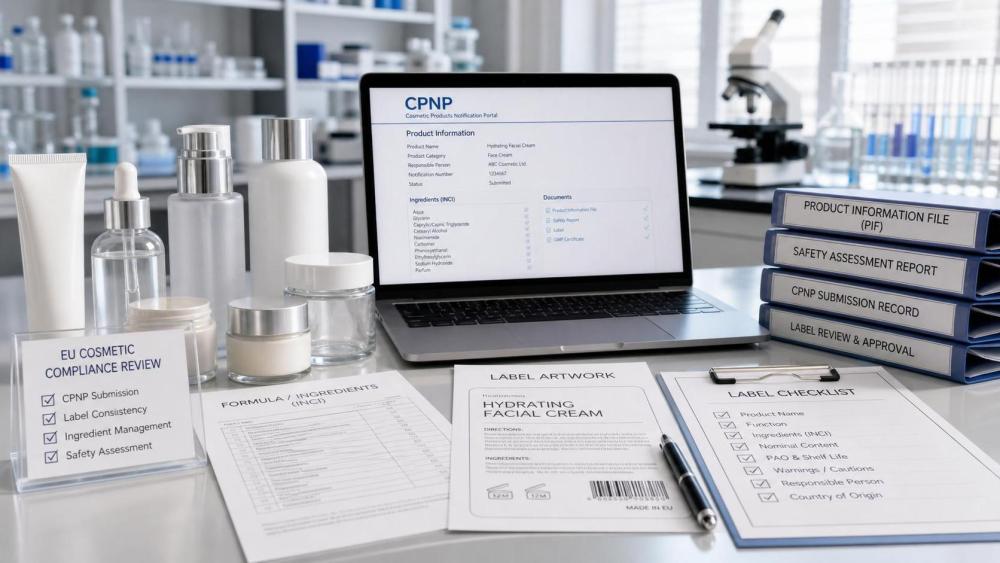
In the EU, the Cosmetic Products Notification Portal supports market surveillance and poison center access to product information. It is not a substitute for safety assessment, but it is closely tied to product traceability and compliance readiness.
This matters even more as formulas become more complex. Premium anti-aging compounds, essential oil blends, multifunctional preservatives, and sensory modifiers all bring performance value, but they also raise documentation demands. The stronger the product positioning, the less room there is for inconsistency.
FFAI follows these issues across ingredient intelligence, fragrance systems, and high-end cosmetic actives. That wider FMCG view is useful because compliance problems often begin upstream, long before the final product reaches the notification stage.
What European CPNP cosmetics compliance really covers
At a practical level, European CPNP cosmetics notification connects several records that must align. The formula, product category, label, responsible person, country of placement, and toxicological support cannot contradict one another.
A common misunderstanding is to view the portal entry as a standalone form. In reality, it is the visible output of a deeper compliance chain. If the raw material file is incomplete, if the INCI name is wrong, or if the artwork changed late, the portal entry becomes vulnerable.
For this reason, European CPNP cosmetics should be reviewed in the same way critical specifications are reviewed in quality systems: against source documents, version history, and ownership.
The records that usually need tight alignment
- Finished formula composition and ingredient naming
- Product function, format, and category classification
- Packaging artwork and mandatory label elements
- Responsible person identity and address details
- Supporting Product Information File consistency
- Serious undesirable effects reporting readiness
The compliance mistakes that cause the most disruption
Not every error carries the same risk. Some create immediate barriers at launch. Others remain hidden until an authority review, distributor check, or adverse event investigation brings them to light.
Incomplete or poorly standardized ingredient data
This is one of the most frequent weaknesses in European CPNP cosmetics files. Ingredient lists may be copied from supplier sheets without full normalization, especially when fragrance compositions, botanical extracts, or specialty actives come from multiple sources.
In cosmetic categories shaped by peptides, essential oils, preservatives, and surfactant systems, one naming inconsistency can spread across labels, specifications, and portal entries. The risk is not only clerical. It affects traceability and safety interpretation.
Labeling and portal information that do not match
Late-stage packaging edits often create this problem. Claims, shades, product names, intended use, or language variations may change after internal approval. If the CPNP record is not updated accordingly, the mismatch becomes a visible compliance fault.
European CPNP cosmetics reviews should always compare the final commercial presentation against the submitted notification data, not against draft artwork.
Incorrect responsible person details
The responsible person is central to EU cosmetics compliance. Problems arise when companies use outdated addresses, misallocate legal responsibility across affiliates, or fail to reflect changes in importer and distributor arrangements.
This is especially relevant in cross-border FMCG operations where branding, manufacturing, and distribution may sit in different entities. If the legal chain is unclear, notification accuracy suffers.
Weak product categorization
Multi-benefit products can blur category boundaries. A formula positioned around cleansing, anti-aging, scalp care, or fragrance layering may be described differently by marketing, R&D, and regulatory teams. That inconsistency creates avoidable ambiguity in European CPNP cosmetics submissions.
No control over version changes
Reformulations, supplier substitutions, fragrance adjustments, and preservative updates are common. Yet many teams still rely on manual communication across spreadsheets and emails. When version control is weak, the notified product can drift away from the marketed product.
Where these problems usually begin
Most failures in European CPNP cosmetics do not start inside the portal. They begin earlier, in fragmented data management. An ingredient supplier updates a technical file. A contract manufacturer revises a fragrance code. Marketing localizes a label. No single change seems large, but the cumulative effect becomes material.
This is where broader ingredient intelligence becomes valuable. FFAI’s cross-category lens is relevant because cosmetic compliance increasingly depends on upstream discipline in actives, fragrance materials, preservation chemistry, and surfactant systems. The portal reflects that discipline; it does not create it.
How to build a stronger review process
The most effective approach is to treat European CPNP cosmetics as part of pre-market release control. That means checking data readiness before submission, not correcting issues after launch plans are already fixed.
Focus on document linkage
Each portal field should link back to an approved source. Formula data should tie to the latest specification. Label elements should tie to final artwork. Responsible person details should match current legal records. This sounds basic, but it prevents most recurring errors.
Review high-risk formulas more carefully
Products using complex fragrance systems, botanical extracts, advanced anti-aging actives, or multiple functional additives deserve closer review. These formulas are more likely to carry upstream naming, allergen, or classification complications.
Use change control that includes regulatory checks
A formula change is not only an R&D event. It may affect the Product Information File, label text, toxicological assumptions, and European CPNP cosmetics notification status. Change approval should make that visible before revised batches move forward.
- Lock final label review before notification submission
- Confirm INCI naming against approved source files
- Check legal entity data after distributor changes
- Reassess notification needs after any reformulation
- Keep an auditable version history for all updates
A practical way to judge readiness
A useful question is simple: if an authority, poison center, or trade partner reviewed the file today, would every core record point to the same product? If the answer is uncertain, the issue is not only portal accuracy. It is system reliability.
European CPNP cosmetics compliance works best when regulatory data, ingredient intelligence, and product stewardship move together. That is especially true in premium beauty and personal care, where efficacy claims and sensory differentiation depend on sophisticated materials.
The next step is not simply to submit faster. It is to map where ingredient data enters the business, where label changes occur, and where responsibility for updates becomes unclear. Once those handoffs are visible, avoiding major European CPNP cosmetics mistakes becomes far more realistic and far less expensive.
Related News
- How to verify compliance documents for cosmetic active compoundsSep 19, 2026Dr. Chloe Vance
- How to verify food grade flavor formulation ingredients for safetySep 18, 2026Dr. Chloe Vance
- How to verify clean label ingredients for Europe meet label claimsSep 10, 2026Dr. Chloe Vance
- How essential oil ingredients affect fragrance safety in leave-on productsSep 08, 2026Dr. Chloe Vance
Related News
- 00
0000-00
How to verify compliance documents for cosmetic active compounds - 00
0000-00
How to verify food grade flavor formulation ingredients for safety - 00
0000-00
How to assess an anti-aging ingredients manufacturer’s batch consistency - 00
0000-00
How formulation tips prevent flavor separation in beverage applications - 00
0000-00
How biodegradable surfactants for laundry affect cold-water cleaning
Dr. Chloe Vance
Weekly Insights
Stay ahead with our curated technology reports delivered every Monday.