





FDA GRAS certifications can open major commercial opportunities, yet many submissions slow down for reasons that are largely avoidable. The biggest delays usually come from missing safety evidence, vague intended use, inconsistent technical files, and weak coordination across R&D, regulatory, quality, and commercialization teams.
For businesses working across food, flavor, fragrance, cosmetic-adjacent actives, and functional ingredients, understanding where FDA GRAS certifications stall is more than a legal concern. It directly affects formulation freeze dates, launch timing, export readiness, and budget control.
What are FDA GRAS certifications, and why do teams misunderstand them?
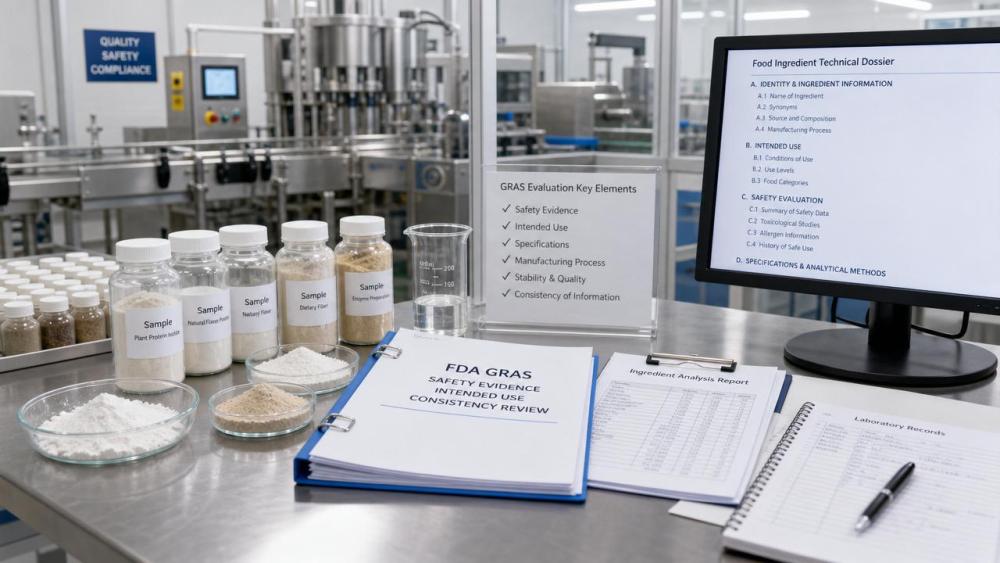
FDA GRAS certifications are often used as a market phrase, but technically GRAS refers to “Generally Recognized as Safe.” It is not identical to a simple product approval.
That distinction matters. Many delays begin when teams assume FDA GRAS certifications work like a one-step administrative license. In practice, GRAS requires a strong safety conclusion for the intended conditions of use.
A company may pursue self-affirmed GRAS or submit a GRAS notice to FDA. In either path, the quality of scientific reasoning remains central.
Confusion also appears when ingredients span multiple sectors. A flavor compound, preservative, antioxidant, hydrocolloid, or bioactive may have different exposure expectations depending on the final application.
If the intended use is not precisely framed, FDA GRAS certifications face early friction. Reviewers and expert panels need a clear answer to one question: safe for what, in which foods, and at what levels?
Common misunderstanding points
- Assuming an ingredient is safe because it is natural.
- Using broad use descriptions without category limits.
- Treating old literature as automatically sufficient.
- Ignoring manufacturing changes that affect impurity profiles.
Which documentation gaps delay FDA GRAS certifications the most?
Incomplete documentation is the most common cause of delay. Even strong ingredients can stall if the dossier does not tell one coherent scientific story.
Identity data is often weaker than expected. FDA GRAS certifications need precise composition details, specifications, manufacturing steps, impurity limits, and batch consistency evidence.
Problems multiply when technical teams provide marketing names instead of chemical identity details. For blends, extracts, fermentation-derived materials, and reaction products, this issue becomes even more serious.
Safety studies can also be poorly matched to the ingredient under review. A paper on a similar substance does not always support the exact ingredient, especially if source material or process conditions differ.
Another delay point is missing dietary exposure analysis. Without a credible estimate of expected intake, the safety conclusion remains incomplete.
Documents that frequently need rework
- Ingredient identity and analytical characterization
- Manufacturing flow and process controls
- Specifications and contaminant limits
- Stability data in realistic food systems
- Intended use levels by food category
- Estimated daily intake and cumulative exposure
- Published and unpublished toxicology support
How do intended use and exposure estimates create hidden approval delays?
Many FDA GRAS certifications do not slow down because the ingredient is unsafe. They slow down because the proposed use case is too broad, too vague, or not quantitatively supported.
For example, saying “use in foods” is not enough. The file should identify food categories, technical function, inclusion rates, and expected consumer intake under normal use conditions.
This is especially important for multifunctional ingredients. A compound may act as an antioxidant, flavor carrier, texture modifier, or preservative depending on the matrix.
Exposure modeling must reflect real consumption patterns. If usage assumptions are unrealistic, FDA GRAS certifications may face additional questions or require reformulation limits.
Cumulative exposure is another overlooked factor. If similar substances already contribute to intake, the safety rationale should acknowledge the broader dietary picture.
Practical checks before finalizing use levels
- Define each food category with market realism.
- Separate typical use and maximum use.
- Confirm technical need at the proposed concentration.
- Estimate intake using credible consumption references.
- Review whether other dietary sources change the margin.
Why do expert panel issues slow FDA GRAS certifications?
Expert panel review is not a formality. It is a core credibility layer in many FDA GRAS certifications, and weaknesses here can delay decisions significantly.
One problem is poor documentation of panel independence and expertise. Review records should show why panelists were qualified for the ingredient, exposure profile, and safety questions involved.
Another issue is shallow meeting material. If panelists receive incomplete chemistry, manufacturing, or toxicology data, the opinion may look unsupported.
Minutes and conclusions also matter. A concise opinion is not enough if it does not show the reasoning path behind the GRAS determination.
For novel extracts, biotechnology-derived ingredients, or high-purity actives crossing into food use, panel rigor becomes even more important.
How does cross-functional misalignment create preventable setbacks?
Many delays in FDA GRAS certifications begin outside regulatory writing. They start when technical, quality, legal, and commercial teams operate from different assumptions.
R&D may revise a formula source. Operations may change a solvent or carrier. Quality may tighten one limit but not update legacy specifications. Marketing may broaden claims too early.
Each change can disrupt the GRAS logic chain. If the ingredient reviewed by experts is not identical to the launch version, the submission may require major correction.
This matters across the wider FFAI landscape. Preservatives, flavors, thickeners, essential oil derivatives, and premium actives often involve global sourcing, sensitive impurities, and processing variability.
The strongest practice is a controlled review pathway. Every technical revision should trigger a fast regulatory impact check before the file moves forward.
Signals of misalignment
- Different departments use different ingredient names.
- Commercial claims exceed documented technical use.
- Supplier changes are not reflected in safety files.
- Analytical methods differ between development and release testing.
What is the fastest way to reduce delays in FDA GRAS certifications?
Speed comes from preparation, not shortcuts. The most reliable way to accelerate FDA GRAS certifications is to build the file backward from the final safety conclusion.
Start by fixing the ingredient identity, manufacturing profile, intended uses, and expected intake. Then test whether all cited studies actually support that defined material and application.
Use a pre-submission checklist that covers chemistry, exposure, toxicology, expert panel process, and change control. For complex ingredients, a cross-border intelligence approach can help align U.S. GRAS strategy with broader compliance planning.
In summary, FDA GRAS certifications rarely fail because of one dramatic mistake. They more often slow down through a chain of small, preventable weaknesses.
A disciplined approach to identity, exposure, expert review, and internal alignment can shorten timelines and reduce expensive rework. That is especially important in fast-moving ingredient markets where compliance credibility supports long-term brand value.
If a project is preparing for FDA GRAS certifications, the best next step is a structured gap review. Clarify the intended use, verify the data package, and confirm that the submission story is scientifically consistent from start to finish.
Related News
- How to verify a cosmetic nanotechnology supplier's safety documentationOct 04, 2026Dr. Chloe Vance
- How to set a control sensory flavour standard for panel consistencySep 27, 2026Dr. Chloe Vance
- How to verify compliance documents for cosmetic active compoundsSep 19, 2026Dr. Chloe Vance
- How to verify food grade flavor formulation ingredients for safetySep 18, 2026Dr. Chloe Vance
Related News
- 00
0000-00
2026 Osong Cosmetics and Beauty Expo Concludes in South Korea - 00
0000-00
How to compare cosmetic active compounds by their cost in use - 00
0000-00
HKBU Showcases DR2 Following NMPA Registration as a New Cosmetic Ingredient - 00
0000-00
How to use ingredient market insights to forecast sourcing costs - 00
0000-00
Galderma Marks 30 Years of Hyaluronic Acid Injectable Innovation
Dr. Chloe Vance
Weekly Insights
Stay ahead with our curated technology reports delivered every Monday.