





Rheological thickeners can turn a weak formula into a stable, premium-feeling product, but misuse can trigger separation, viscosity drift, clumping, and line failures.
In food, fragrance, home care, and beauty formulas, texture is not decorative. It protects suspension, dosing, safety, and consumer trust.
Rheological Thickeners: Stability Risks in Real Formula Scenarios
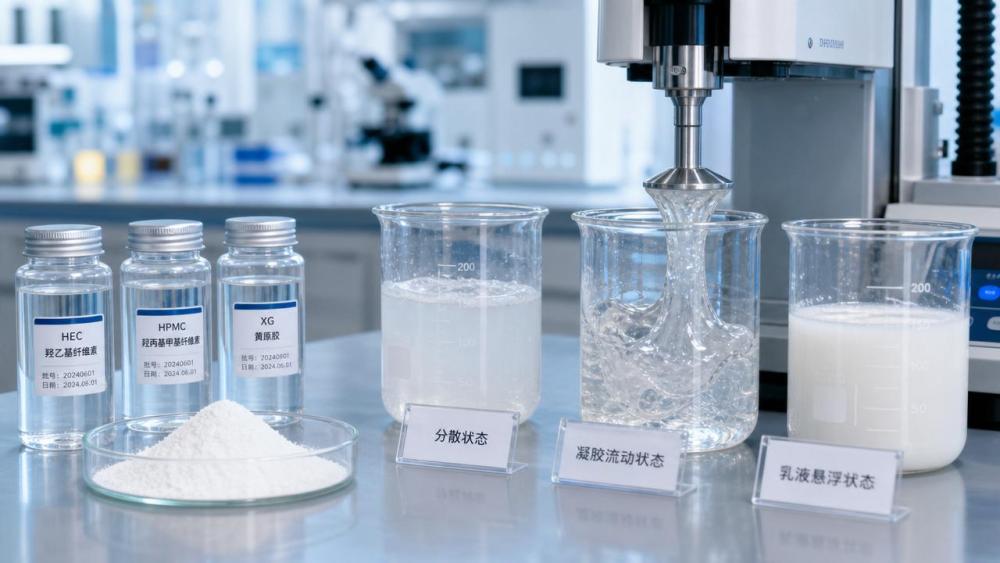
Rheological thickeners behave differently across pH, salt load, heat, shear, and ingredient order. One successful lab sample may still fail at scale.
The main risk is false confidence. A formula may look stable after mixing, then thin, separate, or form gels during storage.
FFAI views rheological thickeners as sensory and structural tools. They connect molecular hydration, consumer feel, and industrial processing discipline.
Why Scenario Judgment Matters Before Choosing Rheological Thickeners
A thickener choice should never start with viscosity alone. It should start with the formula’s stress environment and failure consequences.
Rheological thickeners face different pressures in beverages, sauces, shampoos, creams, gels, detergents, and fragrance emulsions.
A clean-label food system may need heat tolerance. A cosmetic serum may need clarity, slip, and electrolyte resistance.
A detergent gel may require surfactant compatibility. A fragrance mist may need emulsion support without tacky residue.
Scenario judgment reduces rework. It also prevents overuse, which can create stringiness, poor pouring, trapped air, or unpleasant mouthfeel.
Food Systems: When Heat, Acid, and Salt Challenge Texture
Acidic Beverages and Fruit Preparations
In acidic drinks, rheological thickeners must survive low pH, fruit acids, calcium, and pasteurization without graininess or phase separation.
Early warning signs include pulp floating, bottom sediment, viscosity loss after heat, or a cloudy ring near the bottle neck.
Xanthan gum, pectin, cellulose derivatives, and starch systems each respond differently. Hydration order and shear history are decisive.
Sauces, Dressings, and Emulsified Foods
Sauces need cling, pumpability, and freeze-thaw resistance. Rheological thickeners must hold oil droplets, spices, and insoluble solids.
Too little structure causes syneresis. Too much structure causes poor filling accuracy and unacceptable squeeze force.
The best scenario test includes hot fill, cold storage, vibration, and repeated opening. Static viscosity data alone is insufficient.
Personal Care Scenarios: Electrolytes, Actives, and Sensory Drift
Serums, Creams, and Anti-Aging Actives
Cosmetic formulas often contain peptides, acids, salts, humectants, botanical extracts, and preservatives. These can disturb rheological thickeners unexpectedly.
Carbomers may collapse under high electrolyte load. Natural gums may darken, smell, or become sticky after aging.
For high-end skincare, the stability target includes viscosity, spread, afterfeel, clarity, and active compatibility.
Shampoos, Body Washes, and Cleansing Gels
Cleansing systems are complex because surfactants, salt, fragrance, and preservatives all influence thickener behavior.
Rheological thickeners may build viscosity at one salt level, then suddenly thin when salt exceeds the optimum curve.
Common risks include pearlescent settling, fragrance separation, stringy dispensing, and viscosity changes after cold transport.
Home Care and Industrial Liquids: Shear, Suspension, and Dosing Control
Laundry gels, dish liquids, surface cleaners, and concentrates place heavy mechanical demands on rheological thickeners.
They must tolerate surfactants, builders, solvents, enzymes, dyes, and fragrance oils while maintaining controlled flow.
A formula that looks thick in a beaker may lose structure after pumping, filling, or long-distance distribution.
Suspension is especially critical for capsules, abrasives, opacifiers, or visual beads. Yield value matters more than simple viscosity.
Rheological thickeners should be screened under realistic shear. This includes recirculation, filling nozzles, and consumer dispensing conditions.
Different Scenario Demands for Rheological Thickeners
This comparison shows why rheological thickeners require scenario-specific testing. A universal choice often becomes the hidden source of instability.
Adaptation Rules: How to Reduce Formula Instability
Control Hydration Before Adding Stress Ingredients
Many rheological thickeners need full hydration before salts, acids, alcohol, oils, or surfactants are introduced.
Poor hydration creates fish eyes, clumps, uneven viscosity, and delayed thickening. These problems often appear after scale-up.
- Pre-disperse powders when possible.
- Add polymers slowly into strong vortex flow.
- Avoid dumping gums into hot concentrated phases.
- Confirm hydration time before neutralization.
Match Thickener Type to Rheology Target
Not every formula needs high viscosity. Some need suspension, quick break, sprayability, or thixotropic recovery.
Rheological thickeners should be selected by flow curve, not by appearance after one mixing step.
- Use yield value for particle suspension.
- Use shear-thinning behavior for easy pumping.
- Use elastic recovery for stable gels.
- Use low tack systems for premium skin feel.
Early Warning Signs of Thickener Failure
Instability rarely appears without warning. Rheological thickeners usually reveal stress through small visual, tactile, or process changes.
- Viscosity rises during filling, then drops overnight.
- Air bubbles remain trapped for unusually long periods.
- A watery layer appears at the surface.
- Particles settle despite acceptable viscosity readings.
- Texture becomes stringy, grainy, slimy, or rubbery.
- Pump pressure changes during continuous production.
These signals should trigger pH checks, electrolyte review, microscopy, centrifuge testing, and controlled temperature cycling.
Common Misjudgments When Using Rheological Thickeners
Mistaking Viscosity for Stability
High viscosity does not always mean strong suspension. A product can be thick yet unable to hold droplets or particles.
Yield stress, recovery after shear, and microstructure are better indicators for many scenario decisions.
Ignoring Ingredient Addition Order
Rheological thickeners can fail when oils, acids, salts, or preservatives arrive before polymer hydration is complete.
The same formula may pass or fail depending only on the process sequence.
Scaling Too Fast from Lab to Production
Lab mixers create different shear and vortex patterns than production tanks. Powder wetting and air incorporation can change dramatically.
Pilot validation should include charging speed, mixing energy, hold time, temperature profile, and transfer pumping.
Practical Test Plan for Stable Formula Decisions
A focused test plan helps identify whether rheological thickeners are robust enough for the intended market and process.
- Define the required flow behavior before choosing materials.
- Screen pH, salt, temperature, and shear tolerance.
- Compare fresh, aged, heated, frozen, and shaken samples.
- Measure viscosity at multiple shear rates.
- Check appearance, odor, color, and consumer feel.
- Confirm compliance for the target food or cosmetic market.
This approach supports safer decisions for clean-label foods, premium cosmetics, fragrance systems, and surfactant-based products.
Action Guidance: Build Texture Stability into the Formula Brief
The next step is to treat rheological thickeners as strategic formula architecture, not late-stage viscosity correction.
Start with the use scenario, storage route, processing stress, and sensory promise. Then select the thickener system around those requirements.
For stronger decisions, document ingredient order, hydration conditions, pH window, electrolyte limits, and accelerated stability outcomes.
FFAI’s intelligence perspective links molecular behavior, regulatory discipline, and sensory performance for safer global FMCG innovation.
When rheological thickeners are tested by scenario, formulas gain resilience, production gains predictability, and consumers experience reliable quality.
Related News
- How to assess a bio-based thickener manufacturer's batch consistencyOct 16, 2026Food Rheology Expert
- Verifying halal status of hydrocolloid ingredients in the Middle EastOct 15, 2026Food Rheology Expert
- Why Can Xanthan Gum Lose Viscosity After Adding Electrolytes?Oct 18, 2026Food Rheology Expert
- How Do You Test Hydrocolloid Viscosity After Changing a Thickener?Oct 17, 2026Food Rheology Expert
Related News
- 00
0000-00
Bairun Nine-Month Profit Up 20.4% to RMB 662m; Flavors and Fragrances Also Grow - 00
0000-00
How biomimetic peptides work in anti-aging skincare formulations - 00
0000-00
2026 Osong Cosmetics and Beauty Expo Concludes in South Korea - 00
0000-00
How to compare cosmetic active compounds by their cost in use - 00
0000-00
HKBU Showcases DR2 Following NMPA Registration as a New Cosmetic Ingredient
Food Rheology Expert
Weekly Insights
Stay ahead with our curated technology reports delivered every Monday.