





Beverage stability is no longer judged only by shelf life; it is measured by suspension performance, mouthfeel precision, clean-label expectations, and processing resilience. For technical evaluators, selecting rheology modifiers for beverage industry applications means balancing viscosity control, particle suspension, thermal tolerance, pH stability, and sensory neutrality within increasingly complex formulations. This article examines how hydrocolloids and advanced thickening systems help prevent sedimentation, phase separation, and texture drift while supporting scalable, compliant, and consumer-friendly beverage innovation.
For FFAI’s ingredient intelligence perspective, rheology is where molecular behavior becomes consumer experience. A drink may pass microbial testing, yet fail commercially if pulp settles within 48 hours, protein flocculates after retort, or mouthfeel turns gummy after 3 months of storage.
Technical teams therefore need more than a thickener list. They need a formulation logic that connects particle size, pH, heat history, shear rate, flavor release, labeling position, and cost-in-use across pilot and industrial batches.
Why Beverage Rheology Defines Stability Beyond Viscosity
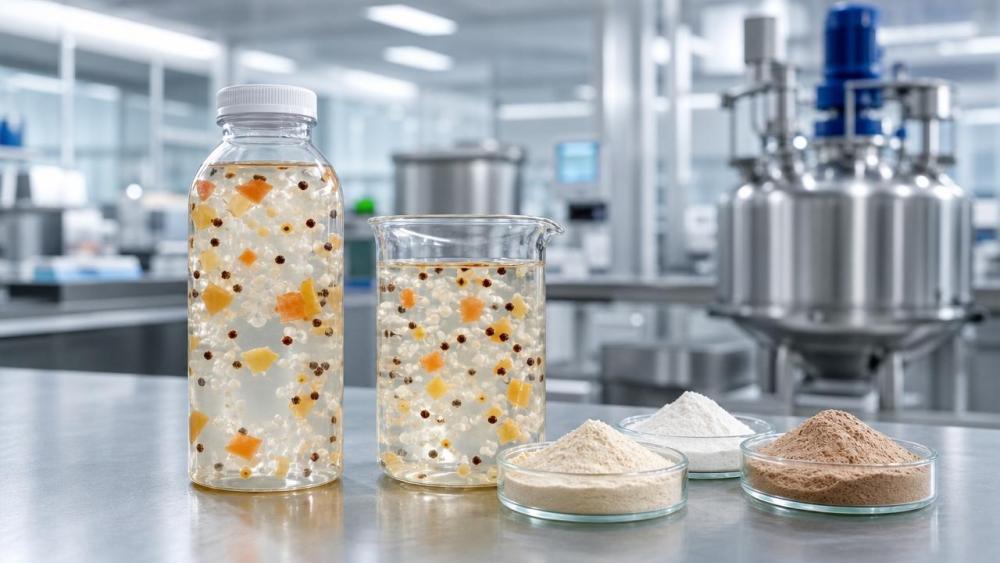
In beverage systems, viscosity is only one visible outcome of rheological design. The more important question is how a fluid behaves under rest, pumping, filling, drinking, and storage at 4°C, 25°C, or 35°C.
Rheology modifiers for beverage industry formulations are used to create controlled flow behavior. The target is often low viscosity during processing and pouring, combined with enough yield value to keep cocoa, fiber, pulp, minerals, or plant protein suspended.
The 4 failure modes evaluators must control
- Sedimentation, where insoluble particles drop because gravitational force exceeds the suspension network.
- Creaming, where fat droplets or emulsified phases rise during static storage.
- Syneresis, where gels or protein systems release water after thermal or pH stress.
- Texture drift, where viscosity changes after 2–12 weeks due to hydration, enzyme activity, or ionic interactions.
A technically sound system should be evaluated at multiple shear points, not only by a single Brookfield value. A beverage may show 150–600 cP at low shear, yet still feel light if shear-thinning behavior is properly designed.
Why clean-label pressure changes the modifier decision
Clean-label strategies have pushed many brands toward recognizable hydrocolloids, plant-based stabilizers, and lower dosage systems. However, natural origin does not automatically mean easy processing or neutral taste.
For technical evaluators, the practical question is whether a modifier can deliver performance at 0.05%–0.40% addition, survive pasteurization or UHT conditions, and remain compatible with acids, minerals, flavors, colors, and preservatives.
Common Rheology Modifiers for Beverage Industry Applications
The beverage sector uses hydrocolloids, modified starches, fibers, pectins, cellulose derivatives, and blended stabilizer systems. Each option has a different hydration profile, thermal response, mouthfeel contribution, and labeling implication.
The table below compares practical choices often considered during technical screening. Actual dosage depends on solids content, pH, heat process, particle load, and target sensory profile.
The main conclusion is that dosage alone cannot determine suitability. A 0.05% gellan system may outperform a 0.30% gum blend for mineral suspension, while pectin may be superior when protein stability below pH 4.2 is the priority.
Xanthan and gellan: suspension specialists
Xanthan gum is valued for high low-shear viscosity and tolerance across broad pH ranges, often from around pH 2.5 to 8.0. It is useful where pulp, cocoa, spice, or insoluble fiber must remain dispersed.
Gellan gum can form a delicate suspension network at low usage. It is especially relevant for plant-based beverages with added calcium, though ion concentration and heat activation must be tested carefully.
Pectin, CMC, and starch: body, protein control, and sensory rounding
Pectin is frequently selected for acidified dairy and fruit systems because it can protect protein surfaces under acidic conditions. Evaluators should monitor hydration time, sugar content, and final pH adjustment sequence.
CMC and starch-based systems provide body and smoothness in flavored milk, nutritional shakes, and meal replacements. They may require 15–30 minutes of controlled hydration to avoid fish eyes or inconsistent viscosity.
Technical Evaluation Criteria for Stable Beverage Formulation
A reliable assessment of rheology modifiers for beverage industry projects should combine lab measurements, sensory review, and process simulation. A modifier that works in a 1-liter beaker may fail in a 5,000-liter tank.
FFAI recommends building the evaluation around 6 practical checkpoints: hydration method, shear tolerance, pH window, heat stability, suspension behavior, and flavor interaction. These checkpoints reduce costly reformulation after scale-up.
Measurement parameters that matter
- Measure viscosity at 2–3 shear conditions to reflect storage, pouring, and drinking behavior.
- Run accelerated storage at 35°C–45°C for 2–4 weeks when the commercial shelf life exceeds 6 months.
- Check pH before and after heat treatment, especially in protein and mineral-rich beverages.
- Evaluate sediment height, serum layer, or creaming ring every 7 days during pilot validation.
- Compare sensory release at chilled and ambient serving temperatures, typically 4°C–25°C.
Rheological curves are more informative than a single endpoint. Shear-thinning fluids can feel refreshing during drinking while still preventing visible sedimentation during static storage.
Compatibility with flavors, colors, preservatives, and actives
Beverage formulation rarely involves one ingredient family. Natural colors, botanical extracts, essential oil emulsions, antioxidants, preservatives, proteins, vitamins, and minerals can all influence network strength.
For example, citrus oil emulsions may need stabilizer support against creaming, while anthocyanin colors require pH discipline. Potassium sorbate, benzoate, and organic acids can also shift perceived body and flavor clarity.
Processing, Scale-Up, and Compliance Considerations
Industrial success depends on how the modifier enters the process. Incorrect powder addition can create lumps, delayed hydration, foam, or viscosity overshoot after filling. These defects often appear after 24–72 hours.
Most hydrocolloids require controlled dispersion before full hydration. Dry blending with sugar, pre-slurrying in oil, or using high-shear induction can reduce agglomeration and shorten batch correction time.
The following process table outlines a practical validation route for technical evaluators comparing rheology modifiers for beverage industry commercialization.
This staged approach helps separate material performance from processing error. If viscosity rises only after overnight storage, the issue may be delayed hydration rather than excessive dosage.
Heat, shear, and homogenization effects
Pasteurization, retort, and UHT processing can change hydration state, protein interaction, and network strength. Some systems improve after heating, while others lose viscosity after excessive shear or long holding times.
Homogenization pressure, often assessed across ranges such as 50–250 bar in beverage development, can reduce droplet size but may also disrupt weak gel networks if the sequence is poorly designed.
Regulatory and label review
Compliance evaluation should confirm permitted use, regional labeling terminology, allergen status, and documentation such as specification sheets, safety data, origin statements, and food-grade declarations.
For export-oriented beverage brands, the same stabilizer may be accepted in one market but require different naming or usage verification in another. Early review can prevent relabeling or formula withdrawal.
Application Scenarios and Formulation Strategies
Different beverage categories require different rheological fingerprints. A clear functional drink, a high-protein shake, and a fruit smoothie may all need stability, but they do not need the same mouthfeel.
Plant-based and protein beverages
Plant-based drinks often contain suspended protein, minerals, oil droplets, and insoluble fiber. A stabilizer system may need to manage calcium salts, pH 6.5–7.2, heat treatment, and cereal or legume flavor masking.
In high-protein drinks, the key risk is not only sediment. Heat-induced aggregation can create graininess, chalkiness, or serum separation. Pectin, CMC, carrageenan, or blended systems may be screened based on protein source.
Juice, tea, coffee, and functional drinks
Acidic beverages typically operate around pH 3.0–4.2. The modifier must remain stable without dulling flavor top notes or creating a heavy finish that conflicts with refreshment positioning.
Ready-to-drink coffee and tea may involve tannins, dairy components, emulsified flavors, and sweetener systems. Even small hydrocolloid changes can alter aroma release and perceived bitterness after 30–90 days.
Clean-label sensory balancing
Many clean-label projects fail because formulators replace one stabilizer with another at equal dosage. A better approach is to rebuild the rheological system around solids, acidity, heat process, and target drinking texture.
For premium beverages, a 0.02% dosage adjustment can change the perception from fresh to syrupy. Sensory panels should therefore review appearance, pour, first sip, aftertaste, and residue separately.
Procurement Guidance for Technical Evaluators
Selecting rheology modifiers for beverage industry procurement is not a commodity exercise. Cost per kilogram matters, but cost-in-use, rework reduction, documentation quality, and supplier consistency usually matter more.
A lower-priced gum may become expensive if it requires longer hydration, causes batch variability, or forces higher dosage. Technical sourcing should compare at least 3 dosage levels and 2 processing routes before approval.
Recommended supplier questions
- What is the standard viscosity specification, and what test method is used?
- How does the ingredient perform after pasteurization, UHT, or retort simulation?
- What particle size, hydration guidance, and dispersion method are recommended?
- Can the supplier provide food-grade documentation and regional compliance support?
- What are the normal lead time, MOQ, batch traceability process, and shelf-life conditions?
Typical procurement reviews include specification consistency, microbial limits, heavy metal limits where relevant, packaging integrity, storage recommendations, and lot-to-lot viscosity variation.
Common mistakes to avoid
One common mistake is evaluating only fresh samples. Some beverages look stable on day 1 but show sediment, color ring formation, or viscosity collapse after 4 weeks at elevated temperature.
Another mistake is ignoring sensory neutrality. A modifier can solve separation but suppress fruit top notes, increase sweetness perception, or create lingering coating that damages brand preference.
How FFAI Supports Ingredient Decisions
FFAI views beverage stabilizers as part of a wider FMCG ingredient architecture that includes preservatives, antioxidants, natural pigments, flavors, functional actives, and processing aids.
Our intelligence approach helps technical teams connect molecular function with commercial reality. A stable beverage should satisfy lab data, sensory intention, production efficiency, label strategy, and market positioning at the same time.
Decision framework for formulation teams
For new beverage development, a practical framework includes 5 steps: define stability targets, map ingredient interactions, screen candidate modifiers, validate processing resilience, and confirm consumer-relevant sensory performance.
For reformulation, the process should begin with failure diagnosis. Sedimentation, creaming, protein instability, and texture drift require different corrective mechanisms, even when they appear as similar shelf-life complaints.
The best rheology modifiers for beverage industry innovation do not simply thicken liquids. They protect appearance, guide mouthfeel, stabilize active ingredients, reduce production uncertainty, and support credible clean-label or premium claims.
Technical evaluators should select systems through measured rheology, real process simulation, and disciplined sensory review rather than generic substitution. This reduces launch risk and supports scalable beverage quality.
If your team is comparing hydrocolloids, troubleshooting separation, or building a clean-label beverage platform, FFAI can help structure the evaluation and identify practical formulation pathways. Contact us to get a customized solution or consult specific ingredient details.
Related News
- How to assess a bio-based thickener manufacturer's batch consistencyOct 16, 2026Food Rheology Expert
- Verifying halal status of hydrocolloid ingredients in the Middle EastOct 15, 2026Food Rheology Expert
- Why Can Xanthan Gum Lose Viscosity After Adding Electrolytes?Oct 18, 2026Food Rheology Expert
- How Do You Test Hydrocolloid Viscosity After Changing a Thickener?Oct 17, 2026Food Rheology Expert
Related News
- 00
0000-00
2026 Osong Cosmetics and Beauty Expo Concludes in South Korea - 00
0000-00
How to compare cosmetic active compounds by their cost in use - 00
0000-00
HKBU Showcases DR2 Following NMPA Registration as a New Cosmetic Ingredient - 00
0000-00
How to use ingredient market insights to forecast sourcing costs - 00
0000-00
Galderma Marks 30 Years of Hyaluronic Acid Injectable Innovation
Food Rheology Expert
Weekly Insights
Stay ahead with our curated technology reports delivered every Monday.