





Biodegradable Surfactants: Cost vs Performance
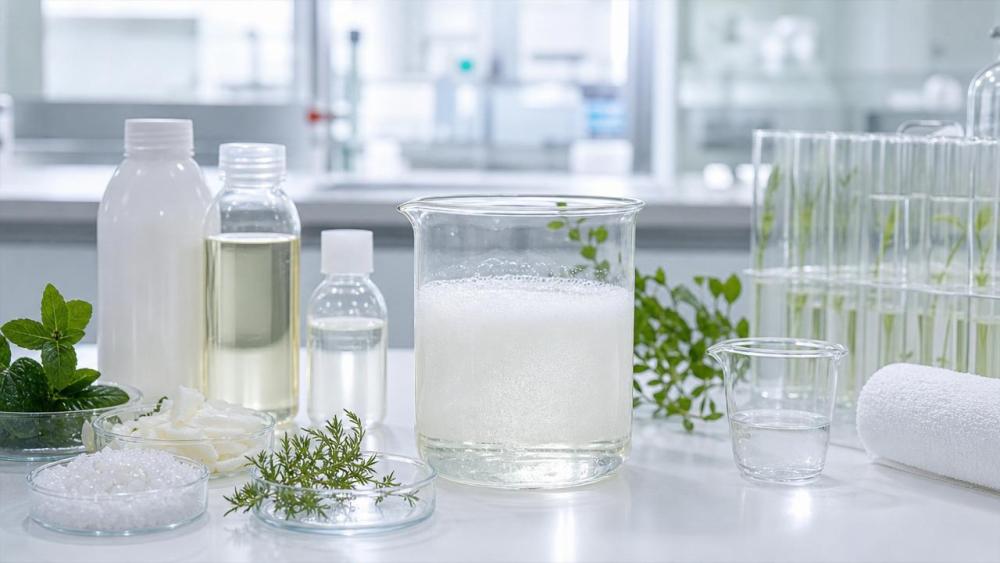
For FMCG formulation economics, biodegradable surfactants are no longer a simple sustainability checkbox.
They have become a strategic cost-performance decision across detergents, shampoos, cleansers, cosmetics, and industrial hygiene systems.
Brands face tighter regulation, clean-label expectations, and pressure to reduce aquatic toxicity without weakening consumer-visible performance.
The central question is practical: can biodegradable surfactants match conventional systems in cleaning, foam, mildness, stability, and total cost?
The answer depends on chemistry, concentration, co-surfactant design, water hardness, processing limits, and the final product promise.
The Market Signal Is Shifting From Green Claims To Measurable Performance
The strongest trend is not simply “natural.” It is verified biodegradability combined with reliable sensory and functional performance.
Biodegradable surfactants now sit at the intersection of regulation, ingredient transparency, premium positioning, and formula resilience.
In home care, their value is judged by stain removal, cold-water performance, and compatibility with enzymes and builders.
In personal care, biodegradable surfactants must deliver foam elegance, scalp mildness, viscosity response, and fragrance compatibility.
In cosmetics, mild biodegradable surfactants also support micellar systems, cream cleansers, and hybrid skin-barrier positioning.
This is why cost evaluation is moving beyond price per kilogram toward cost per delivered consumer experience.
Why Biodegradable Surfactants Are Gaining Commercial Momentum
Several forces are pushing biodegradable surfactants from niche alternatives into mainstream formulation roadmaps.
These drivers explain why biodegradable surfactants are being evaluated as strategic formula assets, not optional substitutions.
Cost Is Not Only Ingredient Price
A direct price comparison can mislead decision-making.
Some biodegradable surfactants cost more per kilogram but work at lower active levels or improve claims architecture.
Others require more salt, hydrotrope, fragrance adjustment, or preservation tuning, raising hidden formulation costs.
The relevant metric is total system cost, including active matter, process energy, stability risk, testing, and claim validation.
Biodegradable surfactants also influence packaging strategy, marketing language, retailer acceptance, and long-term compliance exposure.
- Compare active matter cost, not supplied-liquid cost.
- Measure dosage needed for the same cleaning result.
- Include viscosity builders, solubilizers, and preservatives.
- Account for claim testing and documentation.
- Evaluate premium pricing potential and retailer fit.
Performance Trade-Offs Are Becoming More Specific
Older debates framed biodegradable surfactants as weaker cleaners.
That view is too broad for current chemistry.
Modern options include alkyl polyglucosides, amino acid surfactants, methyl ester sulfonates, betaines, and selected biosurfactants.
Each family has different behavior in foam, oil removal, mildness, electrolyte tolerance, and hard-water resistance.
Biodegradable surfactants can outperform conventional systems in mildness and skin feel, especially in facial and scalp products.
However, they may need smart pairing to match high-degreasing industrial cleaners or heavy-duty laundry detergents.
Application Economics Differ By Category
The best business case for biodegradable surfactants depends heavily on category positioning.
In shampoos, mildness and foam aesthetics can justify higher surfactant cost through premium sensory claims.
In facial cleansers, biodegradable surfactants support low-irritation narratives and compatibility with barrier-care actives.
In laundry liquids, cost pressure is stronger, so performance per wash becomes the decisive metric.
In dishwashing liquids, foam longevity, grease cutting, and hand mildness must be balanced carefully.
In institutional cleaning, biodegradable surfactants must prove dilution efficiency, stability, and dependable cleaning under variable water quality.
What Formula Strategy Changes When Sustainability Becomes Mandatory
When biodegradable surfactants become a core requirement, formula design becomes more integrated.
A single drop-in replacement rarely delivers the best economics.
Better results often come from surfactant architecture: primary cleanser, foam modifier, amphoteric mildness booster, and rheology support.
This approach reduces the risk of overpaying for one expensive green ingredient.
It also helps biodegradable surfactants express their strengths through synergy rather than isolated performance.
- Use blends to balance detergency, foam, and mildness.
- Test across realistic water hardness conditions.
- Validate fragrance stability and solubilization behavior.
- Check viscosity response under heat and cold cycles.
- Confirm biodegradability documentation before claim launch.
Supply Stability Is A Hidden Performance Factor
Biodegradable surfactants are often linked to renewable feedstocks, including coconut, palm kernel, sugar, starch, or fermentation substrates.
That creates exposure to crop cycles, certification availability, regional logistics, and competing demand from food or oleochemical markets.
Supply reliability should therefore be evaluated alongside foam curves and cleaning results.
A technically excellent surfactant can damage margins if lead times fluctuate or substitution options are limited.
For global FMCG systems, dual sourcing and specification flexibility reduce risk without diluting sustainability targets.
Key Evaluation Points Before Switching Systems
The decision to adopt biodegradable surfactants should follow a structured scorecard.
The strongest scorecards combine laboratory performance, regulatory confidence, sensory results, and commercial resilience.
- Define the non-negotiable product promise first.
- Benchmark against the current formula, not theory.
- Measure performance at actual use dilution.
- Assess irritation, odor, color, and preservation interactions.
- Model cost per use, not only input price.
- Check biodegradation method, timing, and certification credibility.
This prevents biodegradable surfactants from being judged unfairly or adopted prematurely.
How Cost-Performance Decisions May Evolve Next
The next phase will favor biodegradable surfactants with stronger proof packages and broader formulation compatibility.
Biosurfactants may gain attention as fermentation economics improve, especially where premium natural positioning matters.
Amino acid surfactants will likely remain attractive in mild personal care, despite higher cost.
Alkyl polyglucosides should continue expanding in home care because they offer biodegradability and useful foam support.
Methyl ester sulfonates may grow where laundry economics require stronger cleaning at more accessible cost.
A Smarter Way To Balance Cost And Performance
The winning approach is not choosing the cheapest surfactant or the greenest story.
It is identifying where biodegradable surfactants create measurable value in the finished product.
That value may appear as lower irritation, better label acceptance, stronger retailer fit, or reduced environmental liability.
It may also appear as premium pricing, consumer trust, and resilience against future compliance pressure.
When these gains exceed added formulation cost, biodegradable surfactants become a commercial advantage.
When they do not, the answer may be phased adoption, hybrid blends, or category-specific reformulation.
Next Actions For More Reliable Sourcing Decisions
Start by mapping current surfactant systems against performance gaps, claim risks, and future regulatory exposure.
Then shortlist biodegradable surfactants by chemistry family, active concentration, documentation quality, and supply security.
Run side-by-side tests at realistic dosage, water hardness, temperature, and soil conditions.
Finally, calculate cost per use and connect results to market positioning.
For ingredient intelligence, FFAI tracks surfactant chemistry, compliance signals, and cost-performance shifts across global FMCG categories.
With disciplined evaluation, biodegradable surfactants can protect product quality, support cleaner claims, and strengthen long-term margin logic.
Related News
- Ingredient Application Guidance for Home Care: Common Formulation MistakesJul 10, 2026Surfactant Chemistry Architect
- Cold-Process Bio-Based Thickeners: Performance Trade-Offs in Low-Energy ProductionJun 29, 2026Surfactant Chemistry Architect
- How to Assess Consumer Goods Ingredients for Household ProductsJun 28, 2026Surfactant Chemistry Architect
- Green Chemistry Surfactants: Market Shifts, Compliance Pressure, and R&D PrioritiesJun 20, 2026Surfactant Chemistry Architect
Related News
- 00
0000-00
2026 Osong Cosmetics and Beauty Expo Concludes in South Korea - 00
0000-00
How to compare cosmetic active compounds by their cost in use - 00
0000-00
HKBU Showcases DR2 Following NMPA Registration as a New Cosmetic Ingredient - 00
0000-00
How to use ingredient market insights to forecast sourcing costs - 00
0000-00
Galderma Marks 30 Years of Hyaluronic Acid Injectable Innovation
Surfactant Chemistry Architect
Weekly Insights
Stay ahead with our curated technology reports delivered every Monday.