





For business evaluators, green chemistry surfactants are no longer just a sustainability checkbox—they are a strategic cost-performance decision shaping detergents, personal care, food-adjacent cleaning, and premium FMCG formulations.
As brands pursue biodegradability, safer toxicological profiles, and clean-label credibility, procurement teams must still justify foaming power, emulsification, mildness, supply reliability, and price premiums.
This article examines how to assess the real commercial value of green chemistry surfactants, balancing regulatory resilience and consumer trust against formulation performance and total cost of ownership.
Where Green Chemistry Surfactants Change the Business Equation
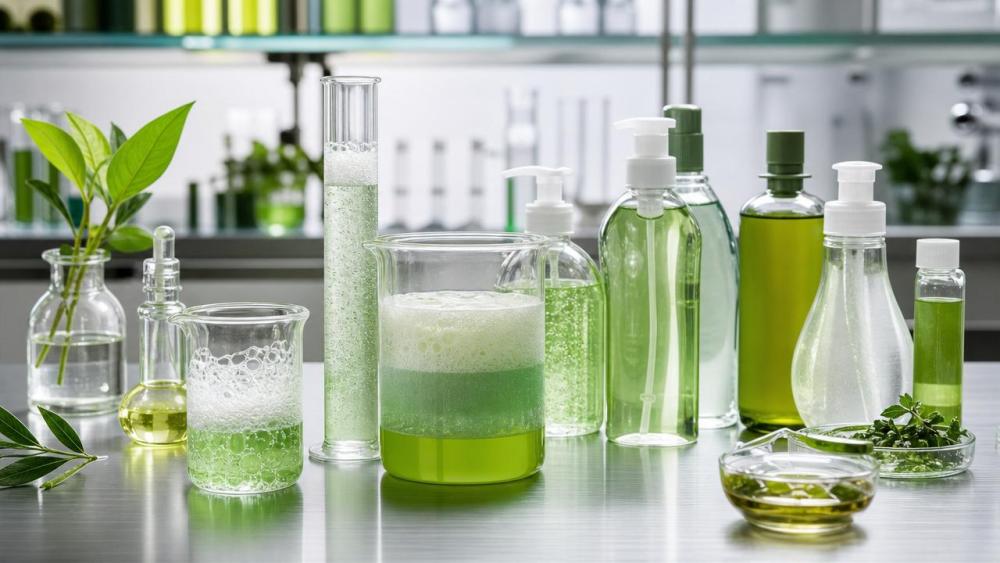
Green chemistry surfactants affect far more than an ingredient list. They reshape claims, sensory quality, compliance risk, and shelf positioning.
In household cleaning, the key question is detergency per dose. In personal care, the question becomes mildness, foam texture, and irritation control.
In food-adjacent cleaning, residues, odor, and rinse behavior matter. In premium beauty, green chemistry surfactants support both performance and ingredient storytelling.
A direct price comparison often misleads. A biosurfactant may cost more per kilogram yet reduce active dosage or improve label value.
The practical evaluation should include formulation stability, manufacturing compatibility, logistics risk, regulatory endurance, and consumer willingness to pay.
Scenario Background: Why One Surfactant Does Not Fit Every Formula
Green chemistry surfactants cover multiple chemistries, including alkyl polyglucosides, amino acid surfactants, sophorolipids, rhamnolipids, and ester-based systems.
Each chemistry brings a different balance of foam, wetting, emulsification, irritation profile, viscosity response, and biodegradation pathway.
A shampoo needs creamy foam and scalp comfort. A hard-surface cleaner needs wetting, grease removal, and low streaking.
A fragrance emulsion needs solubilization without dulling top notes. A baby-care cleanser needs extreme mildness and simple claims.
This is why green chemistry surfactants should be screened by use scenario, not by sustainability claim alone.
FFAI’s ingredient intelligence view links molecular function with FMCG outcomes. It asks how chemistry improves sensory experience, safety, and commercial defensibility.
Laundry and Fabric Care: Cost per Wash Beats Cost per Kilogram
Laundry formulations expose the toughest cost-performance tension. Soil types vary, water hardness changes, and consumers expect visible cleaning results.
Green chemistry surfactants must remove sebum, particulate dirt, food stains, and cosmetic residues while remaining compatible with enzymes and builders.
Alkyl polyglucosides can improve biodegradability and mildness. However, foam control and viscosity must be tuned for concentrated formats.
The correct metric is cost per effective wash. Include active matter, dosage, stain removal, cold-water performance, and rewash reduction.
Green chemistry surfactants can justify premiums when they support compact liquids, lower transport weight, and credible eco-positioning.
Core judgment points for fabric care
- Test oily stain removal under cold-water and short-cycle conditions.
- Check enzyme compatibility across storage temperatures.
- Measure foam behavior in front-load washing machines.
- Compare cost per wash, not ingredient price alone.
Shampoo and Body Wash: Mildness Creates Premium Value
Personal cleansing is where green chemistry surfactants often create the strongest value perception. Skin feel and scalp comfort are immediate signals.
Amino acid surfactants can deliver mildness, fine foam, and luxury positioning. Their challenge is usually higher cost and viscosity complexity.
APG systems support natural-origin claims and gentle cleansing. They may need co-surfactants to improve foam creaminess and sensory elegance.
Green chemistry surfactants are especially relevant in sulfate-free shampoos, facial cleansers, baby washes, and sensitive-skin body wash systems.
Performance should be measured through foam volume, foam density, combing feel, irritation indicators, and fragrance bloom.
When paired with peptides, botanical extracts, or anti-aging actives, green chemistry surfactants help protect a premium formulation narrative.
When the premium is justified
- The product makes mildness, sulfate-free, or natural-origin claims.
- The formula targets frequent use or sensitive skin.
- Foam quality supports a higher retail price.
- Regulatory risk reduction strengthens export plans.
Household and Kitchen Cleaning: Grease Removal Still Decides Success
Kitchen cleaners and dishwashing liquids test the practical power of green chemistry surfactants. Sustainability claims cannot compensate for greasy residue.
The priority is rapid wetting, emulsification, rinseability, and low odor interference. Foam should signal efficacy without slowing rinsing.
Biosurfactants can provide attractive biodegradation and low aquatic toxicity profiles. Yet availability and batch consistency require close qualification.
Green chemistry surfactants are useful in dish soaps, countertop sprays, appliance cleaners, and food-processing-area detergents.
For food-adjacent spaces, fragrance load, residue profile, and material compatibility become decisive. Stainless steel, plastic, and rubber seals need testing.
Cost assessment should include dilution ratio, cleaning time, rinse water, and complaint reduction from odor or residue.
Fragrance, Flavor, and Emulsion Systems: Clarity, Stability, and Sensory Integrity
In fragrance and flavor-adjacent systems, surfactants may act as solubilizers, emulsifiers, or processing aids.
Green chemistry surfactants must stabilize oils without muting volatile aroma molecules or creating unwanted haze.
This scenario matters for room sprays, personal fragrance bases, deodorants, oral-care flavors, and rinse-off products with high fragrance impact.
The evaluation should include clarity, droplet size, freeze-thaw stability, scent release, and interaction with preservatives.
Green chemistry surfactants can strengthen clean-label credibility, especially when combined with natural pigments, botanical oils, or gentle preservative systems.
However, a green emulsifier that destabilizes top notes may damage product identity. Sensory panels are essential, not optional.
Different Scenario Demands: A Practical Comparison
The table shows why green chemistry surfactants cannot be ranked by a universal score. The right answer changes with the formula mission.
Scenario Adaptation: How to Build a Cost-Performance Decision Model
A strong decision model begins with target claims and unacceptable failures. Then it tests chemistry against real use conditions.
Green chemistry surfactants should be assessed through a total cost of ownership framework, not a single supplier quotation.
- Define the must-win scenario, such as mildness, degreasing, or clarity.
- Benchmark against current surfactants at equal active matter.
- Measure performance at intended dosage, pH, and water hardness.
- Run stability tests with fragrance, preservatives, pigments, and actives.
- Calculate logistics, storage, concentration, and rework costs.
- Map claim value against retail price and compliance resilience.
This model prevents overpaying for a fashionable ingredient. It also prevents rejecting a higher-cost input that improves market value.
Regulatory and Safety Resilience: Hidden Value in Volatile Markets
Regulatory resilience is one of the strongest hidden benefits of green chemistry surfactants. It reduces exposure to future restrictions.
Biodegradability, aquatic toxicity, impurity profile, and skin irritation data increasingly influence ingredient acceptance across global FMCG markets.
For export-oriented formulas, documentation quality matters as much as laboratory performance. Incomplete safety files can delay launches.
Green chemistry surfactants with transparent origin, consistent specifications, and robust toxicology packages deserve higher confidence scores.
FFAI’s compliance perspective emphasizes early screening. FDA, EU cosmetics notifications, ecolabel rules, and local detergent regulations should be mapped early.
A cheaper surfactant can become expensive if reformulation, relabeling, or restricted-market access follows later.
Common Misjudgments That Distort Cost vs. Performance
The first misjudgment is assuming natural-origin always means better performance. Some systems need smart blends to match conventional benchmarks.
The second is comparing price per kilogram without active content. Diluted materials may look cheaper but increase freight and dosage.
The third is ignoring processing behavior. Green chemistry surfactants may require different mixing order, temperature, or electrolyte control.
The fourth is underestimating sensory trade-offs. Odor, tackiness, foam collapse, or haze can destroy consumer confidence.
The fifth is treating supplier claims as proof. Data should include biodegradation methods, irritation tests, impurities, and batch consistency.
Green chemistry surfactants perform best when the formulation architecture is redesigned, not when they are forced into a direct substitution.
Cost vs. Performance: When to Pay More, When to Hold Back
Pay more when green chemistry surfactants unlock a higher-value claim, improve mildness, reduce regulatory risk, or support concentrated formats.
Pay more when performance data shows lower dosage, fewer complaints, better stability, or stronger compatibility with premium actives.
Hold back when the formula competes purely on low price, and the green ingredient does not improve measurable use outcomes.
Hold back when supply is fragile, documentation is weak, or batch variation threatens fragrance, viscosity, or cleaning consistency.
The most balanced strategy often uses hybrid systems. Green chemistry surfactants can anchor claims while co-surfactants optimize cost and performance.
Action Guide: Turning Ingredient Intelligence into Formulation Decisions
Start by choosing the scenario that matters most: stain removal, scalp comfort, degreasing, fragrance clarity, or regulatory resilience.
Then build a comparison matrix using cost per use, active content, performance data, sensory quality, compliance documents, and supply reliability.
Green chemistry surfactants should pass pilot-scale validation before marketing claims are finalized. Laboratory foam is not enough.
Include packaging, concentration strategy, fragrance impact, preservative compatibility, and consumer-use conditions in the final decision.
For premium FMCG, the winning formula combines molecular efficiency with sensory persuasion. Safety, biodegradability, and delight must work together.
FFAI supports this decision logic by connecting surfactant chemistry, compliance intelligence, sensory performance, and pricing strategy.
Green chemistry surfactants are not automatically cheaper or better. Their value appears when the scenario, claim, and formulation architecture align.
The next practical step is a structured shortlist, followed by side-by-side testing under real market and regulatory conditions.
Related News
- Ingredient Application Guidance for Home Care: Common Formulation MistakesJul 10, 2026Surfactant Chemistry Architect
- Cold-Process Bio-Based Thickeners: Performance Trade-Offs in Low-Energy ProductionJun 29, 2026Surfactant Chemistry Architect
- How to Assess Consumer Goods Ingredients for Household ProductsJun 28, 2026Surfactant Chemistry Architect
- Green Chemistry Surfactants: Market Shifts, Compliance Pressure, and R&D PrioritiesJun 20, 2026Surfactant Chemistry Architect
Related News
- 00
0000-00
Bairun Nine-Month Profit Up 20.4% to RMB 662m; Flavors and Fragrances Also Grow - 00
0000-00
How biomimetic peptides work in anti-aging skincare formulations - 00
0000-00
2026 Osong Cosmetics and Beauty Expo Concludes in South Korea - 00
0000-00
How to compare cosmetic active compounds by their cost in use - 00
0000-00
HKBU Showcases DR2 Following NMPA Registration as a New Cosmetic Ingredient
Surfactant Chemistry Architect
Weekly Insights
Stay ahead with our curated technology reports delivered every Monday.