





On June 19, 2026, the latest freight data signaled more than a price move on the East China–Mediterranean route: it highlighted a practical shift in shipping conditions that matters for trade execution, delivery planning, and CIF quotation discipline. For exporters, importers, procurement teams, and supply chain service providers handling time-sensitive ingredients such as Food Preservatives and Water-soluble Flavors, the immediate issue is not only higher transport cost, but also tighter control over lead times, shipment commitments, and trade documentation assumptions.
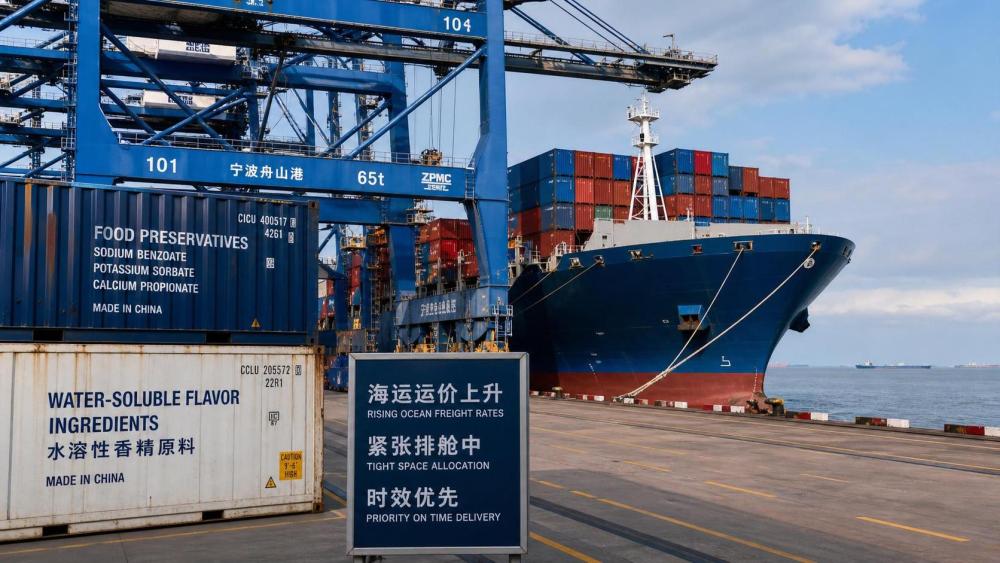
A sharp weekly move on the East China–Mediterranean lane
According to data released by the Shanghai Shipping Exchange on June 19, 2026, the freight rate for a 40-foot container on the East China–Mediterranean route rose 32% in a single week to $3,820/FEU. The level marked a new high since 2025.
The summary provided for this development attributes the increase to the normalization of Red Sea rerouting together with earlier seasonal stocking for Europe. The same summary states that the change directly affects delivery cycles and CIF pricing strategies for highly time-sensitive raw materials, including Food Preservatives and Water-soluble Flavors.
Where the pressure is likely to appear first
Contract and quotation management face immediate strain
From an industry perspective, direct trading companies and export sellers are likely to feel the impact first in quotation validity, freight assumptions, and delivery commitments. Where CIF terms are used, the shipping cost surge can quickly affect pricing discipline, especially for cargoes with narrow timing windows. What deserves closer attention is whether internal quotation processes, shipment booking timing, and commercial documents still match current route conditions.
Procurement teams must reassess timing-sensitive inputs
For raw material buyers and processing manufacturers, the issue is not limited to freight expense. Analysis shows that a sudden rise on this route can pressure procurement calendars for ingredients that depend on predictable transit timing. In practice, teams may need to review whether purchase timing, replenishment cycles, and supplier communication remain aligned with actual shipping conditions, particularly where imported or exported materials support ongoing production schedules.
Logistics service providers may face tighter execution expectations
Supply chain service providers are also likely to come under closer scrutiny from clients on booking reliability, schedule visibility, and exception handling. Observably, when rerouting becomes a normalized operating condition rather than a short-term disruption, service execution is judged less by one-off recovery and more by how clearly transit risks, booking terms, and delivery expectations are communicated across the shipment process.
Operational points companies should review now
Check whether CIF assumptions still reflect actual route conditions
Analysis shows that the most immediate practical review is around CIF quotation logic. If freight levels have moved sharply within one week, companies should pay closer attention to whether their commercial offers, shipment cost assumptions, and customer confirmation processes still reflect the latest route reality rather than older benchmarks.
Reconfirm delivery windows for time-sensitive categories
For businesses handling Food Preservatives, Water-soluble Flavors, and other time-sensitive raw materials named in the event summary, it is more appropriate to understand the current development as a signal to recheck delivery windows rather than assume previous lead times remain stable. This is especially relevant where shipment timing affects production planning, inventory turnover, or customer acceptance conditions.
Review document consistency across trade and logistics teams
What deserves closer attention is document consistency between procurement, sales, and logistics functions. Even without new formal regulation being cited in the input, a sharp freight and route-condition change can expose gaps between contracts, internal lead-time promises, booking plans, and shipping-related paperwork. Companies should therefore watch for any need to update internal execution language or approval thresholds.
Monitor market wording and execution signals before treating the move as settled
The input does not provide detailed official execution rules beyond the freight data and summary. For that reason, companies should treat this development as an active execution signal and continue monitoring how market participants describe delivery risk, timing expectations, and route-related cost treatment in ongoing transactions.
Why this matters beyond a single freight quote
Observably, this development is more meaningful as an execution signal than as a standalone freight headline. The confirmed facts do not establish a new regulation or formal trade rule by themselves, but they do indicate that normalized rerouting and earlier stocking behavior are already affecting the practical conditions under which trade terms, delivery promises, and pricing decisions are made.
From an industry perspective, that makes the event relevant to compliance-minded operations as well. When route conditions materially change, the pressure often appears first in whether companies can still perform consistently with their quoted terms, delivery representations, and internal control procedures. It is therefore more appropriate to understand this as a market condition change with rule-of-execution implications, rather than a purely temporary freight fluctuation.
How the market may best read this signal
The clearest takeaway is not that one weekly freight spike alone defines a new long-term pattern, but that current shipping conditions on the East China–Mediterranean route are already affecting sensitive cargo planning and CIF trade practice. Analysis shows that companies exposed to time-critical ingredient flows should interpret the move as a prompt to reassess execution readiness, cost pass-through discipline, and lead-time communication.
At this stage, a neutral reading is the most appropriate: the change is already visible in freight and delivery pressure, but its broader impact on trade behavior, procurement adjustment, and market practice still requires continued observation.
Basis of this article and what still needs verification
This article is generated based on the user-provided news title, event date, and event summary. For developments of this kind, relevant source types commonly include official announcements, regulator releases, customs or trade authority information, industry association updates, standard-setting documents, and reporting by authoritative media.
A specific official source link was not provided in the input, so further verification remains necessary. What still needs continued observation includes any follow-up official wording, execution interpretation in trade practice, changes in tender or procurement documents, market feedback from affected sectors, and how companies adjust actual delivery and quotation behavior in response.
Related News
- How functional additives for beverages affect shelf-life stabilitySep 11, 2026Food Preservation Scientist
- Ingredient selection for preservatives when pH limits antimicrobial efficacySep 07, 2026Food Preservation Scientist
- How to evaluate a food preservation technology supplier for shelf-life controlSep 03, 2026Food Preservation Scientist
- Food Preservatives USA: Rules, Risks, and Safer OptionsJul 23, 2026Food Preservation Scientist
Related News
- 00
0000-00
How to verify compliance documents for cosmetic active compounds - 00
0000-00
How to verify food grade flavor formulation ingredients for safety - 00
0000-00
How to assess an anti-aging ingredients manufacturer’s batch consistency - 00
0000-00
How formulation tips prevent flavor separation in beverage applications - 00
0000-00
How biodegradable surfactants for laundry affect cold-water cleaning
Food Preservation Scientist
Weekly Insights
Stay ahead with our curated technology reports delivered every Monday.