




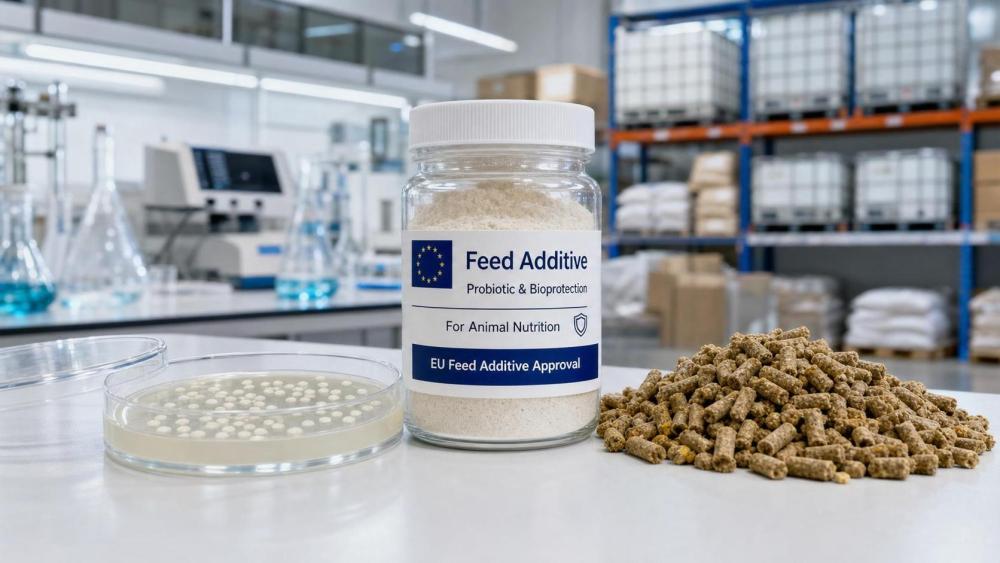
On May 11, 2026, the European Commission approved a preparation of Pediococcus pentosaceus (NCIMB 12674/DSM 35357) for use as a feed additive for all animal species. For feed additive suppliers, preservative ingredient exporters, feed formulators, and cross-border trade businesses, this is a development worth tracking because it links probiotic functionality with biopreservative use and may create a more visible opening for natural Food Preservatives and Blended Freshness Agents in the EU feed active ingredient market.
What the approval confirms
The confirmed information is limited but clear. The approval was issued by the European Commission on May 11, 2026, and it covers a preparation based on Pediococcus pentosaceus identified as NCIMB 12674/DSM 35357. The authorization applies to feed use across all animal species.
The event summary also states that this strain has notable probiotic and biopreservative functions. In practical terms, the stated relevance is that it can replace part of the role currently played by certain chemical preservatives, which is why the development is being closely watched by companies involved in natural preservative solutions and blended freshness products.
Where the impact may be felt first
Feed ingredient exporters may see a clearer entry point
From an industry perspective, exporters of natural Food Preservatives and Blended Freshness Agents are among the first groups likely to assess the commercial meaning of this approval. The reason is straightforward: the authorization creates a recognized regulatory basis for a specific microbial preparation in feed, which can influence how EU buyers evaluate alternative active ingredients with preservation-related positioning.
The business impact is most likely to appear in market access discussions, product positioning, and customer qualification processes rather than in immediate volume changes. What deserves closer attention is whether buyers begin to ask more specifically about microbial functionality, substitution logic versus chemical preservatives, and documentation supporting intended feed applications.
Feed formulators and manufacturers may reassess additive combinations
For feed formulators and manufacturing businesses, the development may affect how additive systems are reviewed. Because the strain is described as having both probiotic and biopreservative value, companies may pay closer attention to how active ingredients are combined in formulations where preservation and functional performance are considered together.
Analysis shows that the key influence here is not simply the presence of a new approved ingredient, but the possibility that product development teams may revisit where biologically derived solutions fit within feed additive strategies. The immediate focus is likely to remain on formulation compatibility, procurement planning, and customer communication.
Procurement and supply chain teams may face new document demands
For procurement, trade operations, and supply chain service providers, the practical effect may show up in qualification and delivery workflows. Once a regulatory approval draws attention to a specific strain and use case, counterparties often become more detail-oriented in discussions around strain identity, product description, applicable documentation, and delivery consistency.
Observably, this means the impact is not limited to product sellers. Teams handling export paperwork, technical files, and buyer coordination may also need to prepare for more detailed requests tied to feed use scenarios in the EU market.
What companies should watch now
Track how official wording is used in business communication
Companies should distinguish between the fact of approval and broader commercial claims. The confirmed event is the European Commission's approval of the specified preparation for all animal species. Businesses should therefore be careful to align product communication, technical descriptions, and customer-facing materials with the approved scope reflected in official wording, rather than extending the message beyond what is confirmed.
Review priority product lines for EU feed relevance
For Chinese exporters in natural Food Preservatives and Blended Freshness Agents, this is a practical moment to review which product lines are most relevant to EU feed applications. The point is not that all adjacent products will benefit equally, but that this approval may shift buyer attention toward preservation-related active ingredients with a more natural or biological profile.
Prepare for a gap between policy signal and transaction timing
Analysis shows that regulatory recognition and actual procurement movement do not always occur at the same pace. Companies should be ready for a period in which market interest rises before purchase cycles fully adjust. That makes customer follow-up, sample planning, and expectation management as important as the approval headline itself.
Strengthen qualification files and customer response readiness
What deserves closer attention is the operational side of export readiness. Suppliers and traders may need to organize strain-related identification materials, product specifications, compliance documents, and communication records more carefully if they want to respond efficiently to EU customer inquiries connected to feed use.
Why this looks more like a market signal than an immediate reset
This section is an editorial observation. It is more appropriate to understand this development as a meaningful regulatory signal rather than as proof of an immediate market-wide shift. The approval confirms official acceptance of a named microbial preparation for all animal species, and that alone gives the event industry relevance.
At the same time, the current input does not establish how quickly adoption will expand, how purchasing behavior will change, or how broadly substitution away from chemical preservatives will occur in practice. For that reason, the industry should treat this as a development with clear directional value, while continuing to watch how it translates into actual sourcing, formulation, and trade activity.
How to read the development at this stage
In summary, the approval of Pediococcus pentosaceus NCIMB 12674/DSM 35357 for all animal feed use in the EU is important because it connects regulatory acceptance with a strain described as having both probiotic and biopreservative functions. For exporters, feed businesses, and supply chain participants, the main significance lies in the possibility of broader interest in biologically positioned feed active ingredients.
The most balanced reading for now is that this is a concrete regulatory event with potential commercial relevance, but not yet a complete market outcome. It is better understood as a development that may shape decisions across product positioning, customer communication, and export preparation, while still requiring continued observation.
Basis of this article
This article is based on the user-provided news title, event date, and event summary. The input states that on May 11, 2026, the European Commission approved a preparation of Pediococcus pentosaceus (NCIMB 12674/DSM 35357) as a feed additive for all animal species, and that the strain has probiotic and biopreservative functions with possible relevance for Chinese exporters of natural Food Preservatives and Blended Freshness Agents.
For this type of industry update, relevant source categories typically include official regulatory announcements, company statements, industry association materials, authoritative media coverage, and standards-related documents. A specific official source link was not provided in the input, so further verification remains necessary. Follow-up attention should focus on subsequent official wording, market interpretation, and any practical changes in buyer qualification or feed ingredient demand.
Related News
- How functional additives for beverages affect shelf-life stabilitySep 11, 2026Food Preservation Scientist
- Ingredient selection for preservatives when pH limits antimicrobial efficacySep 07, 2026Food Preservation Scientist
- How to evaluate a food preservation technology supplier for shelf-life controlSep 03, 2026Food Preservation Scientist
- Food Preservatives USA: Rules, Risks, and Safer OptionsJul 23, 2026Food Preservation Scientist
Related News
- 00
0000-00
How to assess an anti-aging ingredients manufacturer’s batch consistency - 00
0000-00
How formulation tips prevent flavor separation in beverage applications - 00
0000-00
How biodegradable surfactants for laundry affect cold-water cleaning - 00
0000-00
How food hydrocolloids prevent ice crystals in frozen desserts - 00
0000-00
Which food texture modifiers for sauces prevent thinning after reheating?
Food Preservation Scientist
Weekly Insights
Stay ahead with our curated technology reports delivered every Monday.