





Why are recombinant protein ingredients getting so much attention now?
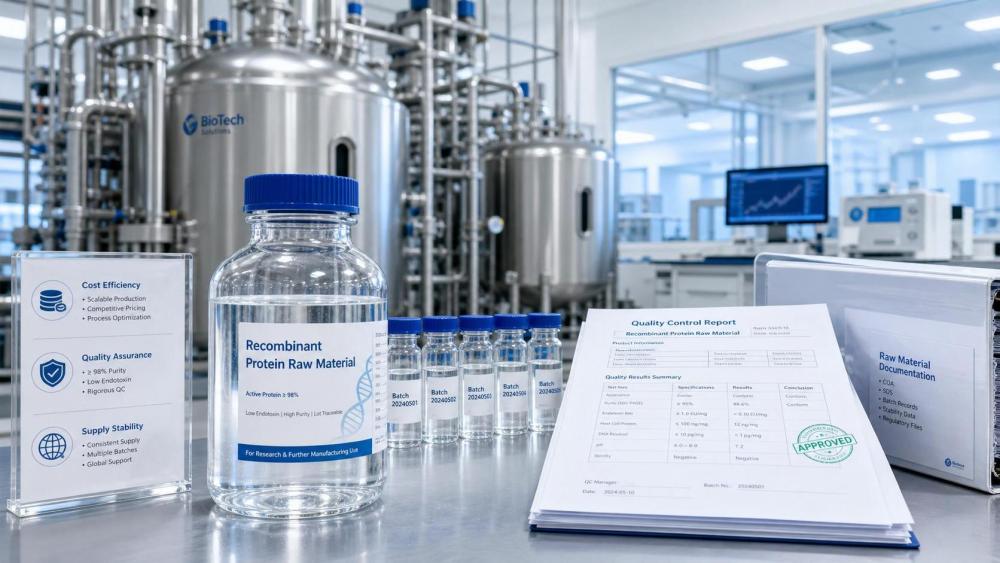
Recombinant protein ingredients have moved from niche science to commercial strategy. That shift matters because formulation pressure is rising across food, fragrance, personal care, and wellness categories.
Buyers are no longer comparing ingredients on headline price alone. They also need to weigh purity, consistency, regulatory exposure, premium positioning, and supply resilience.
In practical terms, recombinant protein ingredients can offer tighter batch control than animal-derived or extraction-heavy alternatives. That makes them attractive where efficacy claims and safety expectations must stay aligned.
This is especially relevant in the FMCG landscape tracked by FFAI. Food preservation systems, sensory modifiers, fragrance construction, and high-end cosmetic actives increasingly depend on ingredients that combine technical performance with compliance readiness.
A more useful question, then, is not whether recombinant protein ingredients are innovative. It is whether they improve commercial outcomes after cost, risk, and formulation fit are fully examined.
What exactly should be included when evaluating cost?
The unit price is only the visible layer. Total cost often changes after stability performance, dosage efficiency, testing burden, scrap risk, and claims support are reviewed.
For example, a recombinant collagen, peptide, or enzyme may look expensive per kilogram. Yet the effective use level can be lower, especially when purity is high and side-materials are limited.
That creates a different cost picture in finished goods. A premium ingredient may still protect margin if it improves efficacy storytelling, reduces rework, or shortens validation cycles.
More commonly, procurement teams compare five cost layers before shortlisting recombinant protein ingredients:
- Fermentation or biosynthesis route and its yield stability.
- Purification intensity, including filtration and downstream processing.
- Required dosage in the final formulation.
- Regulatory documentation and testing support.
- Premium pricing potential in the end market.
FFAI often frames this as a pricing intelligence issue, not just a sourcing issue. If a recombinant active helps justify a stronger sensory claim, anti-aging claim, or clean formulation narrative, the cost discussion changes.
A quick cost screening table
Before moving into audits or samples, a simple comparison table can expose where apparent savings may disappear.
When does quality become the deciding factor rather than price?
That usually happens when the ingredient sits close to product identity. In prestige beauty, advanced nutrition, and high-value sensory applications, variability costs more than a premium raw material.
With recombinant protein ingredients, quality is not only about purity percentage. It also includes structural integrity, bioactivity retention, odor profile, impurity control, and formulation compatibility.
A peptide that assays well but degrades under heat, shear, or pH stress can still fail commercially. The same goes for proteins that interact poorly with preservatives, thickeners, or surfactant systems.
This is where FFAI’s intelligence-led approach becomes relevant. Ingredient quality should be judged in the formulation environment, not in isolation. An elegant lab specification means little if the ingredient loses function after processing.
In food systems, stability through transport and shelf life matters. In cosmetic actives, penetration logic and claim support matter. In fragrance-linked systems, even minor residual notes can affect the final sensory signature.
What quality questions are worth asking early?
- How is bioactivity measured, and is the method validated?
- What impurities remain after purification?
- How does the protein behave under target pH and temperature?
- Is the sensory profile neutral in the intended matrix?
- What evidence supports shelf-life stability after scale-up?
Can supply continuity really become a hidden risk with recombinant protein ingredients?
Yes, and it is often underestimated. Recombinant protein ingredients may appear scalable on paper, yet real-world supply depends on fermentation capacity, strain performance, purification bottlenecks, and regulatory readiness.
A supplier may have strong pilot data but weak commercial redundancy. If one bioreactor campaign slips, lead times can expand quickly, especially for specialized proteins with narrow production windows.
The safer approach is to review continuity beyond inventory levels. Ask about capacity reservations, raw material dependency, site geography, contamination controls, and batch release timelines.
For globally traded FMCG ingredients, continuity also intersects with compliance. A delayed export file, missing market notification, or incomplete traceability record can interrupt supply even when manufacturing is intact.
That is why FFAI’s cross-functional lens matters. Supply confidence should combine market intelligence, formulation relevance, and regulatory tracking instead of treating procurement as a standalone exercise.
Signals that deserve closer review
If two suppliers look similar in specification sheets, these operational signals often separate reliable partners from fragile ones:
- No clear answer on second-site production or toll manufacturing.
- Large variance between quoted and actual lead times.
- Unclear source of microbial host or feedstock inputs.
- Limited historical data on commercial-scale lots.
- Documentation updates only after customer escalation.
Where do recombinant protein ingredients make the most commercial sense?
They make the strongest case when performance and story value work together. That is often true in anti-aging actives, protein-based texture systems, specialty nutrition, and premium sensorial concepts.
In beauty, recombinant collagen fragments or peptides may strengthen efficacy positioning while supporting cleaner sourcing narratives. In food, selected proteins or enzymes can improve texture, stability, or targeted functionality.
Even when fragrance is not protein-led, adjacent formulation systems can benefit. A stable, high-purity support ingredient can preserve intended sensorial expression by reducing off-notes or compatibility issues.
The more common mistake is forcing recombinant protein ingredients into low-value applications with little room for premium recovery. If the ingredient solves no visible technical or market problem, cost pressure returns immediately.
A better screening method is to ask whether the ingredient improves one of four things: claim credibility, formulation stability, sensory quality, or margin architecture.
What mistakes slow down selection and increase sourcing regret?
One common error is treating recombinant protein ingredients as interchangeable with conventional proteins. Production route, folding behavior, purity profile, and downstream stability can vary much more than expected.
Another mistake is overvaluing technical novelty. A sophisticated recombinant ingredient still needs a workable quality agreement, realistic MOQ, and stable release documentation.
Some teams also delay regulatory review until late-stage validation. That creates avoidable risk, especially in applications touching food contact, ingestible systems, or cosmetic claims with regional filing requirements.
Needless complexity is another trap. If the ingredient requires major reformulation, new preservation logic, or specialized handling, the real project cost may exceed its strategic value.
A cleaner path is to align technical, commercial, and compliance checkpoints early. FFAI’s market perspective suggests that strong ingredient decisions usually come from stitched intelligence, not isolated lab enthusiasm.
How should the next sourcing step be structured?
Start with the intended business outcome. That could be cleaner positioning, stronger efficacy, better sensory control, or a defensible premium in a crowded category.
Then map candidate recombinant protein ingredients against formulation fit, full landed cost, quality evidence, and continuity risk. This usually reveals which options deserve deeper validation.
It also helps to separate attractive science from scalable business value. The strongest ingredient is rarely the cheapest, but it should be the easiest to defend commercially.
A practical next step is to build a short decision grid covering dose economics, stability, regulatory readiness, and second-source visibility. That framework makes supplier discussions faster and more comparable.
Recombinant protein ingredients can create real advantage, but only when cost, quality, and supply are reviewed together. In fast-moving FMCG markets, that integrated view is often the difference between a premium ingredient and an expensive distraction.
Related News
- How to verify supplier references for active compoundsSep 12, 2026Prof. Elian Thorne
- How to evaluate the odor impact of sensory ingredients for perfumesSep 01, 2026Prof. Elian Thorne
- How to build a procurement plan that reduces food ingredient stockoutsAug 29, 2026Prof. Elian Thorne
- How functional additives for skincare affect texture stability in emulsionsAug 22, 2026Prof. Elian Thorne
Related News
- 00
0000-00
How to verify compliance documents for cosmetic active compounds - 00
0000-00
How to verify food grade flavor formulation ingredients for safety - 00
0000-00
How to assess an anti-aging ingredients manufacturer’s batch consistency - 00
0000-00
How formulation tips prevent flavor separation in beverage applications - 00
0000-00
How biodegradable surfactants for laundry affect cold-water cleaning
Prof. Elian Thorne
Weekly Insights
Stay ahead with our curated technology reports delivered every Monday.