





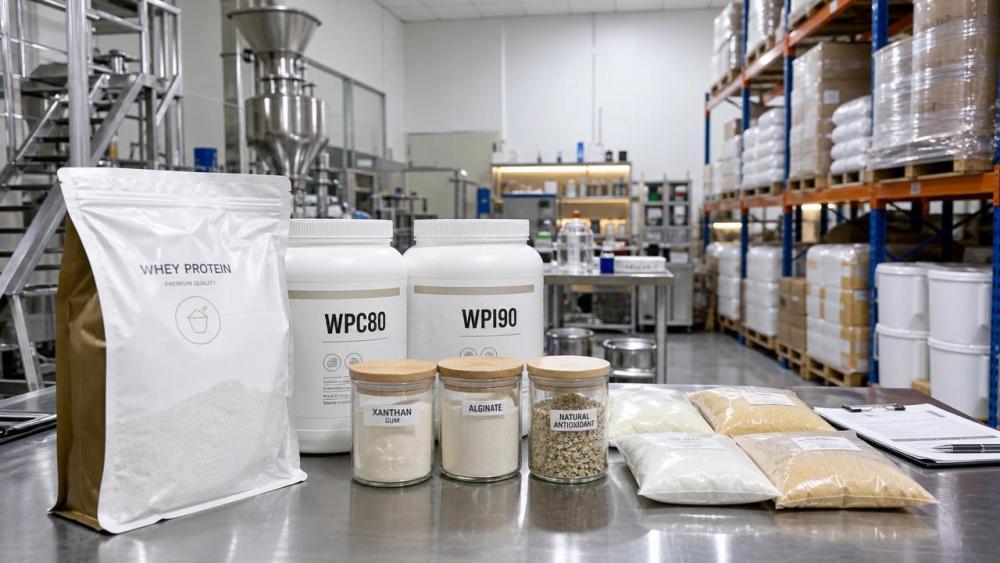
In June 2026, whey protein costs moved sharply higher in the domestic market, with industrial-grade WPC80 quoted at RMB 190,000 per ton and WPI90 rising above RMB 27,000 per ton. The price shock, tied to a tight supply chain, is already pushing infant formula and sports nutrition brands to adjust pricing, while procurement interest in xanthan, alginate, blended freshness agents, and natural antioxidants has accelerated. For ingredient buyers, formulators, and downstream brands, this development is worth close attention because it links raw material pricing, formulation decisions, and commercial execution in a very direct way.
What the June price move confirms
The confirmed market update shows that in June 2026, the domestic quote for industrial-grade WPC80 reached RMB 190,000 per ton, nearly double year on year. Over the same period, WPI90 moved above RMB 27,000 per ton.
The available information also confirms that supply chain tightness has accelerated price adjustments by downstream infant formula and sports nutrition brands. At the same time, procurement inquiries for natural thickeners such as xanthan and alginate, as well as blended freshness agents and natural antioxidants, rose 42% week on week.
These materials are being treated by formulators as urgent replacement options in response to the whey protein price surge and the pressure created by supply constraints.
Where the pressure is likely to be felt first
Formula teams face immediate ingredient trade-offs
From an industry perspective, formulators are among the first groups affected because whey protein pricing now has a direct impact on recipe cost and ingredient selection. The most immediate pressure is likely to appear in reformulation work, replacement screening, and decisions about whether texture, freshness, and oxidative stability can be supported through alternative ingredient combinations.
Infant formula and sports nutrition brands must manage pricing and positioning
Observably, the reported price adjustments by downstream infant formula and sports nutrition brands show that the impact is no longer confined to raw material procurement. For these brands, the key business pressure points are product pricing, margin protection, and how to communicate changes without creating confusion in the market.
Procurement and supply chain functions need to track substitution demand
For procurement teams and supply chain service providers, the 42% week-on-week rise in inquiries for xanthan, alginate, blended freshness agents, and natural antioxidants signals that substitution demand is becoming a live operational issue. What deserves closer attention is not only whey protein availability, but also whether substitute-related materials face tighter lead times or faster quote changes as more buyers move in simultaneously.
Ingredient traders and processors may see a shift in demand mix
Analysis shows that businesses handling ingredient trading or processing may need to watch for a demand shift from single-category whey purchasing toward a broader basket of functional ingredients. The business impact is likely to center on quote management, allocation priorities, and delivery coordination rather than on volume alone.
What companies should watch now
Track whether pricing changes remain temporary or broaden further
Companies should closely monitor whether current whey protein quotes stabilize or continue to move, because that distinction affects both short-cycle purchasing and customer pricing decisions. In the current environment, quote volatility itself becomes a commercial risk factor.
Review substitute ingredients with a formulation lens
For teams evaluating xanthan, alginate, blended freshness agents, and natural antioxidants, the immediate task is not simply to find a lower-cost input. It is more appropriate to assess how these alternatives fit the intended formula role under current cost pressure, especially where urgent replacement decisions are being made.
Check supplier documentation and fulfillment timing
As inquiry volumes rise, companies should pay closer attention to supplier qualifications, supporting documents, and delivery cycles. This matters because a rapid increase in procurement interest can create execution risk even when an alternative ingredient is commercially available.
Prepare clearer customer communication around adjustments
Where downstream pricing changes are already underway, brands and suppliers need to align internal procurement signals with external communication. The practical issue is not only whether prices are adjusted, but also whether customers understand the reason for the change and the expected timing of implementation.
Why this matters beyond a single price spike
Analysis shows that this development should not be read only as a raw material price event. It also points to how quickly formulation strategy can change when supply chain tightness and input cost inflation appear at the same time. The rise in inquiries for natural thickeners, blended freshness agents, and natural antioxidants suggests that buyers are already moving from observation to action.
At the same time, it would be premature to treat this as a fully settled long-term industry outcome. The confirmed facts show a sharp price increase, downstream pricing responses, and a clear jump in substitute inquiries, but they do not yet confirm how long this pattern will last or how broadly substitution will be adopted across applications.
How this update is best understood
At this stage, it is more appropriate to understand the June 2026 whey protein surge as a high-impact market signal with immediate operational consequences, rather than as a final industry conclusion. The current importance lies in the connection between whey protein pricing, downstream repricing, and the rapid search for workable substitute ingredients.
For the industry, the key takeaway is not just that WPC80 and WPI90 have become more expensive, but that cost pressure is already reshaping procurement behavior and formula planning. Whether this remains a short-term disruption or develops into a longer-running adjustment still requires continued observation.
Basis of this report and what still needs verification
This article is based on the user-provided news title, event date, and event summary. The confirmed inputs include the June 2026 pricing levels for industrial-grade WPC80 and WPI90, the reported supply chain tightness, downstream price adjustments by infant formula and sports nutrition brands, and the 42% week-on-week increase in inquiries for xanthan, alginate, blended freshness agents, and natural antioxidants.
Specific official source links were not provided in the input, so further verification is still needed through relevant source types typically associated with this kind of market update, such as official notices, company statements, industry association information, authoritative media reporting, and standard-setting documents where applicable.
Areas that merit continued monitoring include whether whey protein quotations remain elevated, whether downstream price adjustments widen, and whether inquiry growth for substitute-related ingredients translates into sustained purchasing and formulation change.
Related News
- Which food texture modifiers for sauces prevent thinning after reheating?Sep 13, 2026Food Rheology Expert
- How shear-thinning rheology modifiers balance flow and stabilitySep 07, 2026Food Rheology Expert
- How to choose food thickeners for sauces without changing flavorAug 28, 2026Food Rheology Expert
- How to Choose Xanthan Gum Solutions for Stable Viscosity in Food FormulationsAug 13, 2026Food Rheology Expert
Related News
- 00
0000-00
Which food texture modifiers for sauces prevent thinning after reheating? - 00
0000-00
How to verify supplier references for active compounds - 00
0000-00
How functional additives for beverages affect shelf-life stability - 00
0000-00
How to verify clean label ingredients for Europe meet label claims - 00
0000-00
What drives Pro-Xylane price differences between cosmetic suppliers?
Food Rheology Expert
Weekly Insights
Stay ahead with our curated technology reports delivered every Monday.