





On 2026-06-12, market attention centered on a food trade compliance signal tied to U.S. FDA import refusals in May 2026. The disclosed issues point directly to microbial control and pesticide residue management in exported foods, while also raising practical concerns for exporters, ingredient suppliers, overseas buyers, and quality teams responsible for audit, documentation, testing, and delivery risk. For the industry, the value of this development is not only in the rejected shipments themselves, but in the enforcement message it sends about how terminal product compliance can expose upstream sourcing weaknesses.
What the May refusals confirmed
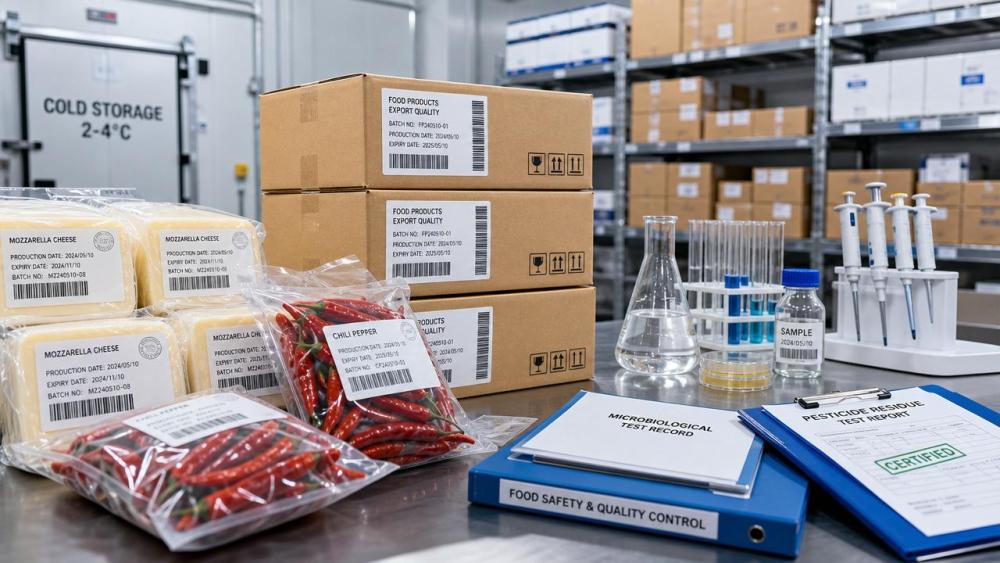
According to the provided information, the U.S. FDA refused entry to 37 batches of food from China in May 2026. Among the cited issues, imported cheese was found to have excessive E. coli, and screw peppers showed pesticide residues exceeding the limit by 563%. The case involving the related Hema store was filed for investigation. The summary further indicates that these problems underscore the critical compliance impact of microbial control and pesticide residue management in export food trade.
The same information also states that the incident touches the terminal application risks of highly sensitive ingredients, including food preservatives such as nisin, natural antioxidants such as rosemary extract, and water-soluble flavor masking agents. It also serves as a warning that overseas buyers need to strengthen compliance audits of upstream raw materials.
Where the pressure is likely to appear first
Export shipments face tighter review at the product end
From an industry perspective, exporters are likely to feel the most immediate pressure in shipment readiness, product release, and supporting compliance files. When refusals are tied to E. coli and pesticide residues, the business impact is not limited to one batch; it can extend to how buyers assess production controls, test evidence, and consistency of upstream sourcing before future orders move forward.
Ingredient sourcing becomes part of finished-product risk
For companies purchasing preservatives, natural antioxidants, and flavor-related ingredients, the incident suggests that ingredient choice alone is not the core issue; what deserves closer attention is whether procurement records, supplier qualification, and use conditions can support downstream compliance. Sensitive ingredients used in final food applications may face closer scrutiny if the finished product later shows microbial or residue-related nonconformity.
Buyers and channel partners may shift audit priorities
Observably, overseas buyers, importers, and distribution-side partners may focus more closely on upstream raw material verification, batch traceability, and whether test reports align with actual delivered goods. This affects procurement review, supplier onboarding, and delivery acceptance, especially where product categories are already considered sensitive from a food safety standpoint.
Testing and compliance service roles may become more operational
Testing bodies and compliance support teams may also see their role move closer to day-to-day transaction control. Analysis shows that when refusals involve both microorganisms and pesticide residues, companies are more likely to pay attention to how laboratory reports, technical files, and product-specific compliance records support export decisions and buyer communication.
What companies should watch now
Check whether upstream audit depth matches product risk
Analysis shows that companies should pay closer attention to whether supplier audits go beyond basic qualification and actually address the raw materials and application scenarios linked to microbiological and residue risks. This is especially relevant where sensitive ingredients are used in finished foods destined for export markets.
Keep testing records and technical documents decision-ready
What deserves closer attention is the completeness and usability of test reports, specification files, and traceability records during shipment review and buyer due diligence. The provided information does not give specific enforcement procedures, so this should be understood as a practical area to monitor rather than a confirmed new documentation rule.
Review delivery plans for categories with higher exposure
For exporters and procurement teams, categories associated with microbial control or pesticide residue exposure may require more cautious scheduling and internal release review. This is not evidence of a formal new barrier in itself, but it is a reasonable compliance response to an enforcement signal already visible in import refusals.
Watch how buyers translate refusals into contract terms
Observably, one area to follow is whether overseas buyers begin tightening supplier qualification language, audit clauses, or quality evidence requirements in procurement and delivery documents. The input does not confirm that such changes have already occurred, so this remains a point for continued observation.
Why this matters beyond one month of refusals
Analysis shows that this development is more appropriately understood as an enforcement signal rather than a standalone news event. The combination of excessive E. coli and severely excessive pesticide residues highlights that export food compliance is being tested at the intersection of production control, agricultural input management, and application governance for sensitive ingredients.
From an industry perspective, the key takeaway is not that a new rule has been explicitly announced in the provided information, but that existing regulatory expectations may be showing up more sharply in actual trade outcomes. That distinction matters for companies deciding whether to treat this as a temporary case issue or as a prompt to tighten routine compliance execution.
How the market may best read this signal
At this stage, it is more appropriate to understand the incident as a concrete execution warning on export food compliance, especially in areas linked to microbial safety, pesticide residue control, and upstream audit credibility. It does not by itself prove a fully defined new rule set in the provided information, but it does indicate that supply chain documentation, testing discipline, and buyer-facing compliance assurance deserve closer operational attention.
Basis of this article and what still needs verification
This article is generated based on the user-provided news title, event date, and event summary. For events of this type, commonly relevant source categories may include official notices, regulatory releases, customs or trade authority information, industry association updates, standards documents, and reporting by authoritative media. No specific official source link was provided in the input, so the exact official reference still requires ongoing verification. Follow-up attention should remain on any later regulatory clarifications, certification or compliance interpretation, procurement document changes, market feedback, and how companies implement related controls in practice.
Related News
- Flavour preservation failures caused by oxygen exposure in beveragesOct 01, 2026Food Preservation Scientist
- Which flavour preservation method best protects citrus top notes?Sep 30, 2026Food Preservation Scientist
- How functional additives for beverages affect shelf-life stabilitySep 11, 2026Food Preservation Scientist
- Ingredient selection for preservatives when pH limits antimicrobial efficacySep 07, 2026Food Preservation Scientist
Related News
- 00
0000-00
Bairun Nine-Month Profit Up 20.4% to RMB 662m; Flavors and Fragrances Also Grow - 00
0000-00
How biomimetic peptides work in anti-aging skincare formulations - 00
0000-00
2026 Osong Cosmetics and Beauty Expo Concludes in South Korea - 00
0000-00
How to compare cosmetic active compounds by their cost in use - 00
0000-00
HKBU Showcases DR2 Following NMPA Registration as a New Cosmetic Ingredient
Food Preservation Scientist
Weekly Insights
Stay ahead with our curated technology reports delivered every Monday.