





On May 20, 2026, China’s General Administration of Customs (GACC), jointly with the Ministry of Agriculture and Rural Affairs (MARA), issued Announcement No. 68, introducing mandatory phytosanitary requirements for imported coffee beans from Ethiopia, Rwanda, and other African countries. The regulation directly affects China-based fast-moving consumer goods (FMCG) manufacturers specializing in soluble coffee flavor extraction, microencapsulated aroma development, and pre-roast blending—particularly those exporting finished products to global markets where traceability and biosecurity compliance are increasingly enforced.
Event Overview
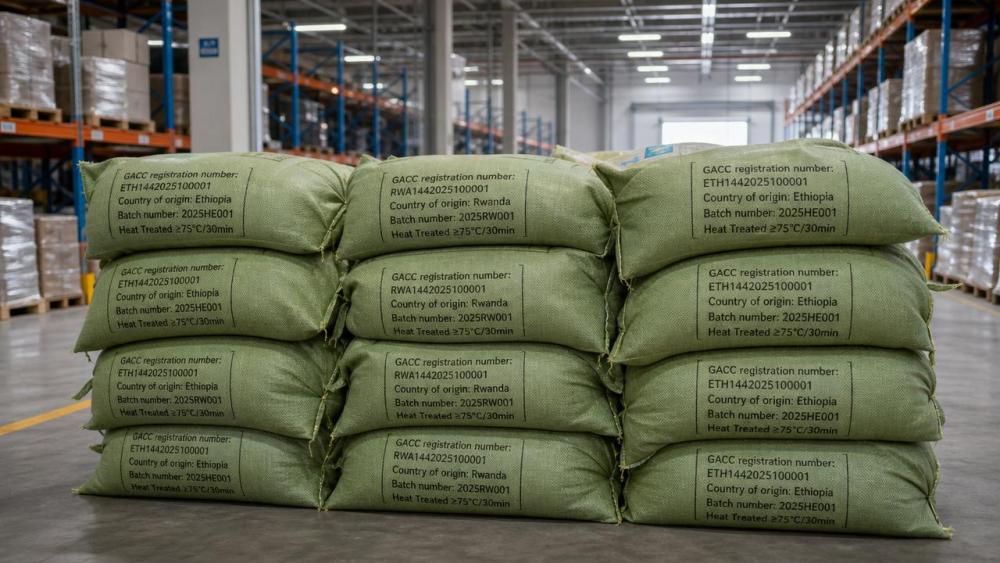
On May 20, 2026, GACC and MARA published Announcement No. 68, specifying new phytosanitary conditions for importing green coffee beans from designated African countries. Key requirements include: mandatory registration of overseas production enterprises with GACC; submission of official heat-treatment certification; inclusion of traceable labeling information on packaging; and provision of an original, government-issued phytosanitary certificate accompanying each shipment.
Industries Affected
Direct Trading Enterprises
Importers and export-oriented trading firms handling African-origin green coffee beans must now verify and maintain active registration status of their overseas suppliers in GACC’s system. Non-registered enterprises will be barred from customs clearance—leading to delays, detention, or outright rejection at port. This adds administrative overhead and shifts liability upstream, requiring traders to audit supplier compliance before contract execution.
Raw Material Procurement Enterprises
Procurement departments of multinational FMCG groups and domestic flavor houses sourcing African beans for R&D or pilot batches face tighter lead-time constraints. Heat treatment must occur prior to export—not upon arrival—and documentation must align precisely with GACC’s format. Discrepancies in certificate wording, date sequencing, or label metadata may trigger re-inspection, increasing landed cost and supply uncertainty.
Processing & Manufacturing Enterprises
Manufacturers engaged in water-soluble flavor concentrate production, microencapsulation of volatile coffee aromas, or pre-mixed green bean formulations must now validate upstream compliance as part of their internal food safety plans (e.g., HACCP, ISO 22000). Failure to document registered origin and certified thermal processing may compromise regulatory audits and invalidate export certifications for downstream markets such as the EU or Japan.
Supply Chain Service Providers
Third-party logistics providers, customs brokers, and certification consultants must update their service frameworks to include GACC registration verification, heat-treatment record reconciliation, and bilingual label review (Chinese + English). Some forwarders report rising demand for ‘pre-clearance validation packages’, indicating a structural shift toward proactive compliance assurance rather than reactive problem resolution.
Key Focus Areas and Recommended Actions
Confirm Overseas Enterprise Registration Status
Verify whether your African supplier is listed in GACC’s publicly accessible database of registered overseas producers (updated biweekly). If unlisted, initiate registration immediately—processing time averages 4–6 weeks, and applications require notarized corporate documents, facility layout diagrams, and pest control protocols.
Validate Heat Treatment Documentation
Ensure each consignment carries a government-issued heat treatment certificate confirming exposure to ≥75°C for ≥30 minutes (core temperature, verified by calibrated data loggers). Certificates must reference the exact lot number, origin farm or mill, and be signed by an authorized official of the exporting country’s national plant protection organization (NPPO).
Update Labeling and Traceability Systems
Labels on inner and outer packaging must display: (i) GACC-registered enterprise code; (ii) batch/lot identifier linked to the heat treatment record; (iii) country of origin and harvest year. Digital traceability systems (e.g., QR-coded batch logs) are not yet mandatory but strongly recommended to support rapid recall readiness.
Editorial Perspective / Industry Observation
Analysis shows this measure is less about immediate pest risk mitigation—and more about institutionalizing upstream accountability across Africa-China agri-commodity flows. Observably, GACC is aligning its import controls with the International Standards for Phytosanitary Measures (ISPM 36), signaling broader application to other high-risk botanical imports (e.g., spices, tea, cocoa). From an industry perspective, the rule accelerates consolidation among African exporters: smaller mills lacking thermal infrastructure or digital recordkeeping will struggle to retain Chinese buyers unless they join cooperative certification schemes. Current data suggests only ~38% of Ethiopian wet mills currently meet the full technical criteria—a gap that may widen sourcing pressure toward vertically integrated estates.
Conclusion
This regulation marks a structural inflection point—not merely a procedural update. It embeds biosecurity governance deeper into commercial contracts and product development timelines. For Chinese FMCG exporters, compliance is no longer a customs checkpoint issue but a foundational input requirement affecting R&D agility, cost modeling, and market access strategy. A rational interpretation is that the policy favors players with integrated quality assurance capabilities and long-standing African sourcing partnerships—rather than those relying on spot-market procurement.
Source Attribution
Official source: General Administration of Customs of the People’s Republic of China, Announcement No. 68 (2026), jointly issued with the Ministry of Agriculture and Rural Affairs, effective May 20, 2026. Full text available via GACC’s Public Notice Portal (www.customs.gov.cn/notice/2026-68). Ongoing monitoring advised for updates to the list of eligible African countries, technical annexes on heat treatment parameters, and rollout of GACC’s online registration portal for overseas facilities.
Related News
- Flavor Masking Solutions for Pharmaceuticals: What Works Best by Dosage FormJun 15, 2026Aromatics & Perfumery Fellow
- Pakistan Requires Forced-Labor-Free Proof for ImportsJun 14, 2026Aromatics & Perfumery Fellow
- Flavor Masking Solutions for Pharmaceuticals: What Actually WorksJun 13, 2026Aromatics & Perfumery Fellow
- Flavor Masking Agent for Supplements: What Actually Works in Gummies and PowdersJun 12, 2026Aromatics & Perfumery Fellow
Related News
- 00
0000-00
China Feed Import Rules to Start in November - 00
0000-00
China Adds 3 Chemicals to Export Control List - 00
0000-00
U.S. Opens Section 301 Supply Chain Probe Across 60 Economies - 00
0000-00
Whey Protein Prices Surge as Replacement Demand Jumps - 00
0000-00
China Starts New Import Food Registration Rules on June 1
Aromatics & Perfumery Fellow
Weekly Insights
Stay ahead with our curated technology reports delivered every Monday.